




Why your radiators won't heat up in Massachusetts

Step 1 of 3: Equipment

A radiator that stays cold usually has air trapped inside it, blocking the hot water from filling the fins. That's the easy fix, and it's why the one upstairs or in the back bedroom is the one giving you trouble while the rest of the house is warm. But cold radiators also turn up for reasons you can't bleed away: a circulator pump that's stopped moving water through the system, a zone valve stuck shut, sludge built up in a radiator that's been there since before you owned the house, or a boiler that's losing pressure and shutting itself down before the loop ever gets hot. Gas-fired boilers are common across Massachusetts, and most of these systems are old enough that more than one of these problems can be happening at once. Figuring out which one you have means checking the boiler's pressure gauge, the pump, and the valves, not just the radiator itself.

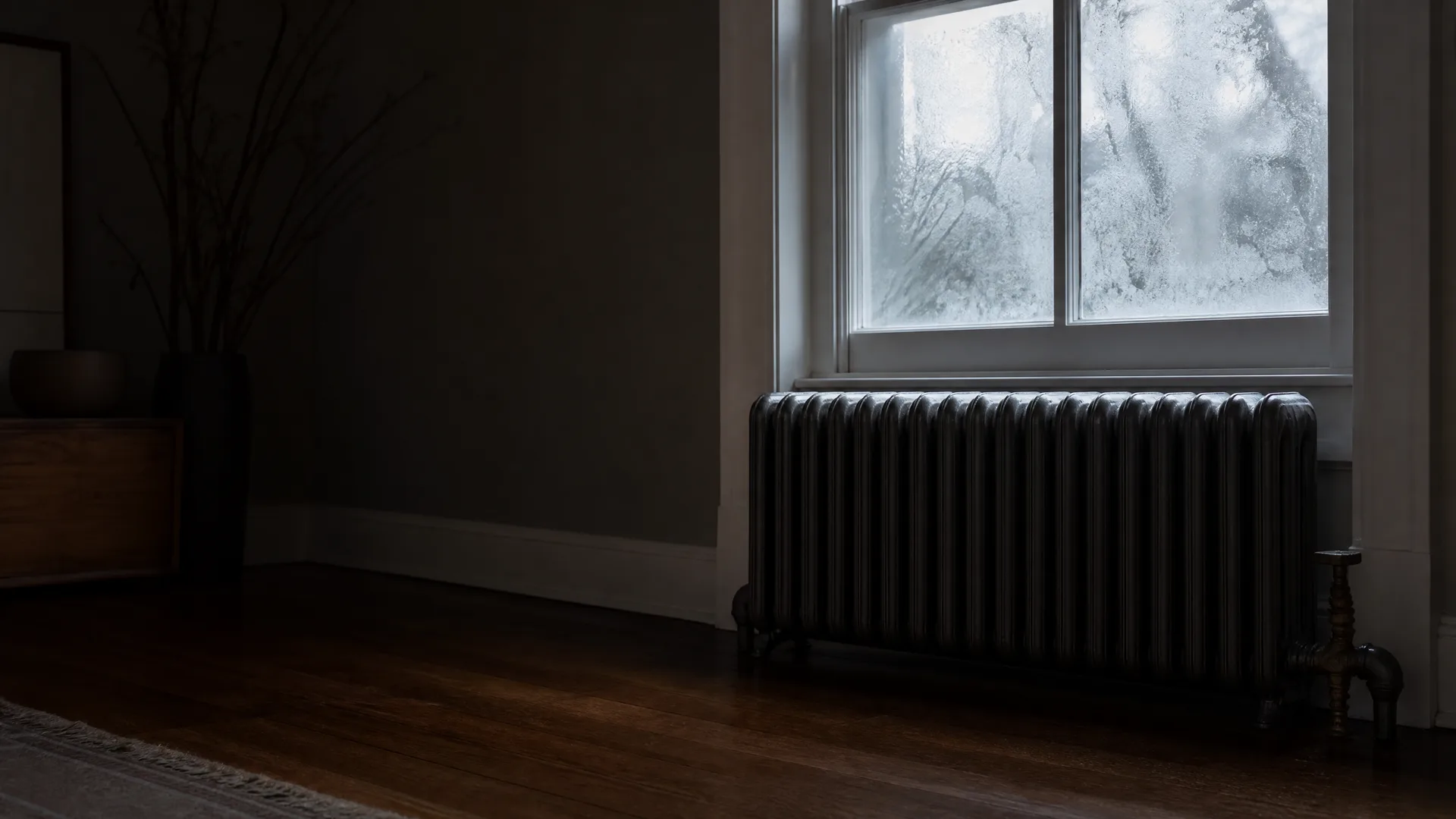
A cast-iron column radiator stands beneath a frosted window in a dim room with dark walls, a wood floor, and a vase of bare branches on a low cabinet at left.

You wake up before the thermostat kicks back on and the bedroom is cold enough that you can see your breath. Down in the living room the window over the radiator has ice on the inside of the glass, a thin white film across the bottom corners. You put a hand on the radiator and it's cold at the top, the ridges along the side barely warm. Outside it's still dark, somewhere in the teens. You bleed the valve like you did last year and wait, listening for water. Nothing comes. The cat won't leave the one spot by the kitchen vent. You add another blanket to the bed and tell yourself you'll deal with it after coffee.

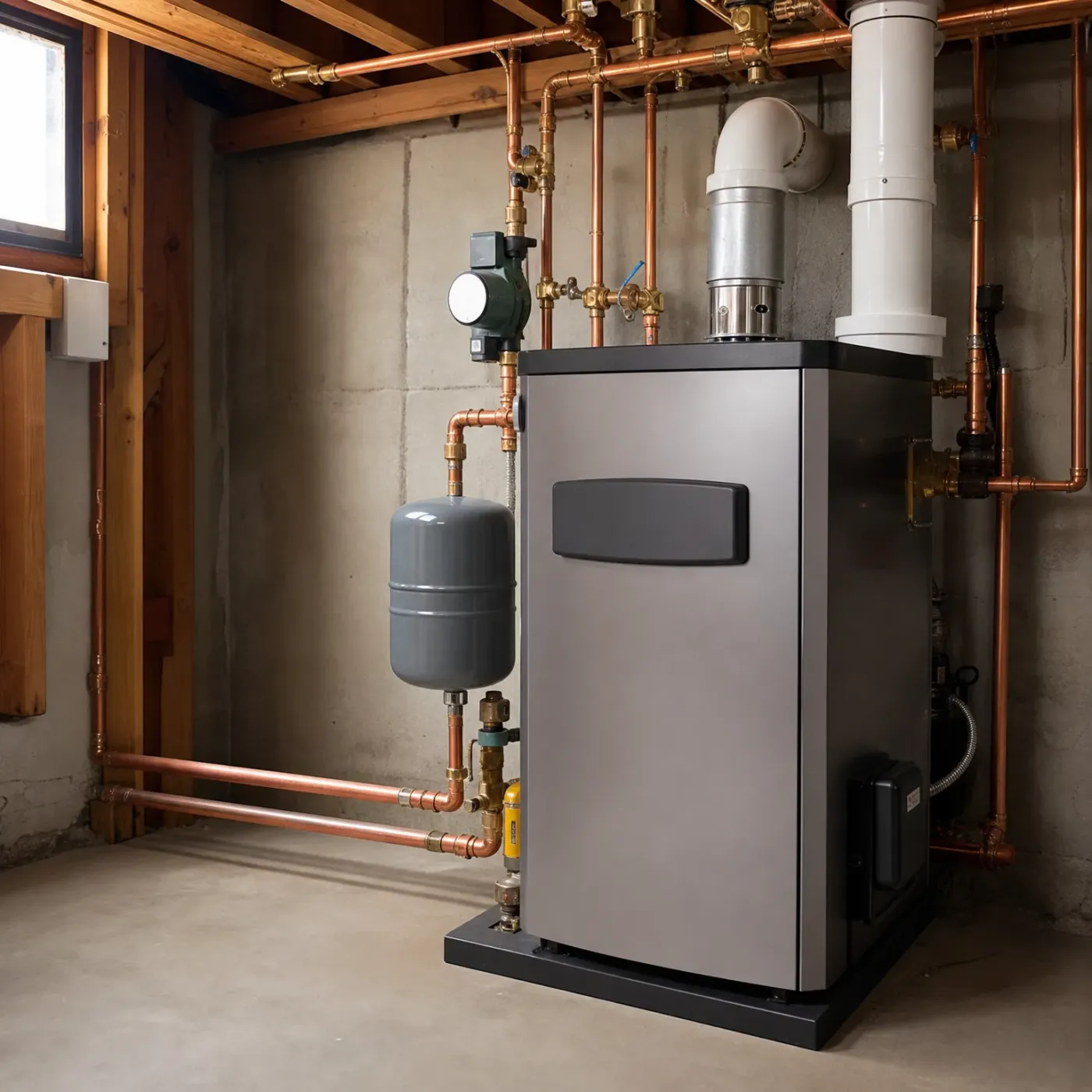
A gray boiler with a metal flue pipe stands in a basement against concrete and concrete-block walls, connected to copper piping, a circulator pump, and two gray expansion tanks.
Pipes, valves and both expansion tanks are intact, so the system can push hot water to every radiator in the house.
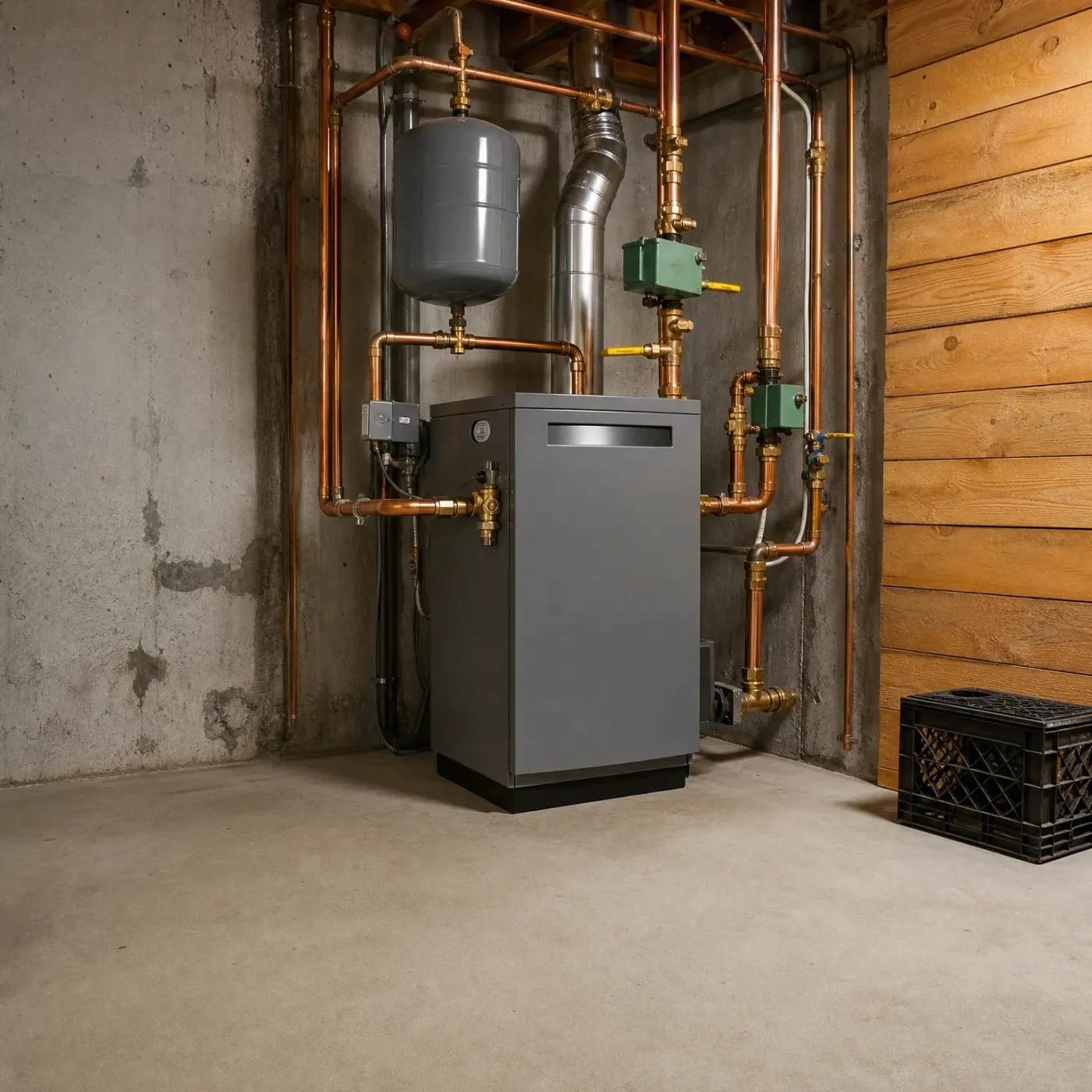
A gray boiler on a concrete pad in a basement with painted concrete block walls, copper piping, a metal flue, and electrical control boxes.
A boiler propped on a raised pad with aging flue components is often one failed part away from no heat at all.

Why Radiators Need Bleeding

  • Hot water enters a radiator at the bottom and air that's trapped rises to the top, where a bleed valve lets you release it.
  • A radiator that's cold at the top but warm at the bottom almost always has air stuck inside it, not a boiler problem.
  • A radiator that's cold all over usually isn't getting water at all, which points to a stuck valve or a clog further back.
  • The bleed key fits a square fitting on the valve, and you turn it just until water starts to spit out, then close it.
  • Bleeding one radiator lowers the pressure in the whole loop, so the boiler's pressure gauge needs a check afterward.
  • A system that needs bleeding every few weeks has air getting in somewhere, which usually means a slow leak or a failing expansion tank.

A boiler pushes hot water through pipes into each radiator from the bottom. Air doesn't belong in that loop, but a little gets in every time you fill the system or let the pressure drop, and because air is lighter than water it rises straight to the top of the radiator and sits there. Water fills in underneath it. That's why you'll feel heat low on a radiator and cold iron up top, and it's also why bleeding works: the valve at the top lets that trapped air out so water can take its place. You open it with a bleed key until the hiss of air turns into a thin stream of water, then you shut it fast. A cold radiator top and bottom is a different problem. No air is trapped because no water got in to begin with, usually because a valve is shut or stuck, or something further back in the pipe is blocking flow. Bleeding won't fix that one. Once you do bleed a radiator, check the pressure gauge on the boiler itself. Letting air out drops the pressure in the whole loop, and most boilers want it back in a specific range before they'll run right. If you're bleeding radiators every few weeks rather than once or twice a season, air is getting in from somewhere it shouldn't, often a small leak in the piping or an expansion tank that's no longer holding its charge.

A blue oil-fired boiler with a burner unit sits on a concrete pad in a basement corner, with copper piping, valves and a gray expansion tank overhead against concrete block walls.
Before you get your boiler repair
A gray boiler unit on a concrete pad in a basement corner, connected to copper piping, valves and a metal flue against painted concrete block walls.
After you get your boiler repair
A gray boiler on a black base in a basement with concrete walls, connected to copper piping, a circulator pump, a gray expansion tank, and white and metal flue vent pipes.

Skip calling around

The pro who reaches out is licensed in Massachusetts.

Answer a few questions instead of calling shop after shop.

Get a licensed local pro

There's no charge for the request.

Why does only one radiator in my house stay cold?

You've bled the easy ones and the rest of the house is fine, but this one radiator never gets warm even when the boiler is clearly running and heating everything else. That usually means the problem isn't air, and it isn't the boiler either. Something specific to that one radiator's loop is keeping hot water from reaching it, and it's worth knowing what before you call anyone.

The valve feeding that radiator is probably stuck or shut

Every radiator has its own valve, and if that valve is closed, corroded in place, or the steam trap behind it has failed, hot water or steam never gets in no matter how well the boiler is running. This is different from trapped air, which keeps a radiator partly warm. A valve problem keeps it stone cold start to finish. On older systems, especially homes still running the original steam setup, the trap is the usual culprit, and it can fail closed or stuck open. A contractor who works on Massachusetts boilers through the winter will check the valve and trap before touching anything else, since that's where a single cold radiator almost always traces back to.

A gray boiler unit in a basement corner with copper piping, brass valves, a gray expansion tank, a metal flue duct, concrete walls and a wood-paneled wall, with a black plastic crate on the floor at right.

Boiler running right

This is what a working setup looks like: copper lines run clean to every zone, valves intact, zone controls mounted and wired, flue tight to the chimney. A boiler kept up like this pushes hot water to every radiator in the house on demand, all winter, without a second thought from you.
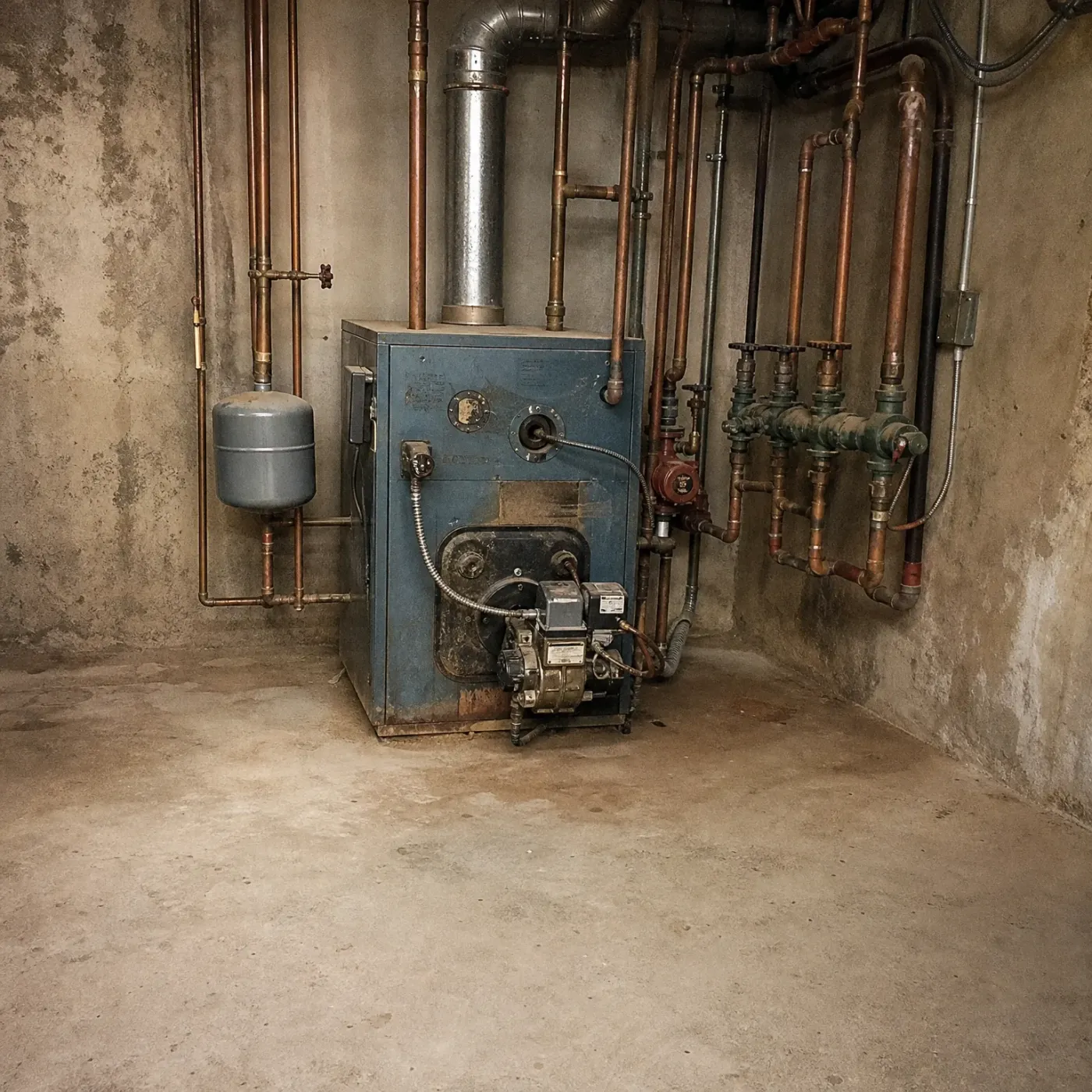

An older blue boiler with a burner unit stands in a concrete basement corner, connected to copper and steel piping, valves and a gray expansion tank on the wall.

Boiler on borrowed time

This one's old oil, tucked in a corner with a galvanized flue pipe and valves you'd need a torch to free. Nothing here is labeled as failed yet, but a system this aged is usually one stuck circulator or cracked fitting away from radiators that won't heat at all.

Winter nights average 21°F statewide

At 21°F overnight, a boiler that's cycling fine but leaving one radiator cold has to work through the night to make up for that room. A trapped air pocket or a stuck valve that's only an annoyance in October becomes the reason a bedroom stays near freezing by morning.

NOAA nClimDiv 1991-2020 county normals weighted by homes

A closed silver laptop and a ceramic mug of dark coffee sit on a wooden table in front of two chair backs, with a kitchen counter, tiled backsplash, wooden cutting boards, a vase of greenery and a potted plant by a window behind.

A cold radiator has a reason, and it can be found

Most of the time it's air stuck in the radiator, a valve that's seized, or a boiler that can't push water where it needs to go. Each of those has a fix, and none of them is a mystery once someone's hands are on the system. What matters is getting the right one diagnosed instead of guessing room by room through another Massachusetts winter.

Finding that person is usually its own chore: searching, calling a few places, explaining the same cold radiator three separate times, then weighing quotes that don't quite describe the same job. Here you skip that part. You're matched with a licensed contractor local to you, someone who works on boilers like yours all winter and knows what tends to fail in them, and you deal with just the one.

A gray upholstered sofa with a matching cushion sits beside a potted plant and a wooden table holding a small green plant in a stone pot, near a curtained window.
A woman with shoulder-length brown hair wearing a beige knit cardigan sits in a gray upholstered armchair near a window, looking off to the side with a slight smile, with bookshelves blurred in the background.
A woman with her hair in a bun holds a sleeping young child against her chest, both wrapped in a textured beige knit blanket on a sofa in a dimly lit room with a lamp, framed picture, and bookshelf behind them.

Describe it once

A cold radiator in a Massachusetts winter has a cause, whether it's air in the fins, a stuck valve, or a boiler losing pressure, and a local contractor who works on these systems all season knows where to check first. Finding one is the part you can skip. Instead of calling around and explaining the same cold bedroom to three different companies, you get matched with one licensed contractor near you who takes it from there.

Skip calling around

Only one pro gets your request, so you hear from one company.

You only hire the pro if you want to.


