







Why your boiler won't turn on in a Massachusetts winter

Tell a local repair pro what your boiler is doing.

Get my match

A boiler that won't fire up on a cold Massachusetts morning is usually stuck on ignition or down to no power getting where it needs to go. Check the thermostat first, then look at the boiler itself. A red light or a code on the display points to a failed ignition sequence, often a dirty or worn igniter, a bad flame sensor, or a pressure switch that thinks the vent is blocked. If the display is dark, the problem may be a tripped breaker, a blown fuse, or a switch along the gas line that got bumped. Low water pressure on the gauge will also stop most boilers cold, since they're built to shut down rather than run dry. None of this means the system is finished. It means something specific failed, and that part can be found and replaced so the heat comes back on.

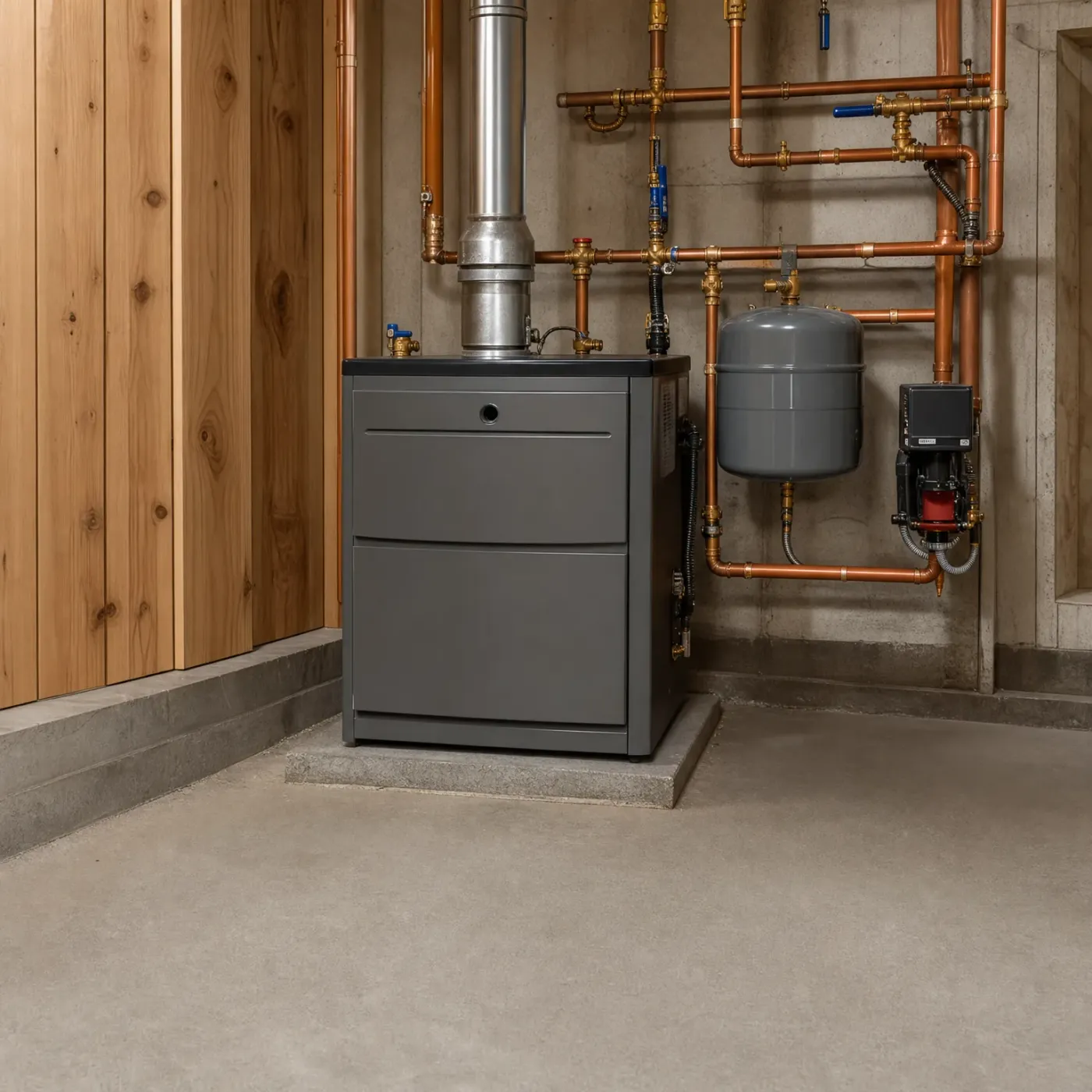
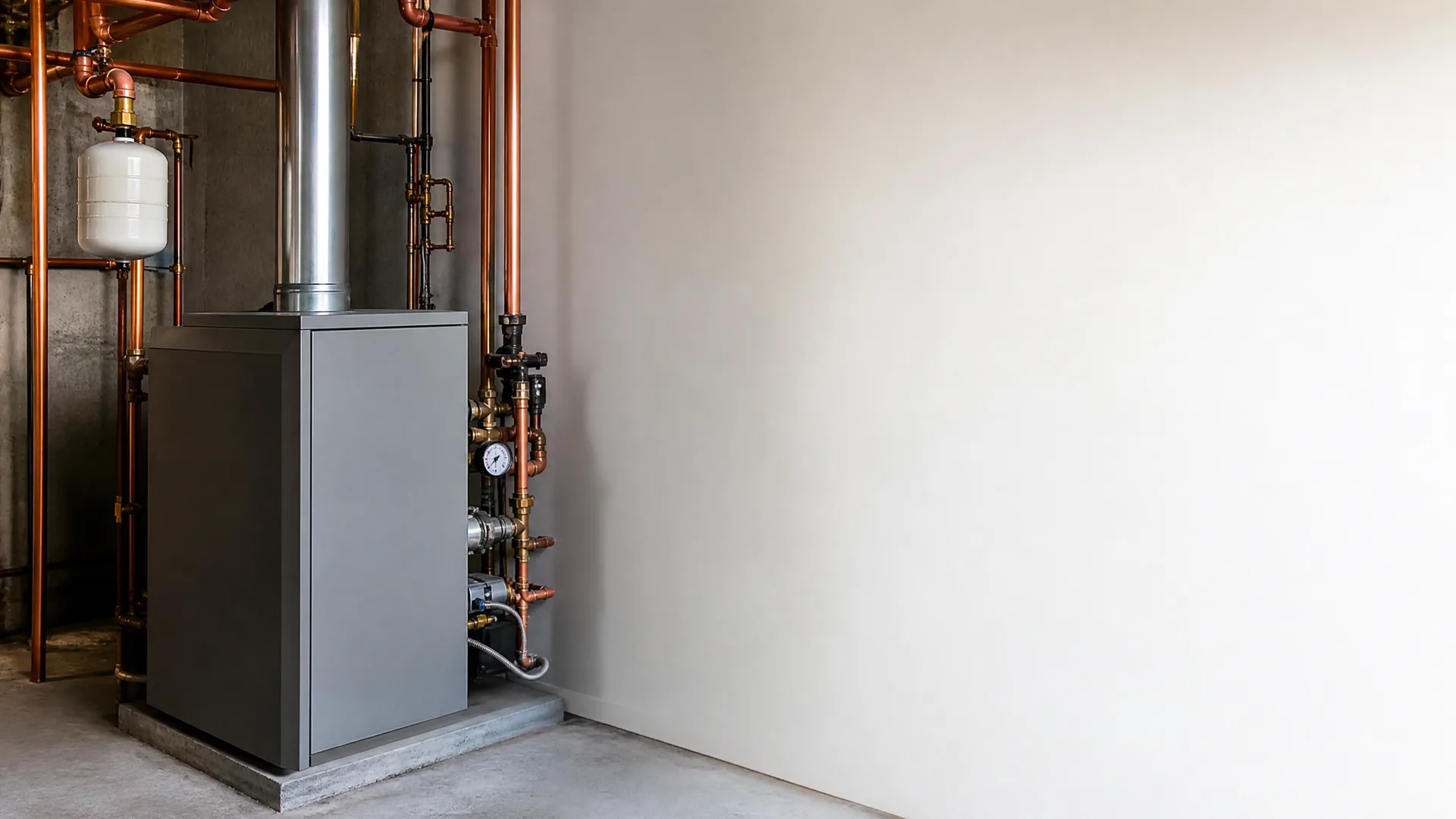
A grey floor-standing boiler with a metal flue and copper pipework, valves and a pressure gauge stands in the corner of a room with plain light walls and a concrete floor.

Why pilot and ignition fail first

Most boilers in Massachusetts run on gas, and gas boilers light with either a standing pilot or an electronic igniter. Cold air pulled in through a draft or a door left open can snuff a pilot light outright. An electronic igniter wears out over years of cycling on and off all winter, and once it can't spark reliably, the boiler won't fire even though gas is reaching the burner. Both failures look the same from the thermostat: no heat, no warning.

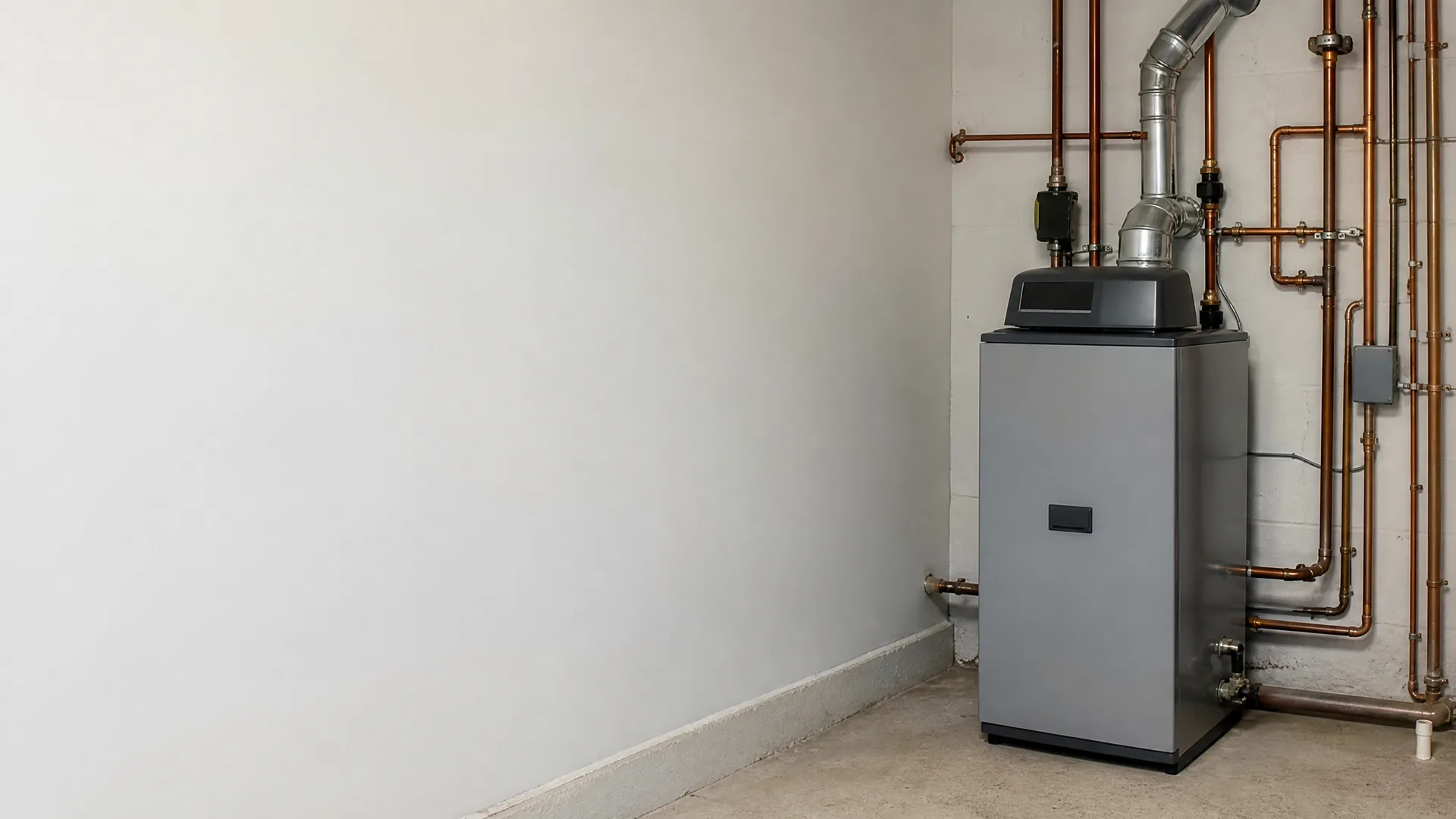
A gray floor-standing boiler with a metal flue pipe stands in the corner of a plain painted basement room, connected to copper pipes running along the wall.

Where the power actually goes out

A boiler needs power to run its control board, igniter and circulator pump, even though the heat itself comes from gas. If a breaker trips or a switch near the unit gets bumped off, the whole system goes dark. Massachusetts power costs are high enough that some homeowners shut off a boiler's switch by mistake while cutting other loads. Check the breaker panel and any emergency switch near the boiler or at the top of the basement stairs before assuming the unit itself has failed.

Is this just a cold house, or is the boiler actually out

Walk over and put a hand on the radiators or the baseboard covers. Cold means the boiler isn't firing, not that it's just working slower in the cold. Listen for it too. A boiler that's running hums or clicks faintly and you can feel warmth building at the pipes near the unit. If you hear nothing and nothing warms up after fifteen or twenty minutes, it's not catching up, it's off. Check the thermostat display is lit and set above room temperature, then go look at the boiler itself for a lit display, a red light, or silence where there should be a hum. The longer it sits off on a cold day, the faster pipes near outside walls or in an unheated basement corner can get cold enough to be a concern.

A woman with dark hair in a bun wearing a cream knit sweater sits on a gray sofa in a bright living room, looking off to the side.
A woman wrapped in a knit blanket sits on a gray sofa in a living room, looking toward a bright window with houseplants and an armchair in the background.
A woman in a gray cowl-neck sweater sits on a light sofa with cushions, smiling and looking to the side, with a kitchen and window visible behind her.
A woman with dark hair in a bun, wearing a light linen shirt, sits on a sofa and looks to the side, with a window, houseplants and a kitchen with pendant lights blurred behind her.

Call for help or wait it out

Call for repair

  • A boiler that won't fire at all leaves you with no heat and no hot water until someone opens it up and finds the failed part.
  • If the display is showing a code or a red light, that's a specific fault a licensed tech can read and act on right away.
  • Pilot and ignition problems get worse with repeated cold snaps, since the same draft or airflow issue will snuff the flame again.
  • A boiler stuck like this on a January morning in Massachusetts means pipes sitting cold for hours, and that risk only grows the longer it sits.
  • Getting it looked at now means whoever finds the issue can also tell you if it's a one-time fix or something that keeps coming back.

Wait and watch

  • If the thermostat was just set wrong or a breaker tripped, the boiler may come back on its own once that's corrected.
  • Waiting costs you heat in the house while you wait, and in a Massachusetts winter that's not a small thing.
  • A boiler that restarts after a reset but trips again within a day or two is telling you the underlying problem didn't go away.
  • Holding off makes sense only if you've already checked the thermostat and the power, and the boiler still won't respond.
  • The longer a no-heat boiler sits unresolved, the more chance pipes exposed to cold rooms have of giving you a second problem on top of the first.
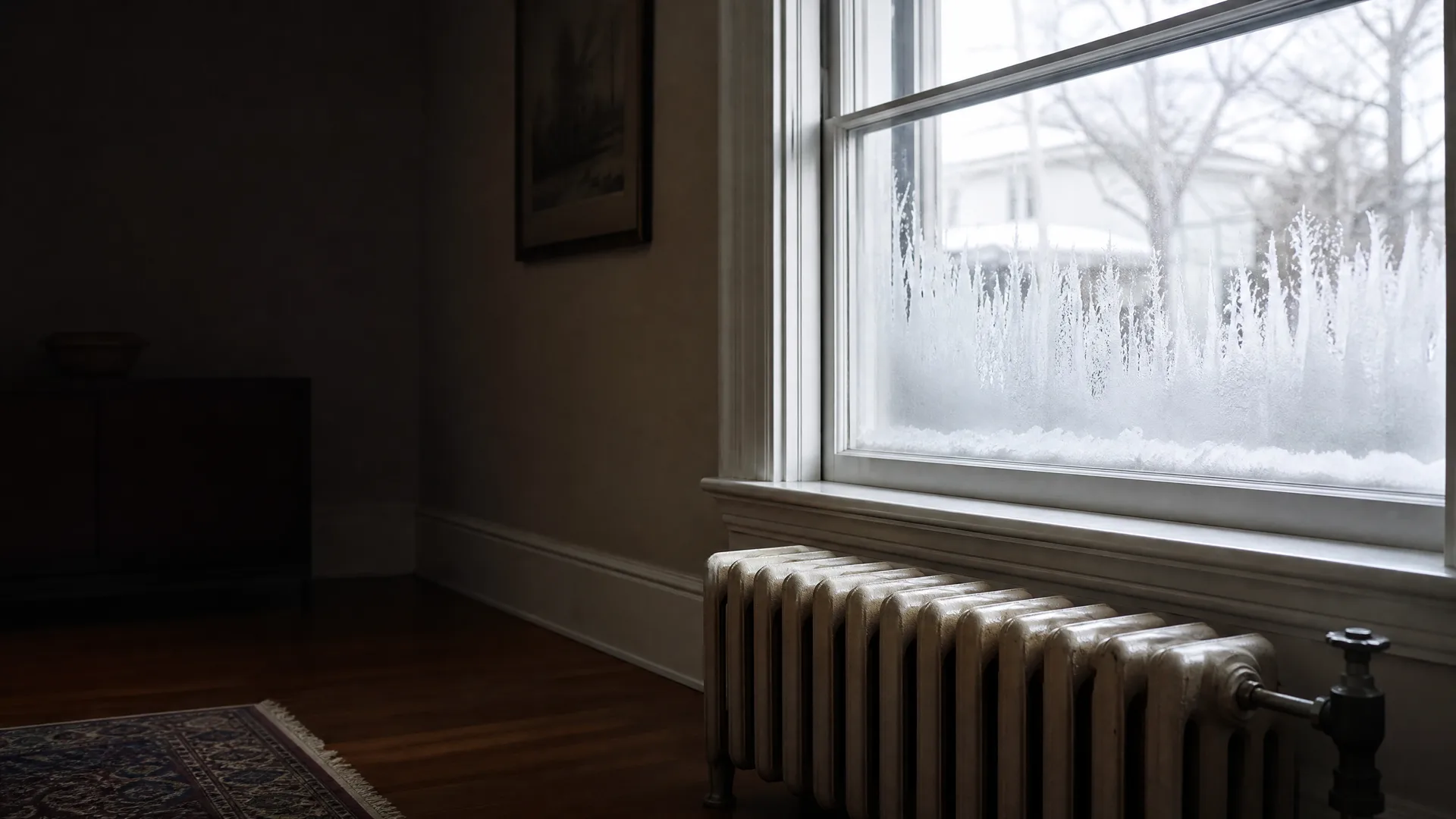
A cast-iron radiator with a valve sits beneath a frost-covered window in a dim room with dark wood floor, a patterned rug, a framed picture, and a low cabinet.

You're up before the rest of the house, same as always, and the living room is colder than the hallway. The radiator under the window hasn't ticked or knocked once this morning, and when you touch it, it's dead cold. Ice has formed on the inside of the glass, a thin white film across the bottom pane. Outside it's still dark, January dark, and the window shows you your own breath for a second before it fades. You pull your robe tighter and head for the thermostat, already knowing what you're going to find when you get there.

A local pro for your boiler repair

Send the request today and let a boiler pro reach out to you.

Asking costs nothing, and the choice to hire stays yours.

A boiler that's short cycling, kicking on and off every few minutes, is still working. It's losing the fight with something: a clogged filter, low water pressure, or a thermostat telling it to stop before the house is actually warm.

A boiler that won't start at all has already lost. Nothing is cycling because nothing is firing, and a house that relies on it for hot water loses that too. One of these you can watch and plan around. The other needs someone there today.

A smiling older woman with gray hair in a cream knit sweater stands in a dimly lit kitchen beside a window showing snow outside, with a round loaf of bread on the counter in the foreground.
A woman and a child wrapped together in a knitted gray blanket on a couch, with the child's head resting on her shoulder and a lit table lamp and houseplant in the background.

Reset the system before you call

Most boilers have a reset button, usually red, somewhere on the front panel or behind a small door. If the boiler locked out on a failed ignition attempt, pressing it once can get the burner to try again. Give it a few minutes to go through its startup sequence before you decide it didn't work. If it fires and runs, you're done for now. If it locks out a second time, stop pressing the button. Repeated resets won't fix whatever stopped it the first time, and some boilers need a longer wait between attempts or they'll lock out faster each try.

When resetting isn't the answer

A boiler that won't reset at all, or fires and dies again within a minute, is telling you the reset isn't the problem. Same if there's no click, no hum, nothing when you press it. That points to no power reaching the unit or a part that's actually failed, not just tripped. Flip the breaker for the boiler and see if it's on. Check that the switch on the unit itself, and the one that looks like a light switch at the top of the basement stairs, are both on. Past that point you're into parts a licensed tech needs to look at.

Winter nights average 21°F statewide

At 21°F, your boiler isn't cycling on and off a few times a night, it's running long stretches to hold the house. That's more hours for a weak igniter or a pressure problem to show itself and leave you with a cold house before you're even awake.

NOAA nClimDiv 1991-2020 county normals weighted by homes

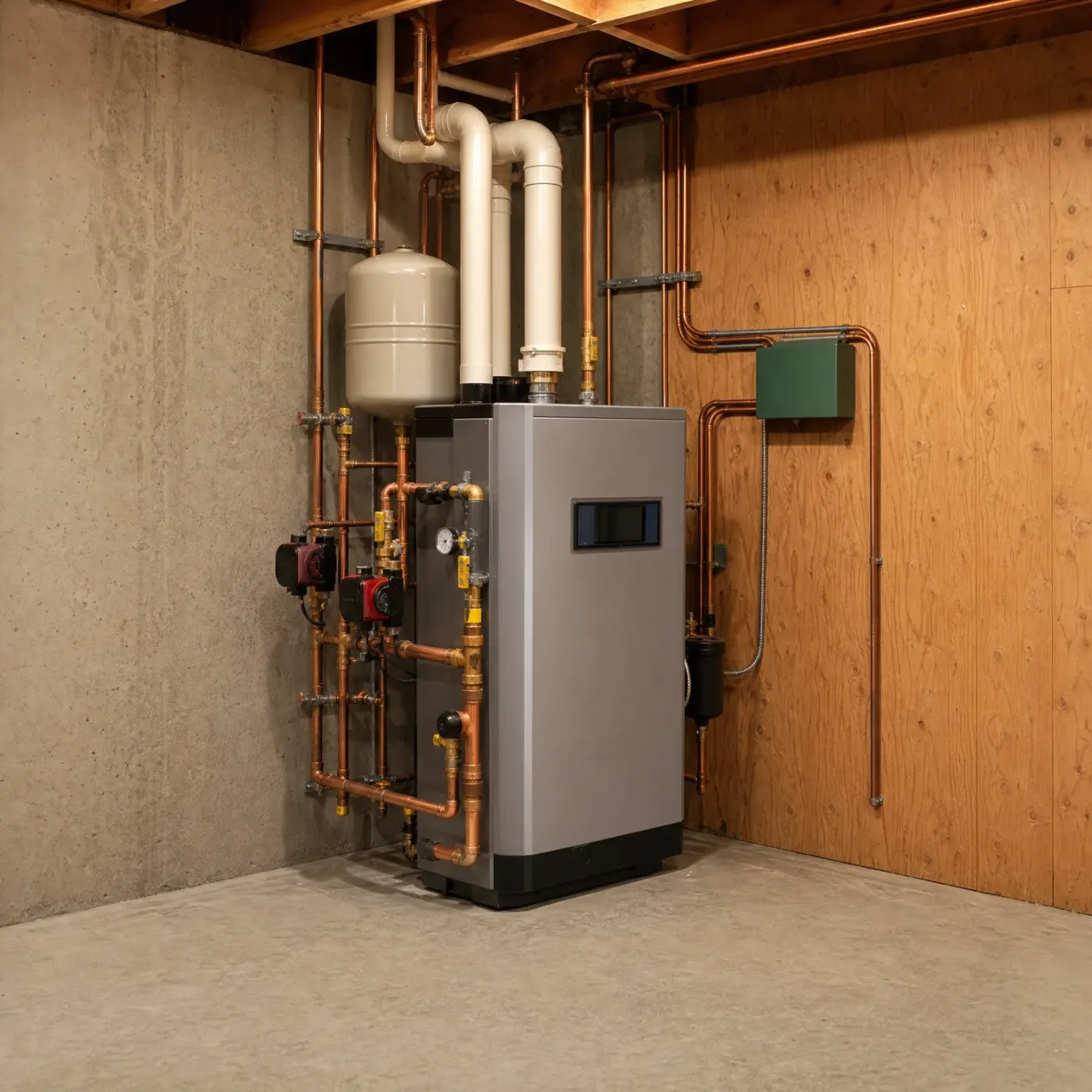
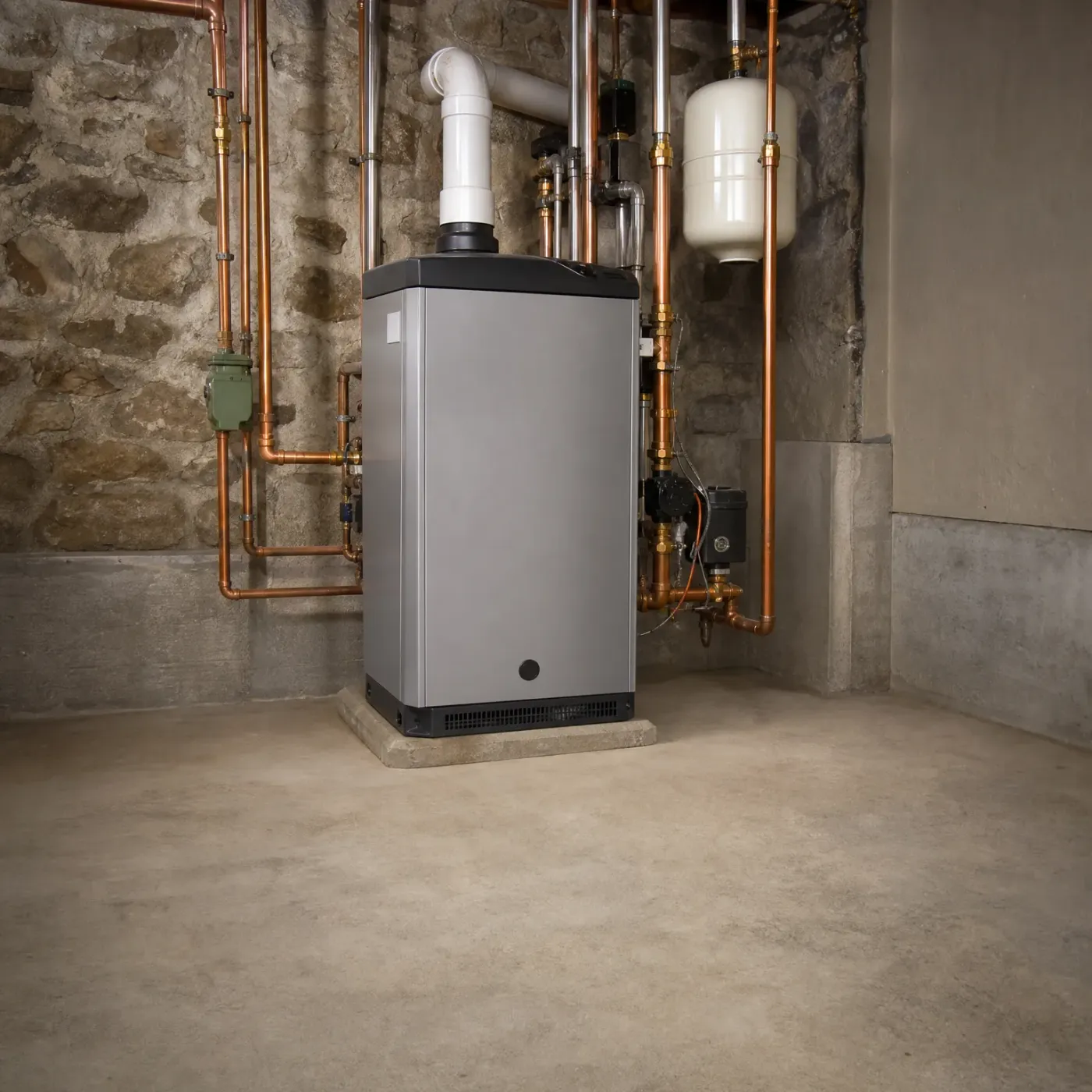
A gray floor-standing boiler on a concrete pad in a basement, connected to copper pipes, a white expansion tank, and a white PVC vent against a stone and concrete wall.
Copper pipes, a circulation pump, and an expansion tank hooked to a boiler venting out through white PVC: a setup still moving heat through the house.
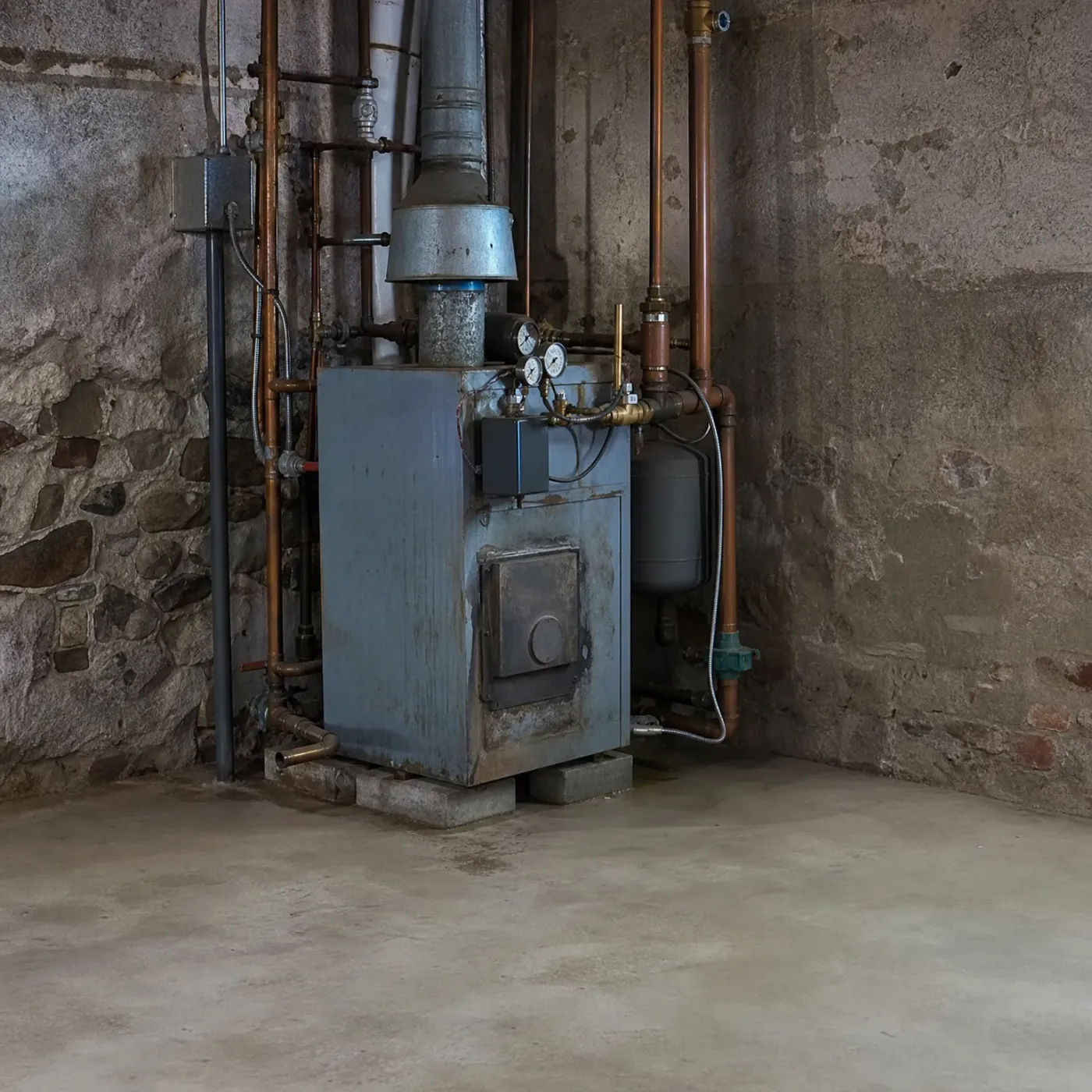
An older gray boiler with a metal flue, copper piping, pressure gauges and an expansion tank sits on concrete blocks in a basement corner with stone and concrete walls.
A cast-iron boiler with a wide flue pipe, pressure gauges, and valves gone quiet in the corner: this is the one not sending any heat upstairs.
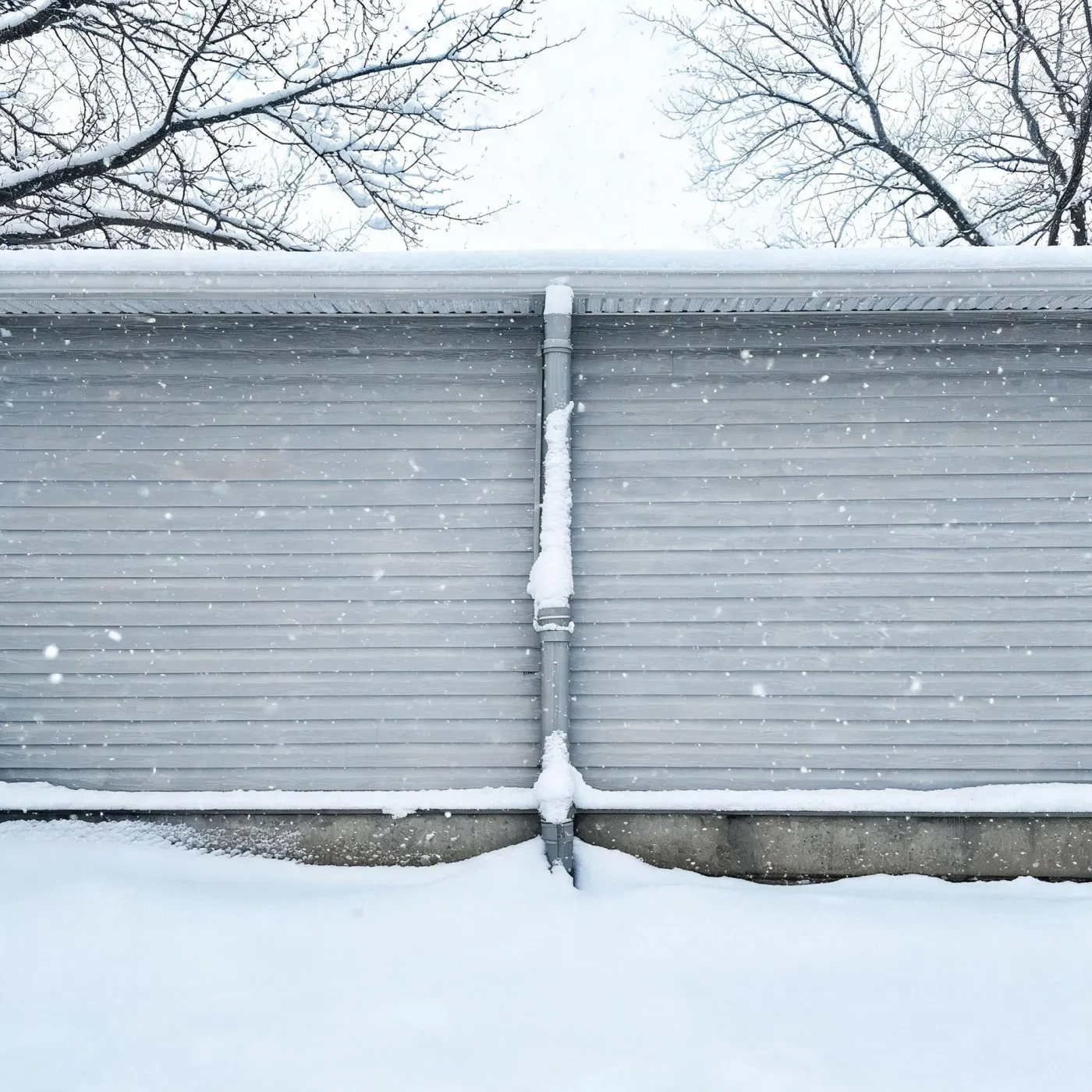
Exterior of a gray horizontal-lap-sided building with a snow-covered roof edge and a central downspout, seen during falling snow with deep snow on the ground and bare tree branches above.

Winter nights average 21°F statewide, according to NOAA climate data. That's cold enough that your boiler runs for long stretches rather than short bursts, holding the house instead of just topping it off. A part that's been slipping by, a weak igniter, a thermostat wire with a loose connection, has more time to fail outright on a night like this. You'll notice it as a chill that doesn't go away once you bump the thermostat, or radiators that stay cool no matter how long you wait. At that temperature there's little room for a boiler to limp along. It either keeps up with the cold or it doesn't, and you'll know which within the hour.

NOAA nClimDiv 1991-2020 county normals weighted by homes

Why does my boiler lock out instead of just trying again?

Pressing the reset button gets the boiler running again, so it's fair to wonder why it doesn't just keep trying on its own when it fails to light. Instead it shuts itself down completely and waits for someone to press a button. That seems like an odd way to handle a cold morning when the house needs heat right away.

Lockout is a safety limit, not a glitch

A gas boiler that fails to light gets a handful of tries, usually three, before the control board locks it out. That limit exists because an open gas valve with no flame is a real hazard, so the board stops feeding gas rather than keep trying blind. Pressing reset tells it to attempt ignition again, and if the igniter or flame sensor is actually bad, it'll fail the same way and lock out again. A boiler that locks out once and stays running after a reset probably had a one-off issue, maybe a draft that snuffed the flame. One that locks out repeatedly has a part that needs replacing, and a licensed tech can pull the fault code and know which one before opening the panel.

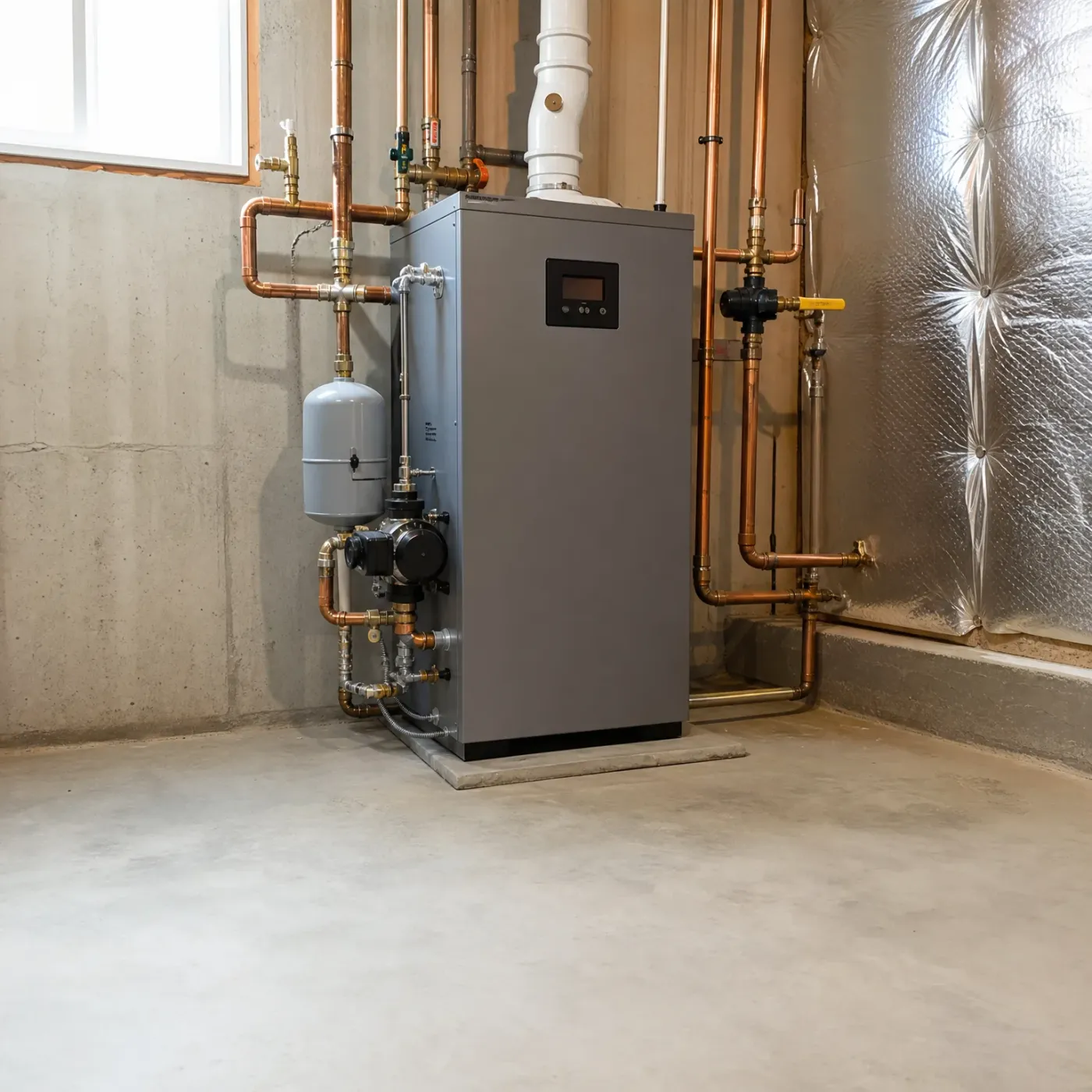
A gray boiler unit with a digital display stands on a concrete basement floor, connected to copper piping, a gas valve, a circulator pump and an expansion tank, beside a concrete wall and foil-faced insulation.

Still doing the job

This boiler is sending heat through copper pipes to a circulation pump and a small expansion tank, venting out through white PVC. The foil-faced panel on the wall is insulation, not a sign of anything wrong. A setup like this is still moving heat through the house, not fighting to.
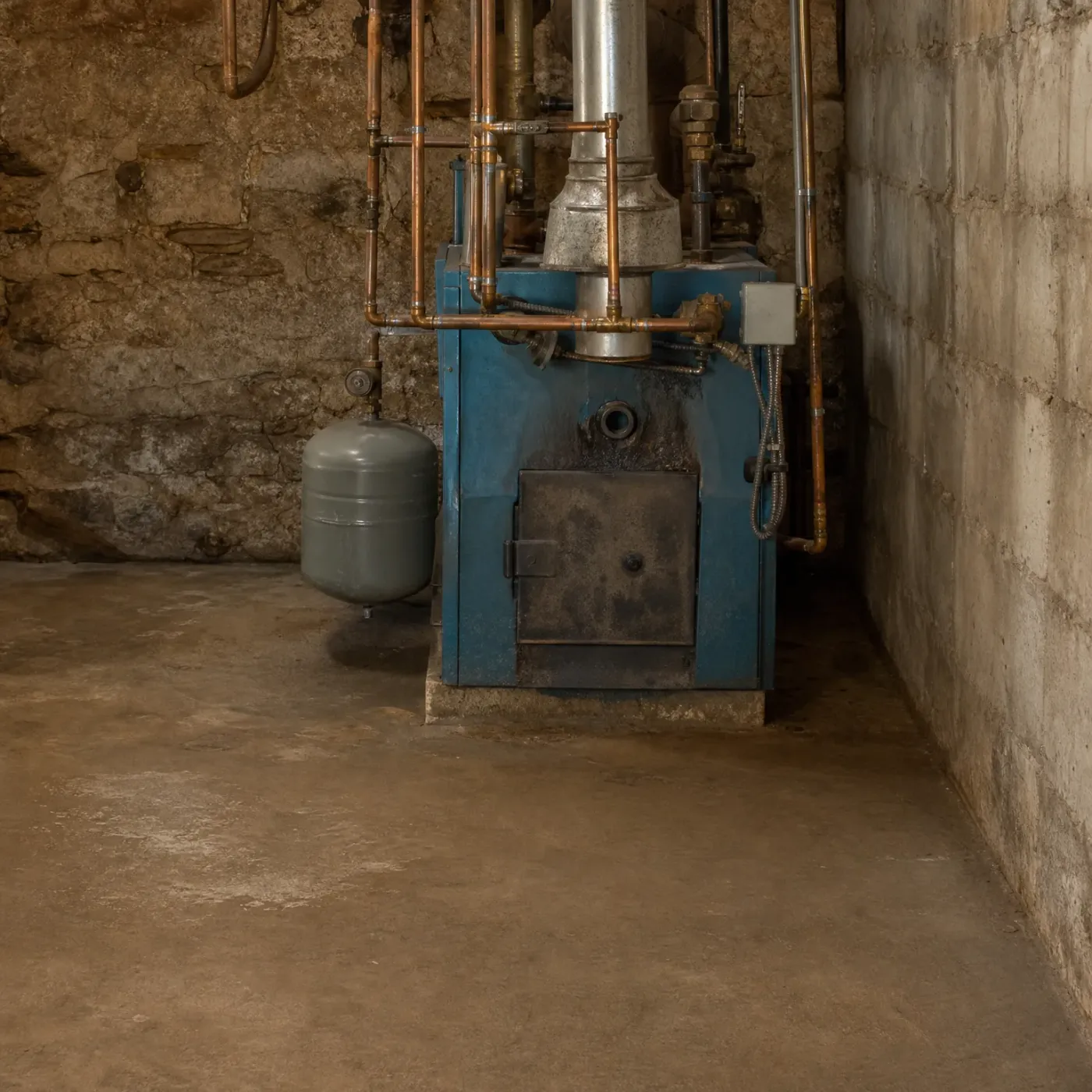
A blue cast-iron boiler with a metal flue pipe and copper piping stands against a stone and concrete block basement wall beside a gray expansion tank on a bare concrete floor.

Gone quiet

This is an old cast-iron boiler with a wide metal flue and a gray expansion tank sitting on the floor beside it. The access door shows rust and wear from years of use. When a boiler like this won't fire, that door is usually the first place a tech opens.

A gray boiler with a flue pipe and burner unit stands against a concrete block basement wall, surrounded by copper and steel piping, valves, and a gray expansion tank, on a bare concrete floor.
Before you get your boiler repair
A gray boiler on a concrete pad in a basement, with a metal flue pipe and copper piping, brass valves, a gray expansion tank and a circulator pump mounted on the concrete wall beside wood paneling.
After you get your boiler repair
A gray floor-standing boiler in a basement corner with copper piping, two red circulator pumps, a beige expansion tank, white PVC vent pipes, concrete and plywood walls.

Running the way it should

This boiler is moving heat through copper pipes to a circulator pump and an expansion tank, venting out through white PVC in the ceiling. The pressure gauge is holding steady and the panel isn't flashing anything. Nothing here needs a call yet.

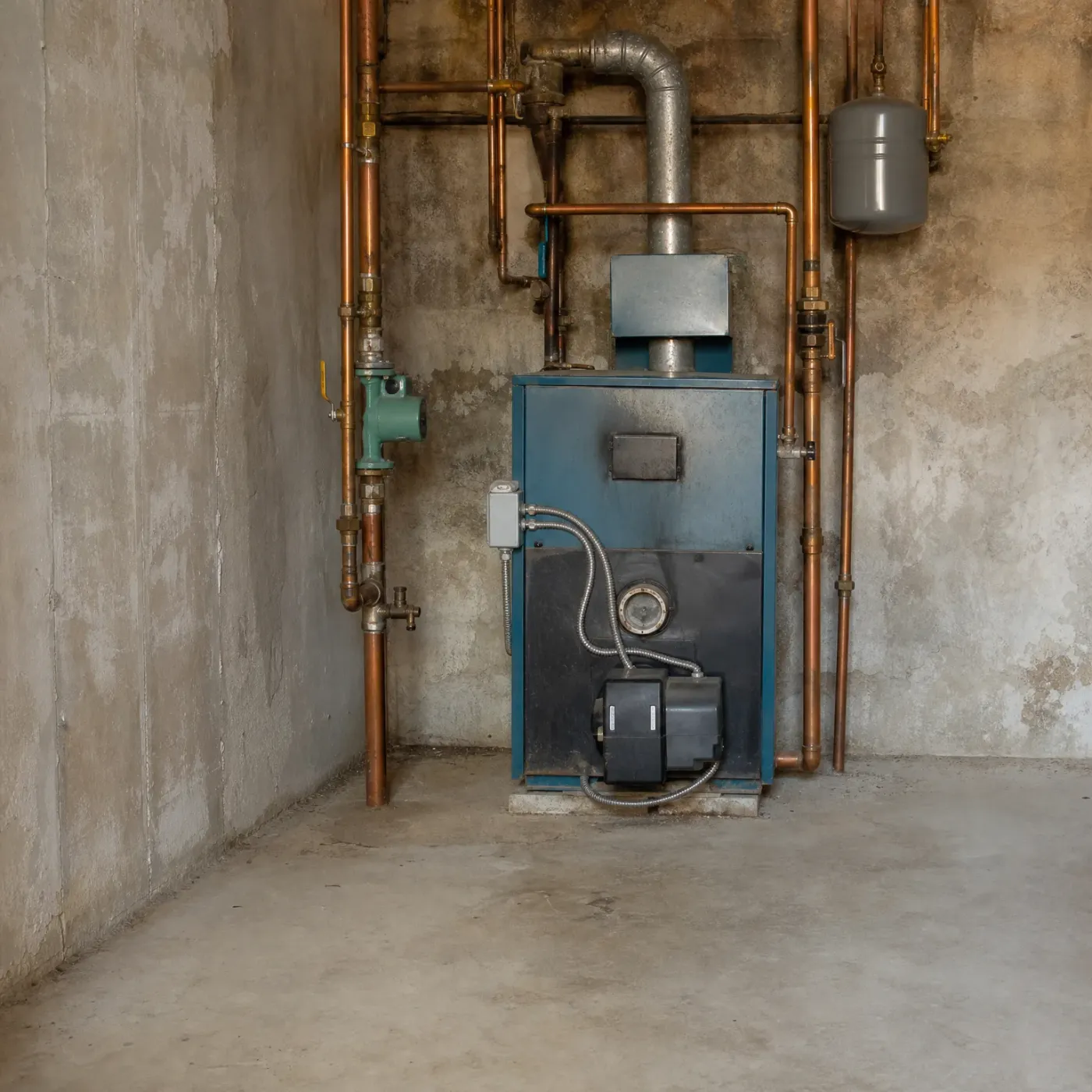
A blue residential boiler with a metal flue, pressure gauge and burner unit stands against a stained concrete basement wall, surrounded by copper pipes, a green circulator pump and a gray expansion tank.

Shut down and cold

This one sits quiet against the wall, its galvanized flue pipe and circulator pump doing nothing. The burner assembly behind that black housing isn't firing, so the copper pipes running off it aren't carrying any heat. A boiler in this state needs a tech to open it up and find the failed part.

A woman in a cream sweater and jeans stands in the open doorway of a white stucco house, holding the dark door, while a man in a dark quilted jacket seen from behind walks toward the entry past potted plants.

A cold boiler on a cold morning has a reason

Whatever sent your boiler down, it's one of a handful of things: a pilot that went out, an igniter that failed, a pressure problem, or power not reaching where it needs to. None of those fix themselves by waiting. The reset button might buy you an hour of heat, but if the same part is failing underneath, it'll lock out again, maybe tonight, maybe at 5am with the house at 21 degrees outside.

Once you send the form, you're done hunting for who can come look at it. A licensed contractor who handles this kind of repair gets your details and reaches out to you directly. You don't have to call around or sit on hold while the house gets colder. That part of it is off your plate now.

Interior corner with a beige sofa holding a dark green and a light cushion and a textured throw, a potted small-leaved tree beside a white-framed window, and a dark shallow bowl on a wooden coffee table in the foreground.
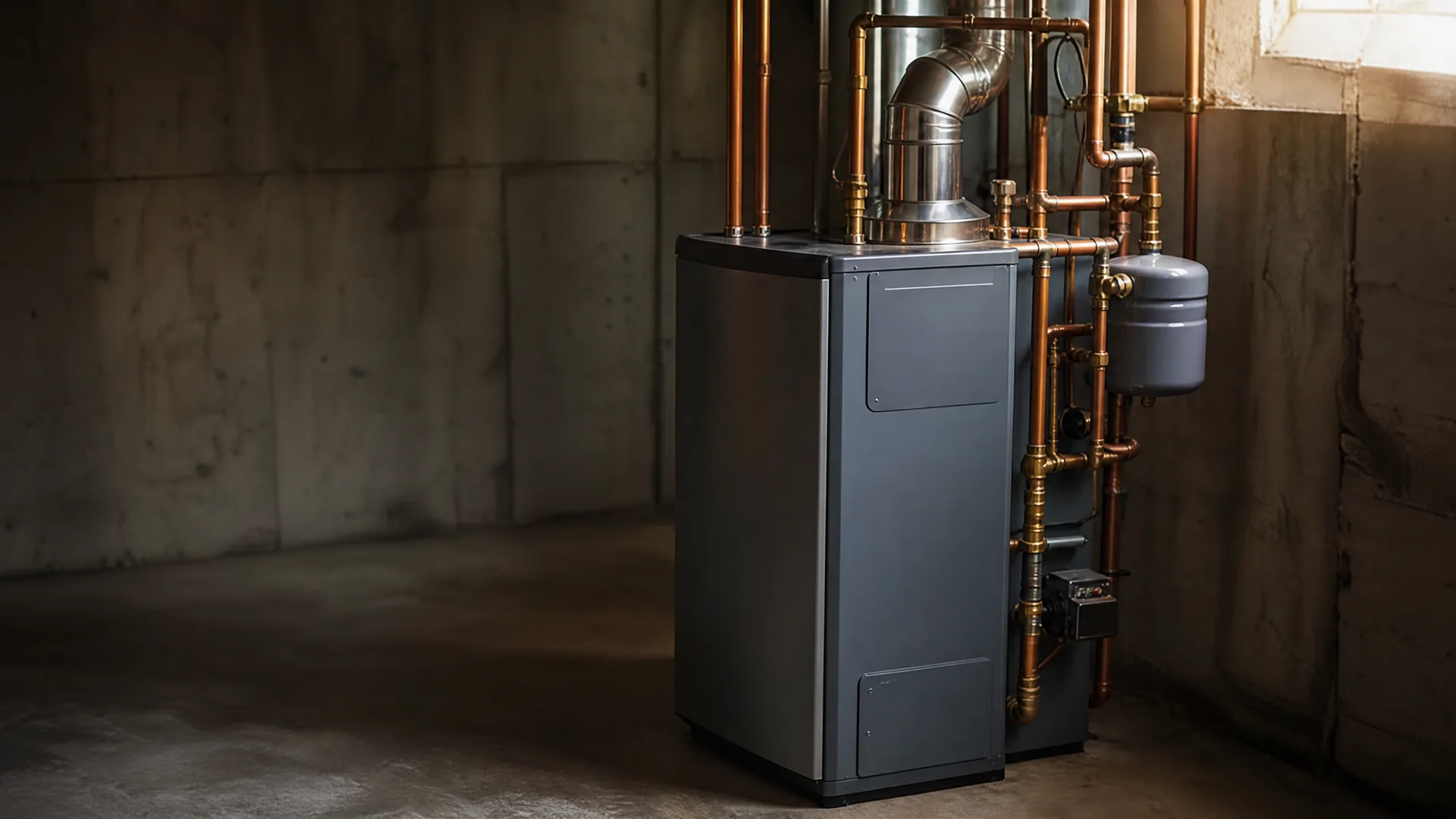
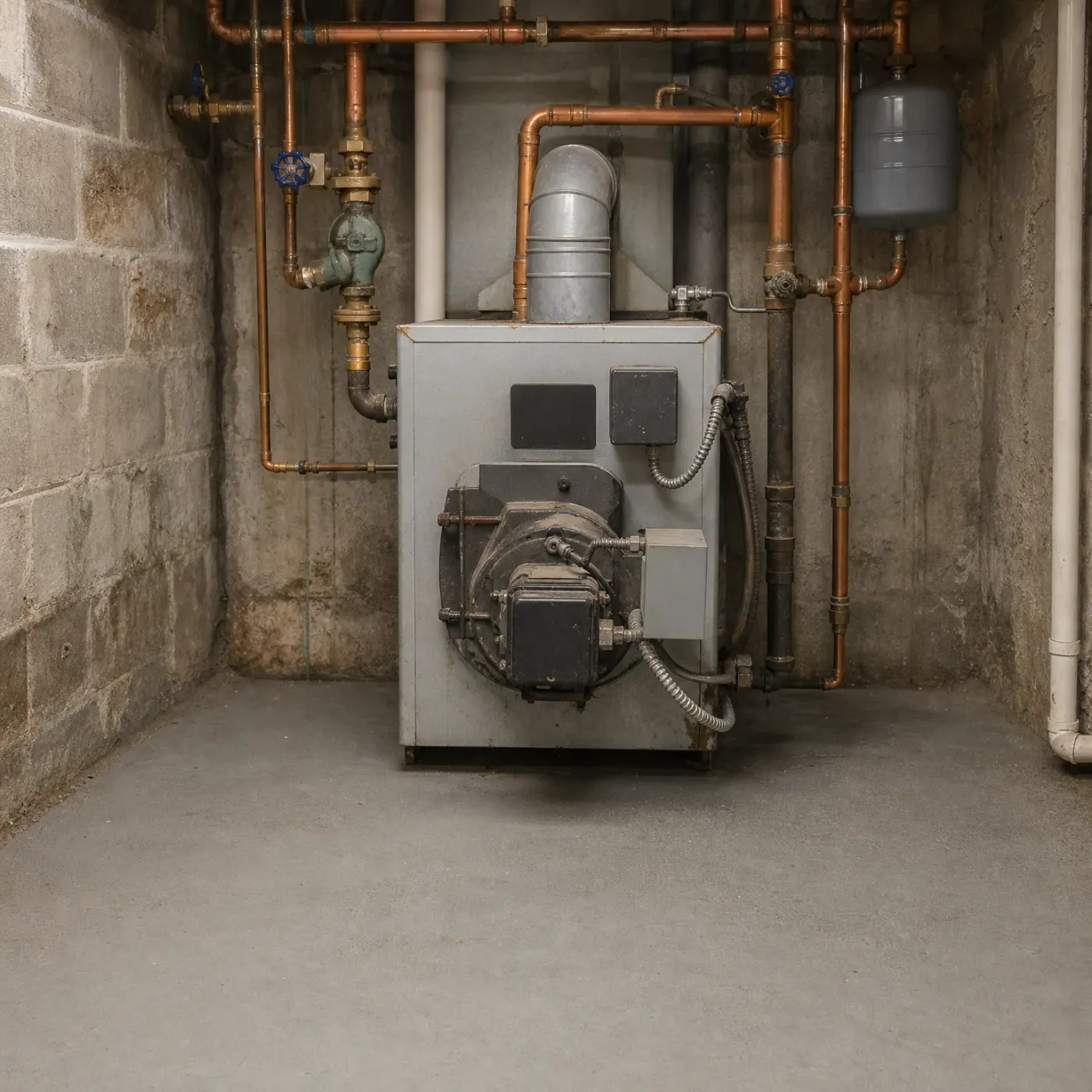
A gray boiler unit in a concrete-walled basement, connected to copper piping, a metal flue duct, and a wall-mounted expansion tank.

Get the right pro for your boiler

Step 1 of 3: Equipment