




Why your boiler makes a banging noise in Massachusetts

Tell a local repair pro what your boiler is doing.

Get my match

Why does my boiler make a banging noise?

A banging boiler is hard to ignore once the heat kicks on, especially with gas prices in Massachusetts pushing people to watch their system closer. You caught it early, which is the right move. The noise usually means something specific is going on inside the boiler, not a sign the whole unit is failing, but it does need a look before the weather turns colder.

It's almost always kettling, caused by limescale or sludge buildup on the heat exchanger

That banging, sometimes called kettling, happens when scale or sludge coats the heat exchanger and traps pockets of water against the hot metal. The water flashes to steam, and the steam bubbles collapsing make the banging you hear. It's more common in older cast iron boilers and in homes with harder water, since the minerals build up faster on the exchanger surface. Left alone, it stresses the heat exchanger and can shorten its life, which matters more here since gas heat runs most of the year and a failing boiler means a bigger bill to replace it than to repair it now. A flush or a cleaning usually clears it if caught early.

A gray floor-standing boiler on a concrete pad in a bare room, connected to copper pipes and an expansion tank against a plain light wall.

What the banging actually is

Water in a boiler turns to steam faster than it can rise through the system when there's sediment sitting on the bottom of the tank. Steam pockets form under that layer, collapse, and the sound travels through the pipes as a bang or a knock. It's called kettling, and it gets louder as more sediment builds up. The noise isn't the pipes themselves moving. It's trapped steam finding a way out.

A gray boiler on a concrete pad in a plain room, connected to copper and black pipes and a stainless steel flue.

Why it matters in winter

A boiler running hard through a Massachusetts winter has to heat water over and over, all day, for months. Sediment builds up faster the more the burner cycles, so a system that's banging in December is often working harder than it should to push heat through a tank that's partly insulated by scale. Left alone, that extra strain shows up on the gas bill before it shows up as a bigger repair.

Flush It Now or Let It Run

Sediment flush

  • A contractor drains the tank and flushes the sediment layer off the bottom, which is what's causing the kettling sound in the first place.
  • This works best when the buildup is still loose rather than baked on, so catching it early like you have matters.
  • It's a shorter visit than most boiler repairs since the tank itself usually isn't damaged yet.
  • If the banging started recently, a flush often clears it without touching any other part of the system.
  • Hard water areas of Massachusetts tend to build sediment faster, so this may need repeating down the line.

Leave it running

  • The banging won't fix itself, since the sediment layer that's causing it only gets thicker with every heating cycle.
  • Steam pockets hitting a thicker layer of sediment hit harder, so the noise usually gets worse, not better.
  • A sediment layer insulates the water from the burner, making the boiler work longer to heat the same amount of water.
  • With Massachusetts power costs among the highest in the country, that extra run time shows up on the bill.
  • Prolonged overheating at the bottom of the tank from trapped sediment can stress the metal over a full winter of use.
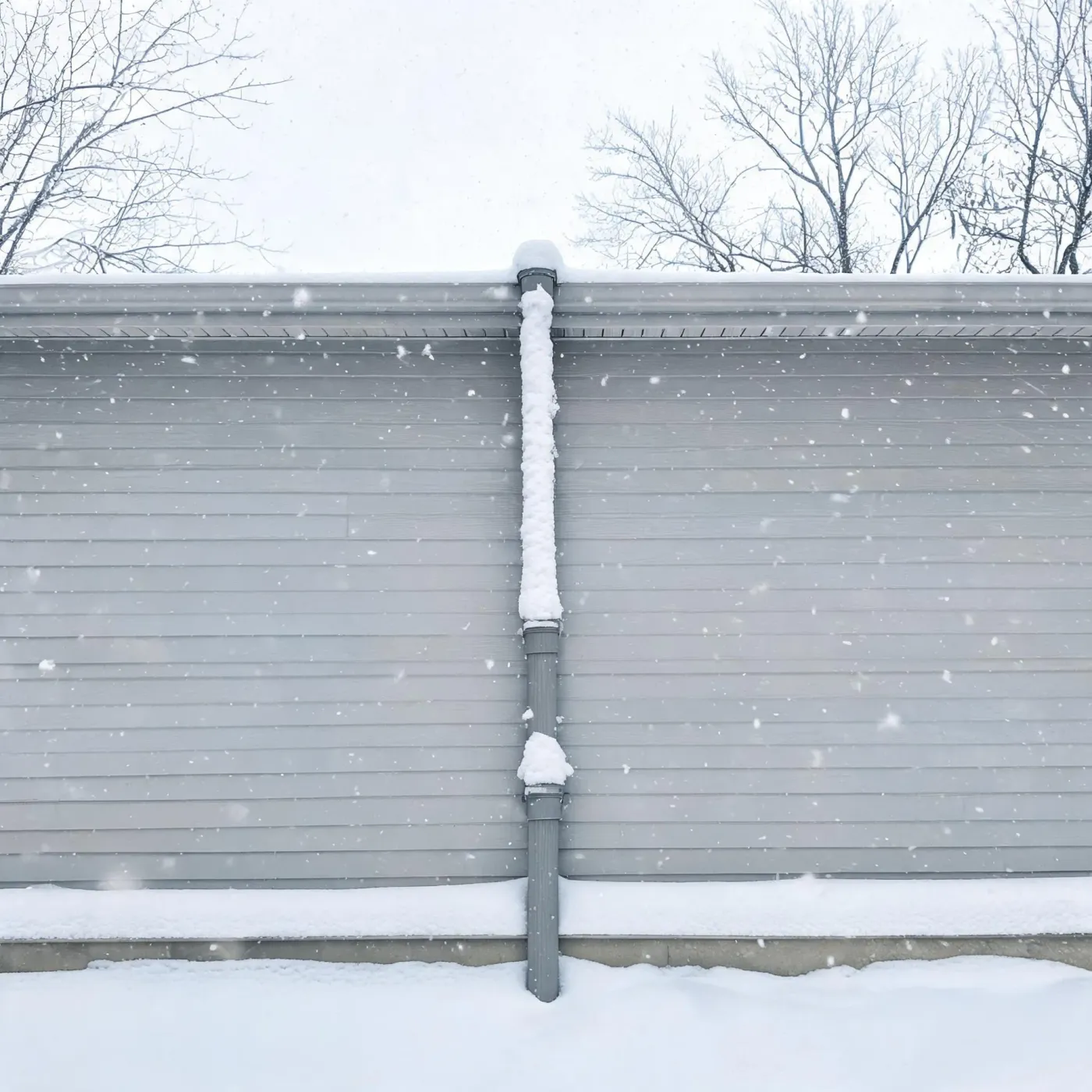
Gray horizontal lap siding on a house exterior with a snow-encrusted downspout running from the gutter to the ground, bare trees behind the roofline, and snow falling.

Winter nights average 21°F statewide, according to NOAA climate data. That's cold enough that your boiler is running long stretches overnight to hold the house steady, and a long run is exactly when sediment at the bottom of the tank gets the most heat under it. More heat means more steam pockets forming and collapsing, so the banging you're hearing tends to get louder as the night goes on and the system keeps cycling. If you've noticed it's worse after midnight than it is in the evening, that's why. Catching it now, before the coldest stretch of the season settles in, means less chance of the sediment baking on and turning a quick flush into a bigger job.

NOAA nClimDiv 1991-2020 county normals weighted by homes

A boiler pro near you

Send the request today and let a boiler pro reach out to you.

There's no charge for the request.

What you'll hear from the house

The banging usually shows up overnight, when the boiler is running its longest stretch to keep the house warm. It can carry through the floor if your pipes run under a bedroom, or just sound like it's coming from the basement. Some nights it's a few knocks when the burner first fires. Other nights, especially the coldest ones, it keeps up for longer because the boiler is working harder and the sediment layer is getting more heat under it. It's not damaging anything that night, but it's telling you the tank has buildup that isn't going away on its own.


What happens if you wait

Sediment doesn't flush itself out, and a layer that's loose now bakes harder onto the tank the longer the boiler keeps firing on top of it. That makes the eventual flush take more work, and in the meantime the boiler is running less efficiently with that insulating layer between the burner and the water. With what gas and electric rates run in Massachusetts, a boiler working harder than it needs to shows up on the bill. Left long enough, the overheating under that layer can stress the tank itself, not just the pipes making noise.

A bearded man in a plaid flannel shirt stands indoors looking out a frost-covered window, with a steaming dark blue mug on the wooden sill and snow-covered trees outside.
A man in a blue T-shirt sits on a light gray sofa, laughing while looking at an open laptop in the foreground, with a framed picture, lamp and potted plant behind him.

The banging is sediment at the bottom of the tank, turning the water to steam faster than it can escape. A contractor can flush that layer out before it bakes on hard and starts costing you more to heat the house through a Massachusetts winter. You noticed the sound early and that's the part that matters most. Once you send the form, you're done hunting for who to call. That job moves off your plate and onto someone who flushes sediment out of boilers for a living. You don't need to track down reviews or call around to three different companies. The match happens, the contractor reaches out, and you go back to not thinking about your boiler until it's time to let someone look at it. That's the whole point of catching this now instead of waiting for the banging to turn into something that leaves you without heat on a cold night.

A modern two-story house with dark siding and stone base at dusk, with lit soffit lights, a path of large rectangular pavers set in dark gravel, planting beds, a lawn, and an orange and blue sunset sky above distant trees and water.

Boiler Repair

A local pro for your boiler repair

Step 1 of 3: Equipment
  • A ceramic vase holding leafy green branches and a shallow wooden bowl sit on a wooden window ledge beside a sunlit window, with a cream upholstered chair and knit throw in the foreground.
    • Describe your boiler job, and a local pro who handles it gets in touch.
  • Sunlit living room corner with a beige upholstered sofa, a round wooden side table holding a ceramic vase of olive branches, linen curtains at a window, a floor vent in the baseboard, and a woven jute rug on hardwood flooring.
    • Once you send the form, finding a pro is off your list.
    • After you send the request, you're done searching.
  • A wooden side table with a single drawer holds a shallow carved wood bowl and a white ceramic vase of green eucalyptus stems, beside a window and an upholstered chair draped with a cream knit throw.
    • Fill out one short form instead of calling around.
    • Explain the job once and skip repeating it on every call.
  • Corner of a house with horizontal siding, a white-framed window and stone veneer base, beside a covered entry with wooden steps, a potted plant, mulched beds of green shrubs and a flagstone path.
    • Your request stays with one local pro.
    • Your request goes to one pro, not a list of companies.




