Why your boiler keeps turning off in Massachusetts
Step 1 of 3: Equipment
Why does my boiler keep shutting off in the middle of a heating cycle?
You turn the heat on and it runs for a few minutes, then quits before the house warms up. A little later it kicks back on, or it doesn't, and you're left checking the thermostat and the boiler itself wondering which one is lying to you. With gas prices what they are in Massachusetts, a boiler that short-cycles all winter is also a boiler running up your bill for heat you're not getting.
Usually a safety switch is cutting power before the boiler overheats or runs dry
A boiler that shuts off mid-cycle is almost always doing what it's built to do. Low water pressure, a clogged flue, a dirty flame sensor or a failing limit switch all tell the boiler something is wrong, so it cuts out rather than keep running. Some of these, like pressure, you can check yourself on the gauge. Others, like a limit switch or a cracked heat exchanger, need a gas-fired boiler technician to pin down. Left alone, a boiler that keeps tripping off tends to get worse, not better, especially once nights turn cold and it's running for hours at a stretch. Catching this early, before a hard freeze, usually means a smaller fix.
A boiler that keeps quitting on you costs more than comfort
Every time the boiler shuts off early, it fires back up to make up the difference. In a Massachusetts winter, that's a lot of short cycles stacked on top of each other, and each one pulls power or gas to get the burner going again. With electricity rates here among the highest in the country, that adds up fast on a bill that's already high from a New England winter.
There's also the risk of waiting it out. A boiler that short cycles is telling you something is already wrong, whether that's a pressure problem, a clogged line, or a sensor that's failing. Left alone, a small issue like that tends to become a bigger one, and a bigger one can mean no heat on a night you need it. Instead of calling around to find someone who works on boilers, you can get matched with a contractor who handles this kind of repair and have them reach out to you directly.
1
A safety sensor checks water temperature, pressure, or flame before allowing the burner to run.
2
If any reading falls outside its limit, the control board cuts power to the burner.
3
The low water cutoff shuts the boiler down if water level drops too far.
4
A dirty flame sensor or failing igniter makes the burner shut off soon after lighting.
What are you noticing around the house right now
You might hear the burner click on and off more than it used to, sometimes a few times an hour. Rooms that used to heat evenly now have cold spots, or the whole house takes longer to warm up than it should. The thermostat might say the heat is running while the radiators or baseboards stay lukewarm. Some homeowners notice a faint burning smell near the boiler, or a puddle on the floor underneath it. Others just notice the gas bill climbing even though the house feels the same or colder. If the boiler keeps shutting off and starting back up all winter, the burner and the ignition parts are working harder than they're built for, and that wear doesn't reverse itself once the weather warms up.
Running the way it should
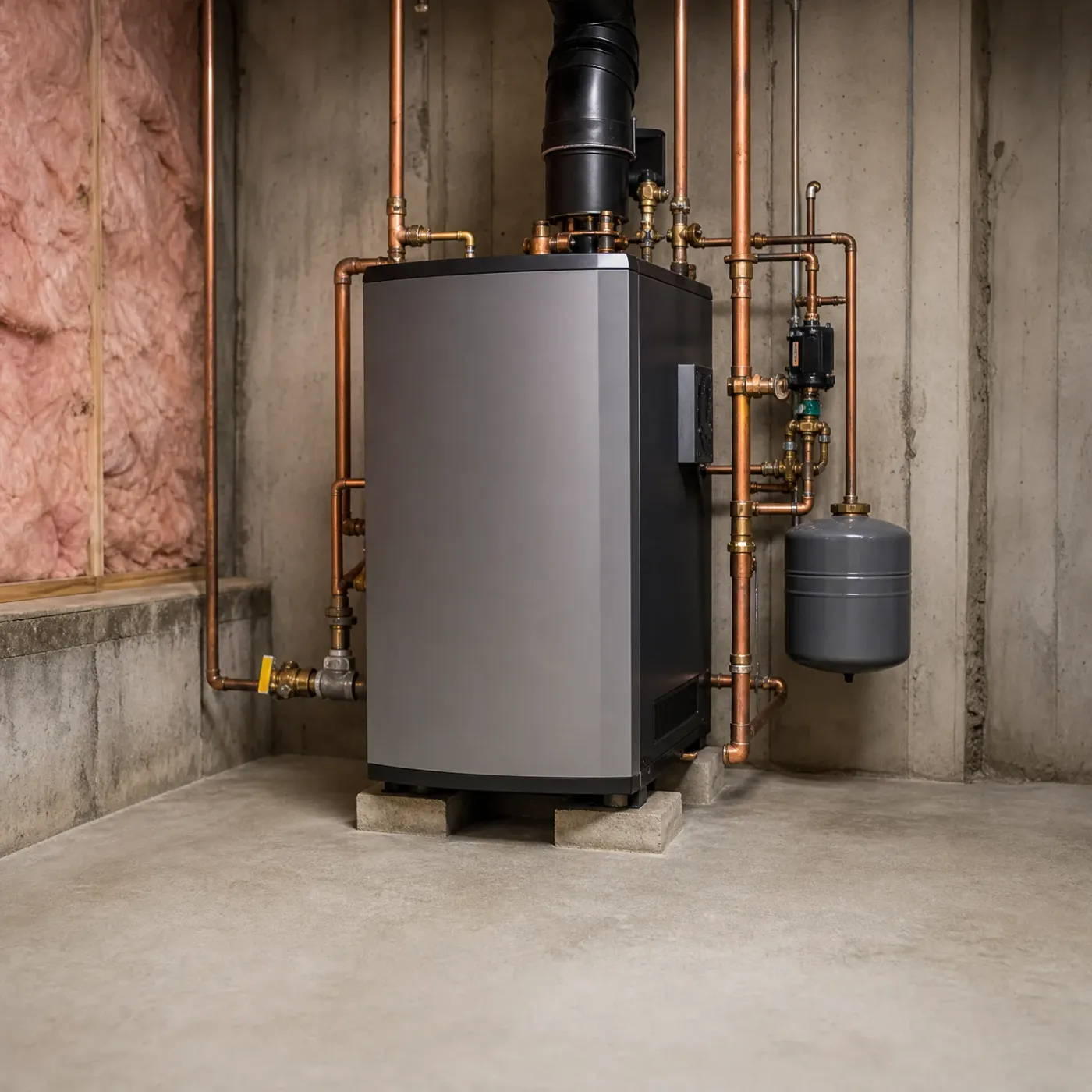
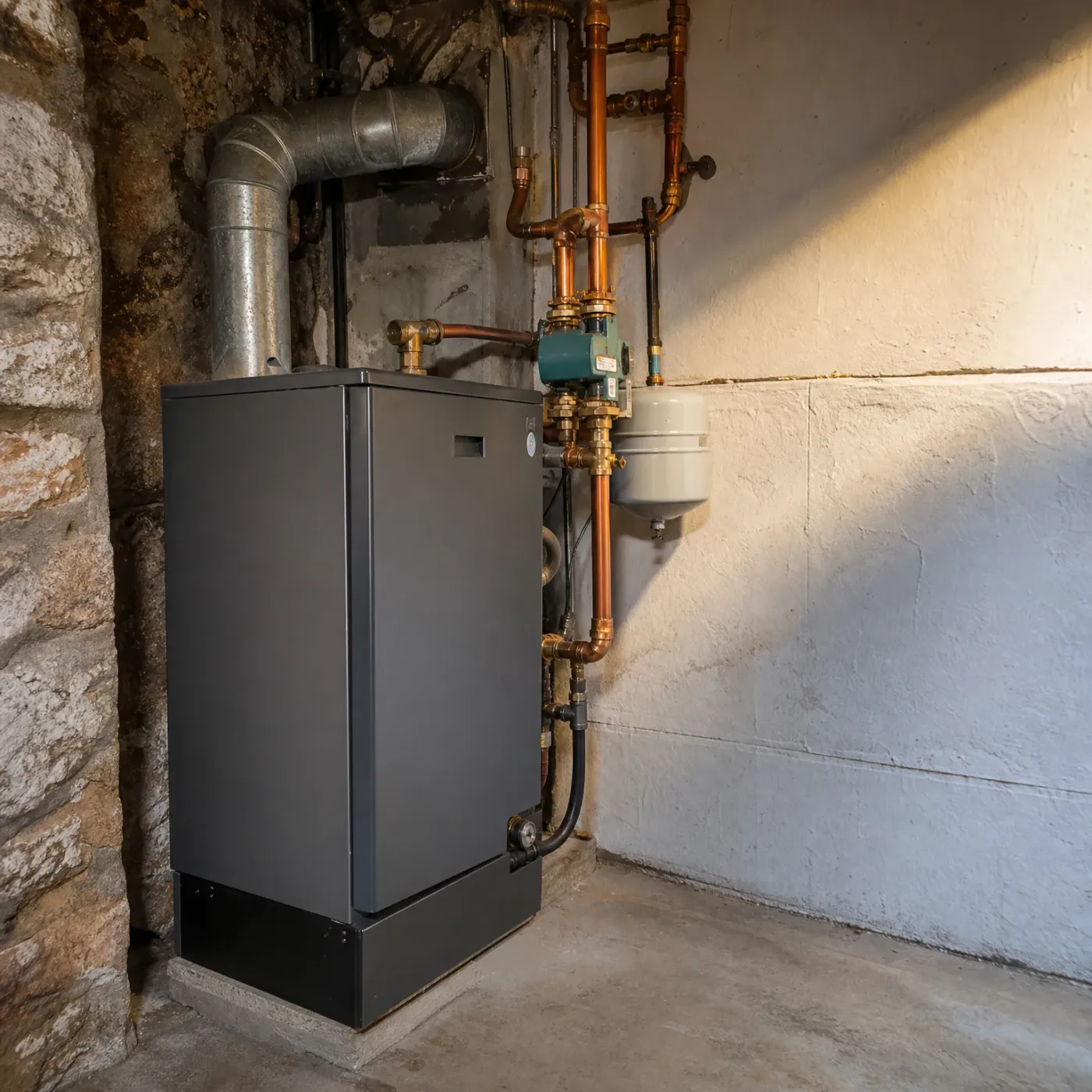
The burner fires, the circulator pump pushes water through the copper lines, and the system holds a steady cycle. Pressure stays where the gauge says it should, and the expansion tank is doing its job quietly in the background.
Shutting off before its time
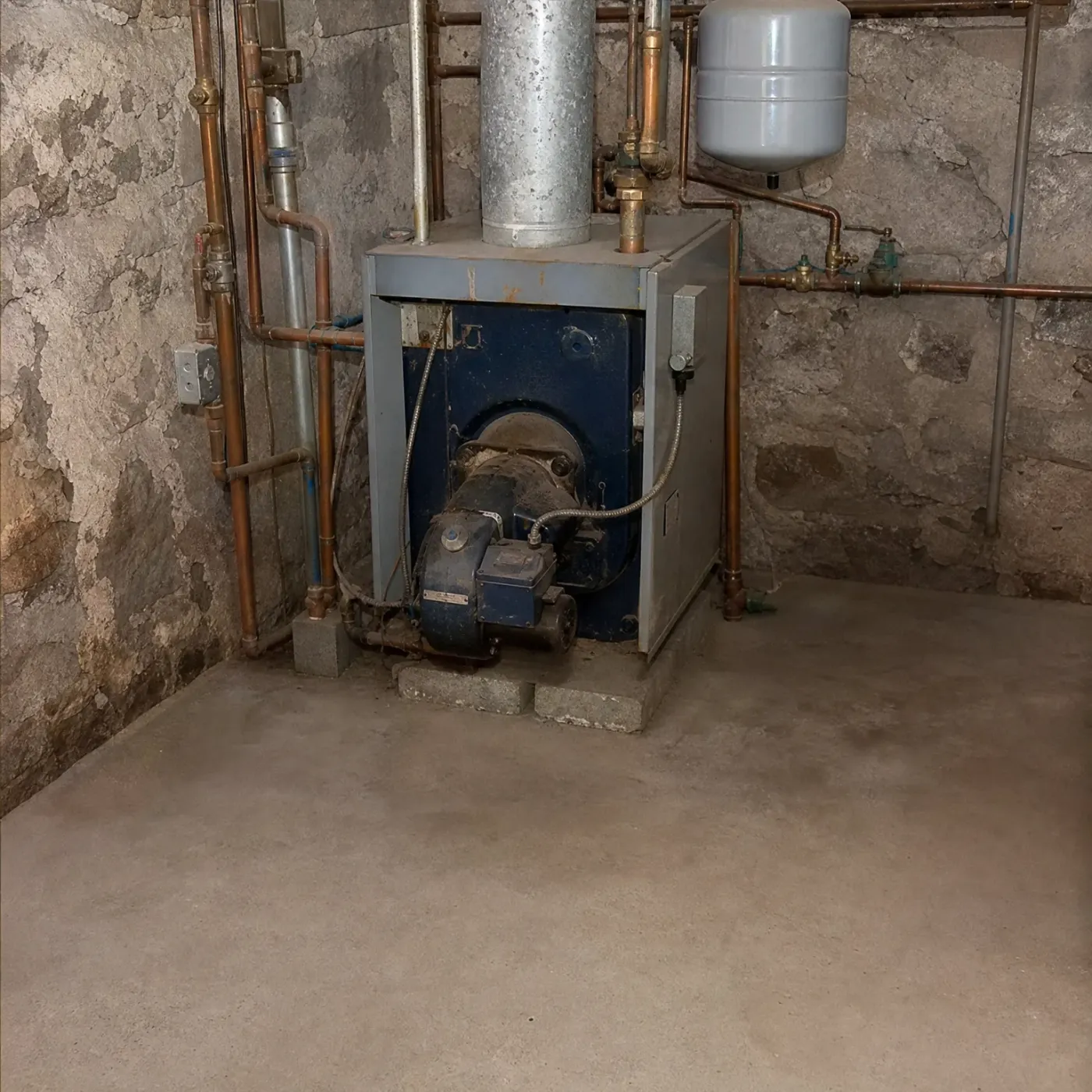
This boiler sits on blocks in a stone-walled basement, further from the floor drain and harder to service than one on a concrete pad. A galvanized flue pipe like this one corrodes over the years, and that affects how safely the unit vents.
A boiler that keeps cutting out doesn't fix itself by waiting it out, and in a Massachusetts winter you don't have the days to spare testing that theory. Short cycling like this usually comes down to a sensor reading something it doesn't like, a pressure problem, or a part wearing past where it should, and telling which one it is means getting hands on the system. That's not something you work out from the thermostat. What it usually takes is calling a few places, explaining the clicking and the cold rooms each time, then sitting on quotes trying to guess who actually knows boilers and who's guessing along with you. With gas prices and electric rates both running high here, a boiler that short cycles all winter is pulling power for heat you're not getting. The faster someone who knows this equipment gets a look at it, the sooner you stop losing money to a system that's working against itself.
Why a sensor shuts it down fast
The limit switches on a boiler are built to err on the side of caution. A flame sensor that doesn't see the right signal, or a pressure switch that reads low, cuts power to the burner in a second or two, not a minute. That's by design. The board isn't trying to figure out if the reading is close enough. It trusts the sensor and shuts down rather than let a boiler run on bad information. That's why a boiler can seem fine one cycle and quit mid-burn the next, with no warning in between.
What a pressure problem actually looks like
Most residential boilers want to sit between 12 and 15 psi when cold. Below that, the low water cutoff can trip even if there's plenty of water in the system, because the pressure reading is what it's checking, not the actual water level. Above that range, the pressure relief valve may open and let water out, which then drops the pressure further on the next cycle. Either direction pushes the system toward another shutdown, and the gauge on the boiler will tell you which one you're dealing with.
Before you get your boiler repairAfter you get your boiler repair
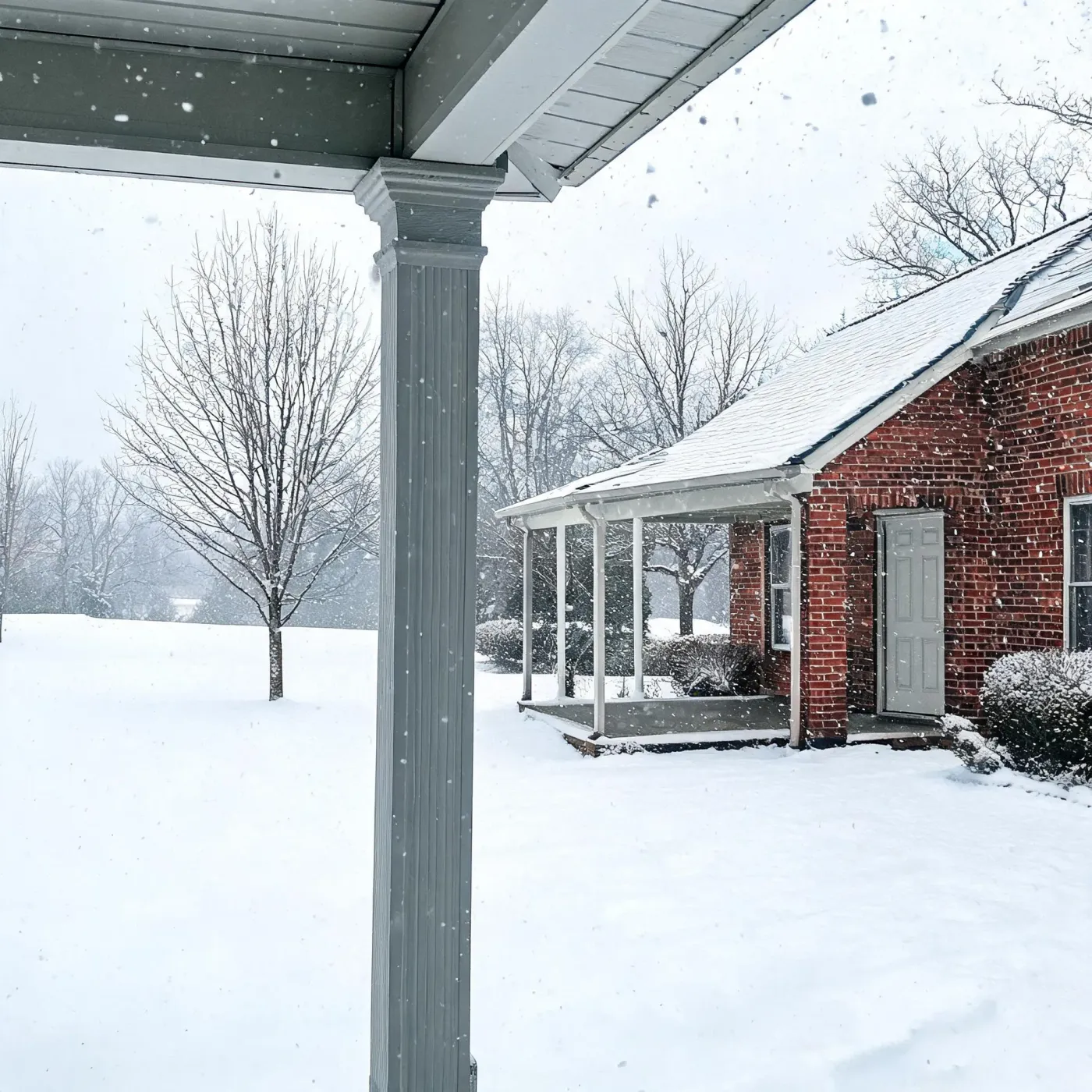
Winter nights average 21°F statewide, according to NOAA climate data, and that's the stretch where short cycling shows up worst. Your boiler has to make up more ground every time it shuts off early, so it fires back up sooner and runs more cycles a night to hold the temperature. If a limit switch is cutting power on a marginal reading, cold nights are when it trips most, because the system is working harder to begin with. You'll likely notice it most around 2 or 3 in the morning, when the house has had hours to lose heat and the boiler can least afford to keep quitting on itself.
NOAA nClimDiv 1991-2020 county normals weighted by homes
A boiler that keeps shutting off mid-cycle is telling you something specific: a sensor, a switch, or a pressure problem is cutting the burner before it should. That's not a wait and see problem, not with Massachusetts winters pushing the system harder every time it short cycles. You could start calling contractors yourself, explaining the clicking and the cold rooms to each one, waiting on callbacks, and sorting through quotes that may or may not cover what's actually wrong. Or you could skip that part. Answering a few questions here gets you matched with a contractor who handles boiler repair and knows what a short cycling system in a cold house means before they even walk in. They reach out to you, not the other way around. You still have a boiler that needs fixing. What you don't have anymore is the work of finding someone to fix it.