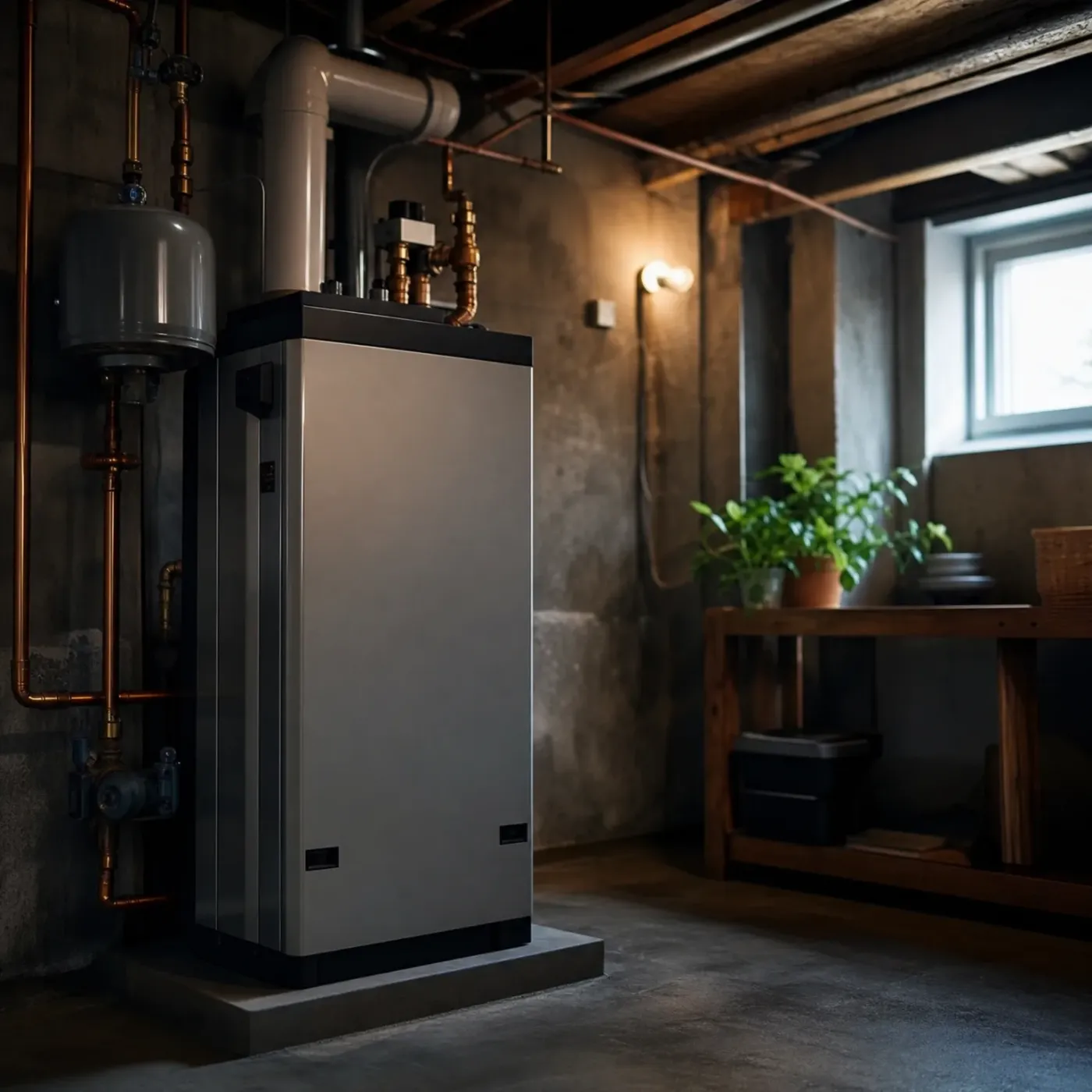
A floor-standing gray boiler unit on a concrete plinth in a basement, with copper pipes, an expansion tank, and a flue pipe above, a wall light, a small potted plant on a wooden shelf, and a window in the background.

The right pro for this job

Why your boiler is kettling in Massachusetts

That rumbling or kettle-whistle sound usually means scale or sludge building up on the heat exchanger, making the water boil in spots before it circulates. This page gets into why that happens and what it means for your boiler. A local contractor who works on boilers all winter can take a look and tell you what's going on with yours.

Find a boiler pro

That kettling noise means water is boiling inside the heat exchanger instead of flowing through it smoothly. Scale builds up on the inside of the exchanger over time, and in a lot of Massachusetts homes the water running through it is hard enough to leave mineral deposits year after year. That scale acts like insulation. Heat can't move into the water the way it should, so the water right next to the metal gets hot enough to flash into steam while the rest of the water around it stays cooler. Those steam bubbles collapsing is the rumbling or whistling you're hearing. Sludge from old iron pipes or a dirty system can do the same thing, trapping heat against the exchanger wall. Left alone, that spot keeps overheating every time the boiler fires, and the metal around it takes the stress. It's worth having someone look at it before a full heating season on it does real damage to the exchanger.

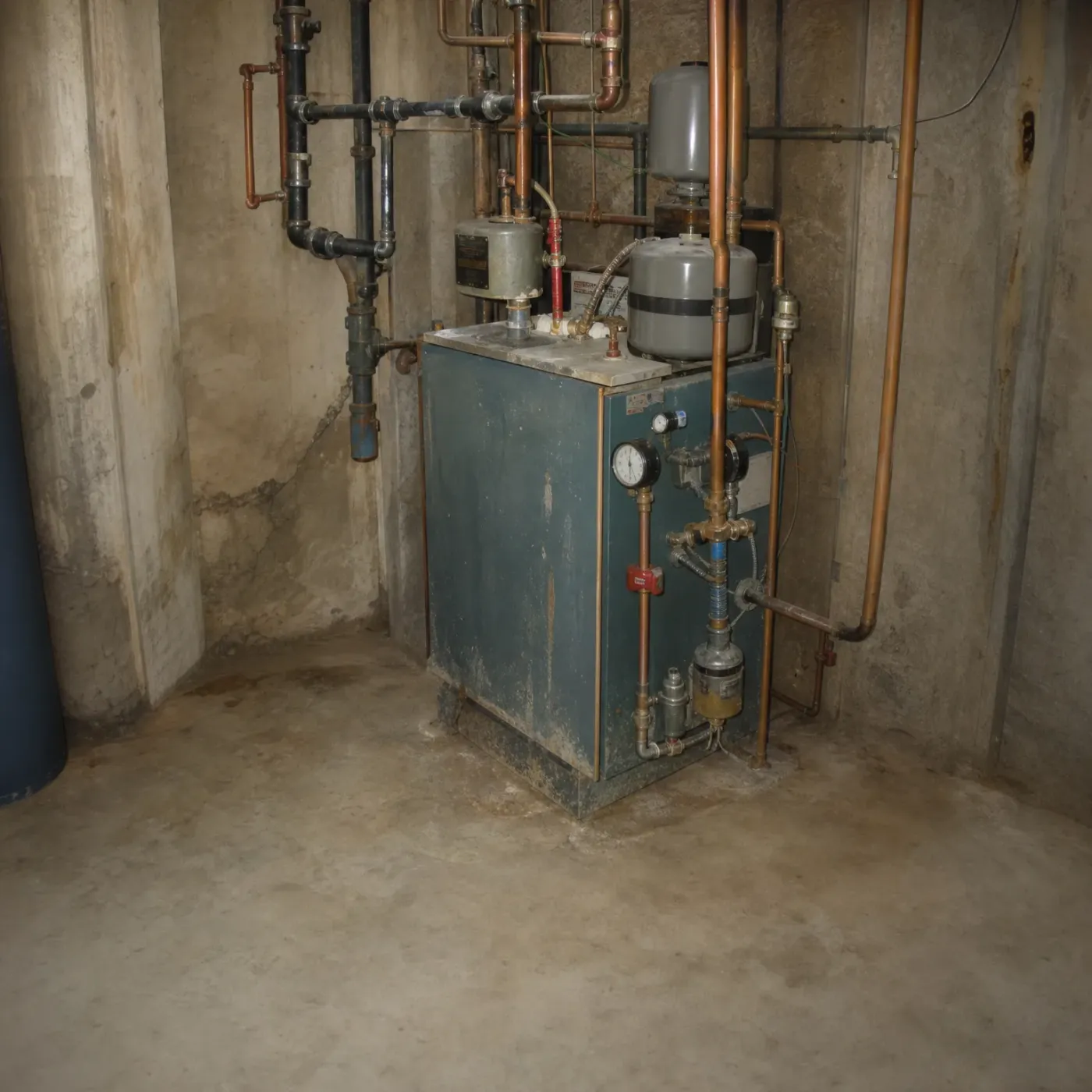
A green metal boiler with pressure gauge stands in a concrete basement corner, surrounded by copper and black iron pipes and two tank-shaped vessels.
Before you get your boiler repair
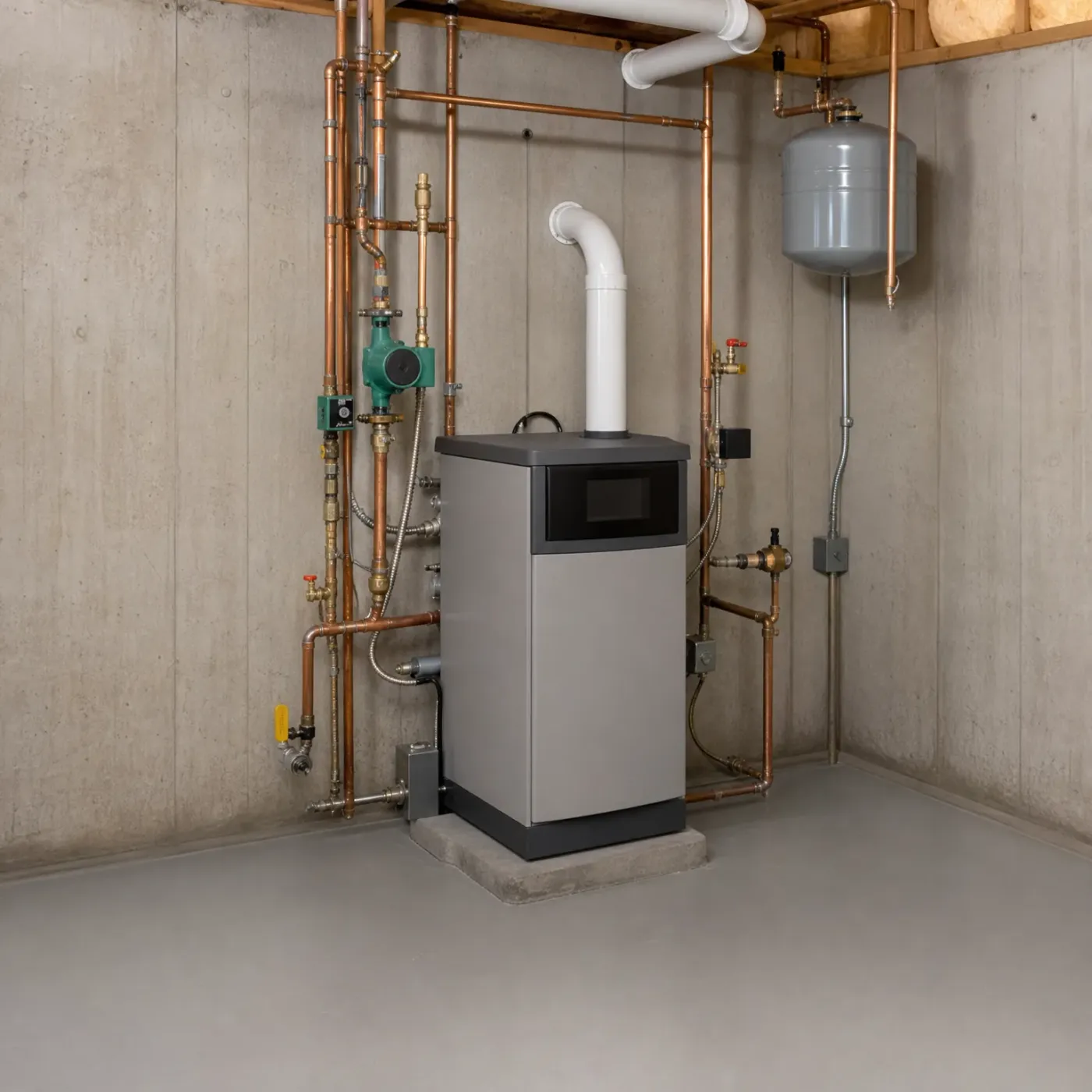
A gray floor-standing boiler on a concrete pad in a basement corner, with copper piping, a circulator pump, a white PVC flue, and a gray expansion tank mounted on the wall.
After you get your boiler repair

Why hard water causes it

Scale forms when minerals in the water drop out as the boiler heats it, and the deposit sticks to the hottest part of the exchanger first. That layer acts like insulation. The metal underneath gets hotter than the water can carry away, so pockets of water flash to steam before they reach the rest of the loop. Those steam pockets collapsing against the exchanger walls are what you hear as the rumbling or whistling. The thicker the scale gets, the hotter that metal runs, and the louder and more frequent the noise gets over time.


What keeps running hot

A boiler can keep kettling for months before anything shuts it down, because the scale is on the inside of the exchanger where nobody sees it. The water still circulates, the thermostat still gets satisfied, and the house still heats. What changes is how hard that one section of metal has to work to pass heat through a layer of scale instead of bare metal. That section runs hotter every cycle, and a boiler that heats most of the year in Massachusetts puts a lot of cycles on it before the noise gets loud enough to notice.

A man with grey hair and stubble in a dark sweater sits on a grey sofa indoors, looking off to the side, with a potted plant and a sunlit window behind him.
A man with gray hair, a beard and glasses, wearing a dark green sweater, sits on a gray sofa in a sunlit living room with a potted plant, table lamp and wooden sideboard behind him.
A middle-aged man with graying hair and a short beard sits on a blue sofa in a living room, looking toward a window, with a bookshelf, lamp and framed picture in the background.
A man with graying curly hair and a dark green sweater sits on a gray sofa in a sunlit living room, looking off to the side, with a framed picture, shelving, an armchair and a window with sheer curtains behind him.

The noise gets worse, not better

Kettling doesn't fix itself. As more scale builds on the heat exchanger, the banging and whistling happen more often, and the metal underneath is taking the heat the water should be carrying away.

Reach a local pro

A cracked heat exchanger

Left alone, the overheated metal can crack. At that point you're not looking at a repair anymore, you're looking at a new boiler, and gas heat in Massachusetts makes that a cost worth avoiding.

Reach a local pro

Ignore the Noise or Fix It Now

Ignore it

  • The scale layer keeps thickening on the heat exchanger, so the banging and whistling happen more often as weeks pass.
  • The metal under the scale is absorbing heat it can't pass to the water, and that stress is what eventually cracks a heat exchanger.
  • A cracked exchanger usually means the whole boiler gets replaced, not just the one part.
  • Mineral buildup doesn't dissolve or loosen on its own once it's bonded to the metal.
  • Running the boiler hotter to compensate for the noise only pushes more heat into metal that's already overworked.

Get it repaired

  • A contractor can flush the scale off the heat exchanger before it cracks the metal.
  • Someone who works on boilers every winter in Massachusetts knows kettling almost always traces back to hard water deposits here.
  • Clearing the scale now means the exchanger goes back to carrying heat the way it was built to.
  • You get matched with one licensed local contractor, not a handful of companies calling about the same job.
  • Catching it while it's just noise avoids the exchanger damage that forces a full boiler replacement.
  1. Minerals in the water drop out as the boiler fires.

  2. Scale sticks to the hottest surface of the heat exchanger.

  3. That layer blocks heat from passing into the water.

  4. Trapped water flashes to steam and collapses with a bang.

Why does kettling only happen when the heat is running?

Your boiler only kettles when it's actually heating, not when it's sitting idle. It makes you wonder if the noise is really a problem or just something boilers do when they're working. In a Massachusetts winter, the boiler is firing most hours of the day, so the sound shows up constantly and that's enough to make anyone want a straight answer.

It needs heat to boil the trapped water, so the noise only shows up while the burner is firing

Scale only causes a problem when there's heat behind it. The burner has to be firing and pushing heat into the exchanger for the water trapped under that layer to flash into steam. Once the thermostat is satisfied and the burner shuts off, there's no more heat going in, so the trapped steam pockets stop forming and the banging stops too. That's why the noise tracks with the burner cycle, not with the time of day. Through a Massachusetts winter, with the boiler firing for hours at a stretch, that pattern repeats often enough that it stops sounding like an occasional noise and starts sounding like the boiler itself.

A middle-aged woman with shoulder-length dark hair, wearing a gray cardigan over a cream top, sits in an upholstered armchair and looks toward a sunlit window, with a shelf holding framed pictures and a plant behind her.
A woman and a child wrapped together in a thick knitted blanket on a sofa, both with eyes closed, with a lit table lamp and houseplant in the dim background.
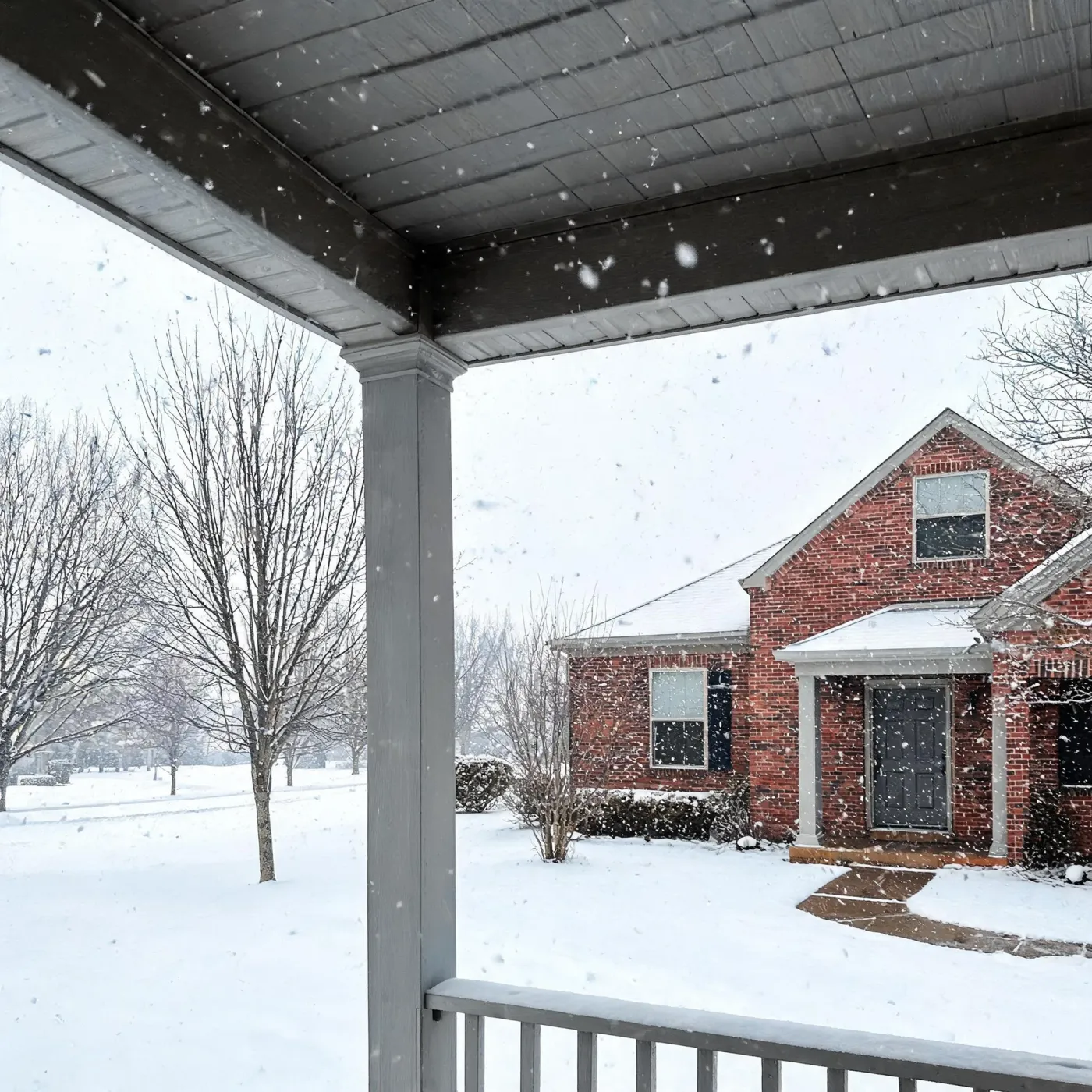
View from a covered porch with a white post and railing toward a red brick house across a snow-covered yard, with falling snow and bare trees.

On a 21°F winter night, your boiler isn't cycling on and off a few times, it's running long stretches to keep up. That means more firing cycles pushing heat through a scaled-up exchanger, and more chances for trapped water to flash to steam and knock. If your place already bangs or whistles when the heat kicks on, those cold nights are when you'll hear it most, and when a hairline crack is most likely to let go. Average low, National Weather Service. A contractor who works boilers all winter in Massachusetts has seen what scale like this does by February, and matching you with one local tech means one call back, not a pile of them.

NOAA nClimDiv 1991-2020 county normals weighted by homes

A boiler pro near you

A boiler that kettles isn't going to quiet down on its own, and running it through another cold stretch just keeps feeding heat into metal that's already struggling to pass it along. Massachusetts winters don't give a scaled-up exchanger much of a break, and gas isn't getting cheaper to burn for a system working harder than it should. The scale on that exchanger took time to build, and clearing it or replacing the part isn't a job to guess at. It calls for someone who's pulled covers off boilers like yours all season and knows whether what you're hearing is still a cleaning job or already a cracked exchanger. Getting a local contractor who handles this equipment regularly looking at it now, before the next cold snap pushes it harder, is what actually changes what happens to your boiler this winter.

Call a repair person for the kettling, and you're trusting whoever answers to know this specific boiler, with no guarantee they've seen this model fail before.

Get matched with a local contractor who works on boilers all winter, and you're trusting someone who already knows what scale does to an exchanger like yours and has fixed it before.

Winter nights average 21°F statewide

At 21°F overnight, your boiler has to hold its heat output for hours, not minutes. A scaled exchanger struggling to pass heat into the water gets pushed hardest on nights like that, which is when kettling tends to show up loudest.

NOAA nClimDiv 1991-2020 county normals weighted by homes

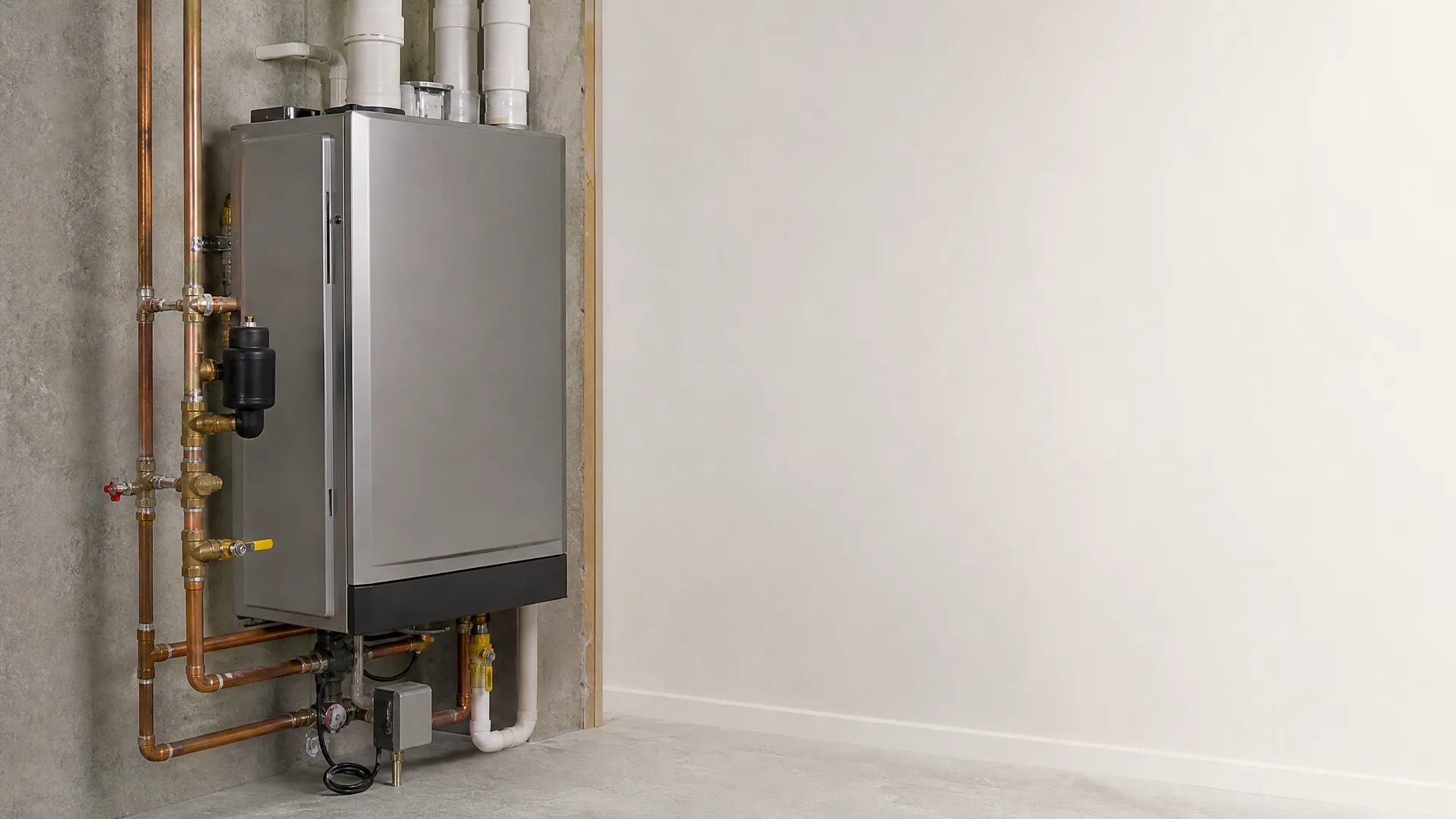
A wall-mounted grey boiler with copper pipework and white flue pipes installed against a concrete wall in an empty room with a plain pale wall to the right.

A boiler with no scale

Water moves through a clean heat exchanger without a fight. Heat passes straight into it and out to your radiators or baseboards. The boiler fires, reaches temperature, and shuts off on a normal cycle. No banging, no whistle, no spots where water is trapped against metal that's hotter than it should be. That's how the system was built to run, and it's quiet because nothing inside it is working harder than it needs to.

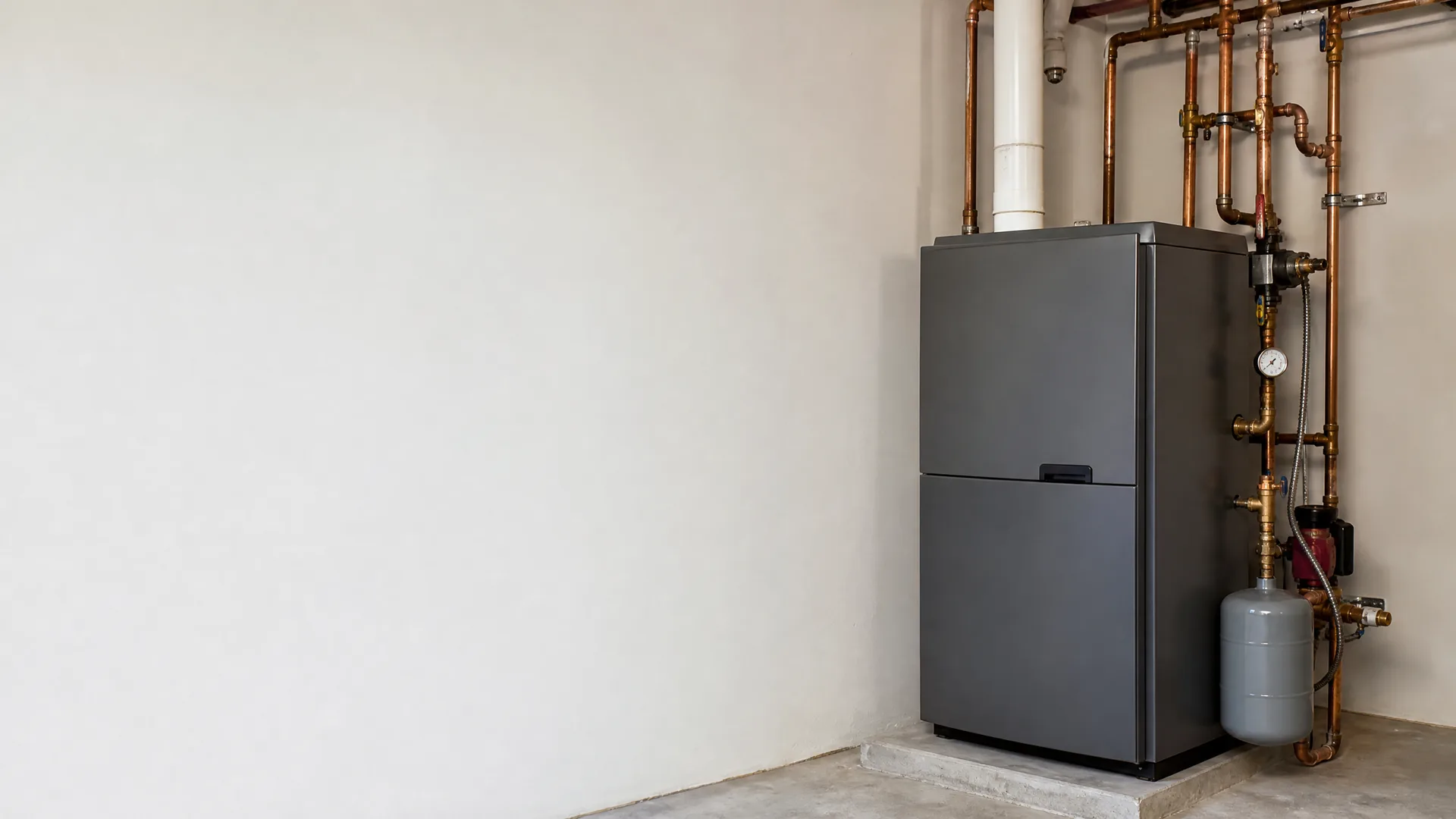
A dark grey boiler unit stands on a concrete pad against a plain light wall, connected to copper pipes, a pressure gauge, a pump and a grey expansion tank.

A boiler coated in scale

Minerals that dropped out of the water sit as a crust on the hottest part of the exchanger. Heat can't pass through that layer the way it should, so the metal underneath gets hotter than the water touching it. Pockets of water flash to steam and collapse, which is the banging you hear. The boiler still heats your home, but it's doing it through a layer that keeps thickening, and the exchanger underneath is taking punishment the water was supposed to carry away.

A woman stands in the open doorway of a white stucco house holding the dark door, facing a man in a black cap and shirt seen from behind in the blurred foreground, with a potted flowering plant beside the entry.

Kettling is scale telling you it's there

The bang and whistle come from water boiling against a heat exchanger that scale won't let it move through cleanly. That's the whole answer. It doesn't go away with a warmer week or a quieter night, because the scale stays put until someone takes it off or the exchanger that's cracking under it gets replaced.

What you need isn't a diagnosis, you already have one. It's someone who's pulled apart enough Massachusetts boilers to know what this model's exchanger looks like under the scale and what it takes to get water moving through it again. Get matched with a local contractor who takes on jobs like this through the winter, and that's who calls you back. Not a dispatcher sending out whoever's free, not three companies competing for your callback. One contractor, local, who knows this equipment.

Interior corner of a living room with a beige upholstered sofa and dark cushion in the foreground, a ceramic vase of leafy branches on a dark side table by a curtained window, a framed picture on the wall, and a wood-surround fireplace at right.
A single-story stucco house at dusk with a lit paver walkway lined by low path lights, desert plants and boulders in front, and distant mountains under an orange and blue sky.

Boiler Repair

A local pro for your boiler repair

Step 1 of 3: Equipment
  • A beige upholstered armchair with an olive cushion sits in a sunlit corner beside a wooden side table holding a ceramic vase with leafy branches, under a framed abstract artwork, on a woven rug over a wood floor.
    • Say what's going on with your boiler, and a pro who works on them reaches out.
  • A gray outdoor condenser unit on a concrete pad surrounded by dark gravel, beside a dark wood-sided wall with an electrical disconnect box and a stone veneer wall with a small evergreen shrub.
    • After this form, you can stop searching for a boiler pro.
    • One request and the search for a pro is handled.
  • A beige upholstered oversized armchair with a matching cushion and a knit throw draped over one arm, beside a round wooden side table holding a vase of greenery near a curtained window, with a framed landscape print on the wall and a woven rug on a wood floor.
    • Answer a few questions instead of calling shop after shop.
    • Describe your boiler job once, to one pro.
  • Sunlit living room corner with a beige upholstered sofa, cushion and knitted throw, a round wooden side table holding a white ceramic vase of leafy branches and a small wooden bowl, a framed landscape painting on the wall, and a window at right.
    • Only one pro gets your request, so you hear from one company.