
What your boiler pressure should be in Massachusetts
What should my boiler pressure be?
Your boiler's pressure gauge is sitting somewhere you're not sure is right, or you noticed it looks different than it did last winter. Before you reach for a radiator key or call anyone out, it helps to know what the needle should actually read, and what it means if it's sitting too high or too low. This matters more once the heat is running every day and you want the system working right through the cold months ahead.
It should read between 12 and 15 psi when the system is cold
A cold boiler holding 12 to 15 psi is doing its job. That number climbs a bit once the water heats up and expands, so seeing it tick up to 20 psi or so while the heat is running is normal. What isn't normal is a gauge sitting under 12 psi cold, or one that climbs past 30 psi and trips the relief valve. Low pressure usually means the system lost water somewhere, through a bleed valve left loose or a slow leak at a fitting. High pressure points to the expansion tank or the fill valve not doing its part. Either way, the number on that gauge is telling you something specific about the system, not just whether it's working.
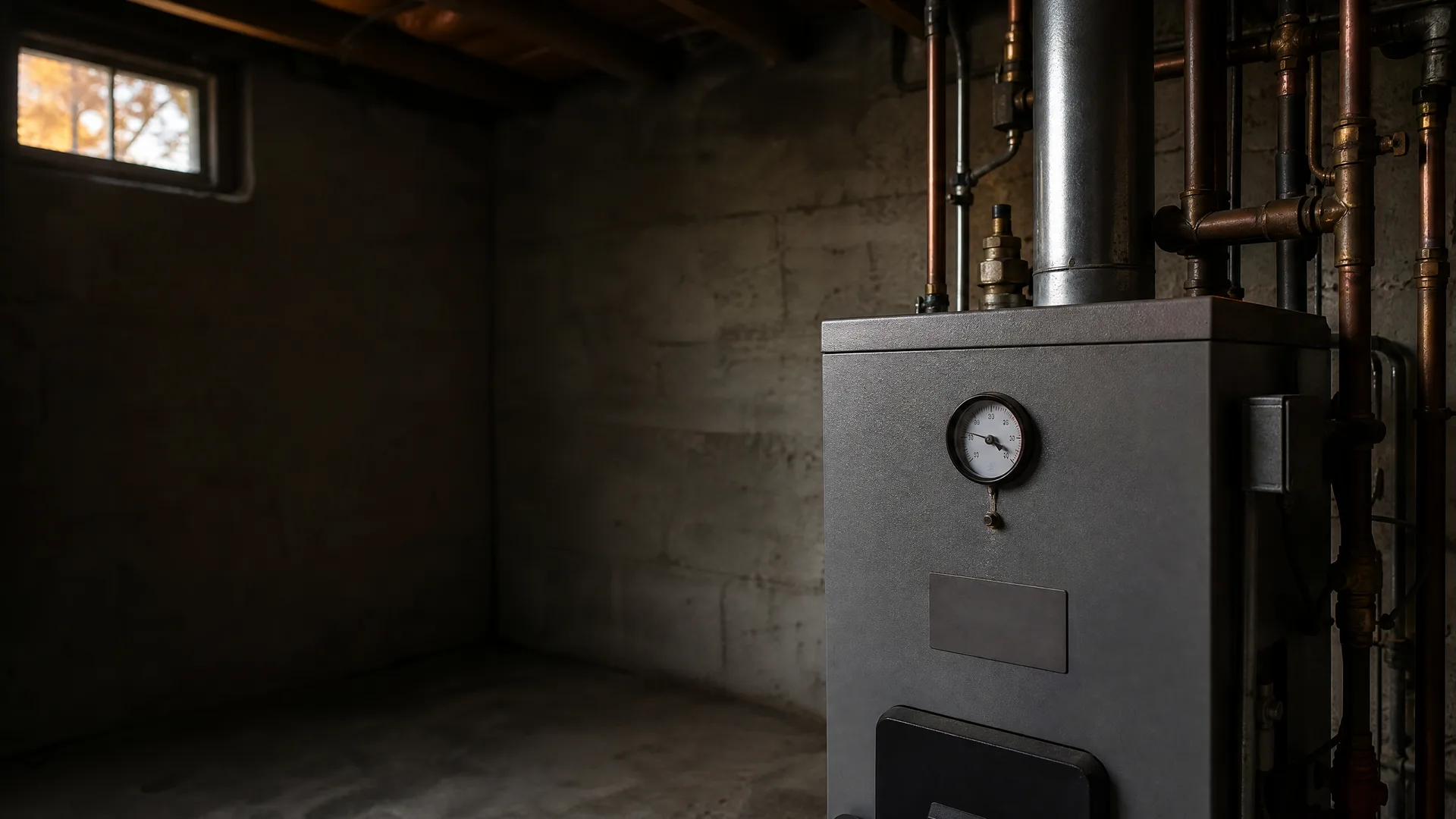
You're down in the basement in October, pulling the storm windows out of storage, and you walk past the boiler out of habit more than anything. The gauge catches your eye. The needle is sitting low, under where it usually rests, closer to zero than to 1. You crouch down and tap the glass, like that might change something. It doesn't. Outside it's still mild, the heat hasn't kicked on for the day yet, but you know that's going to change soon, and you'd rather know now than find out on the first cold night when the radiators upstairs stay cold.
Why does my radiator feel cold at the top?
A radiator that's hot at the bottom and cold at the top usually means air trapped inside it, not low pressure, though the two often show up the same week. You bleed it with the key and hear a hiss, then water. If the pressure gauge is also low, you've likely got both problems at once, and bleeding radiators without adding water first can push the pressure down further. Left alone through a Massachusetts winter, a boiler running low on pressure will shut itself off rather than keep heating, usually on the coldest night it's asked to work hardest. A boiler running too high can weep water from the relief valve, which you'd notice as a damp spot near the pipe.
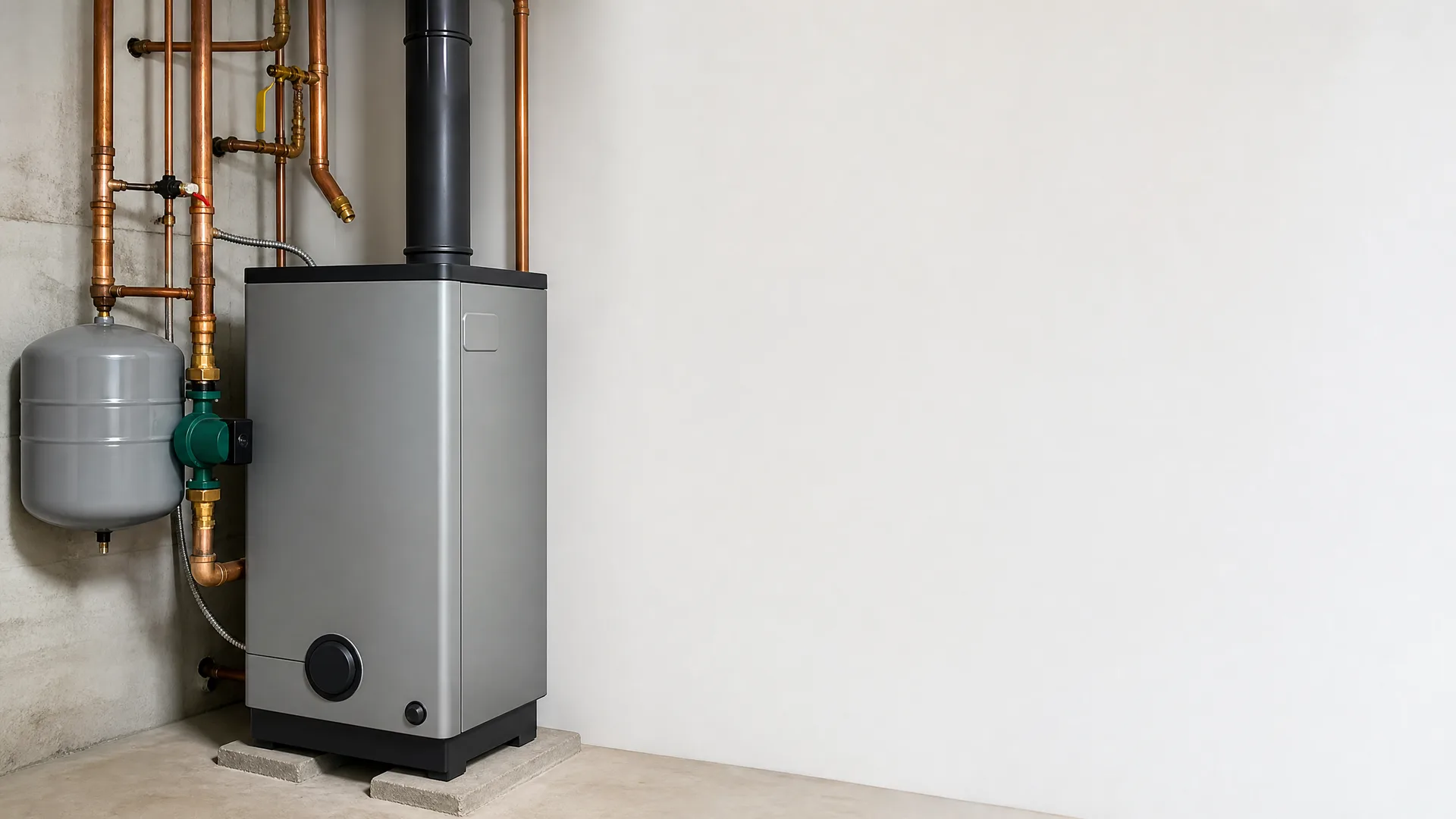
What the gauge is actually reading
Most residential boilers run between 12 and 15 psi cold. That number isn't arbitrary. It's roughly what it takes to push water up to the highest radiator in the house and keep it there, plus a cushion. A two-story colonial needs a little more than a ranch. If your gauge sits at 15 or below when the system's cold, that's normal, not a fault you need to chase down.
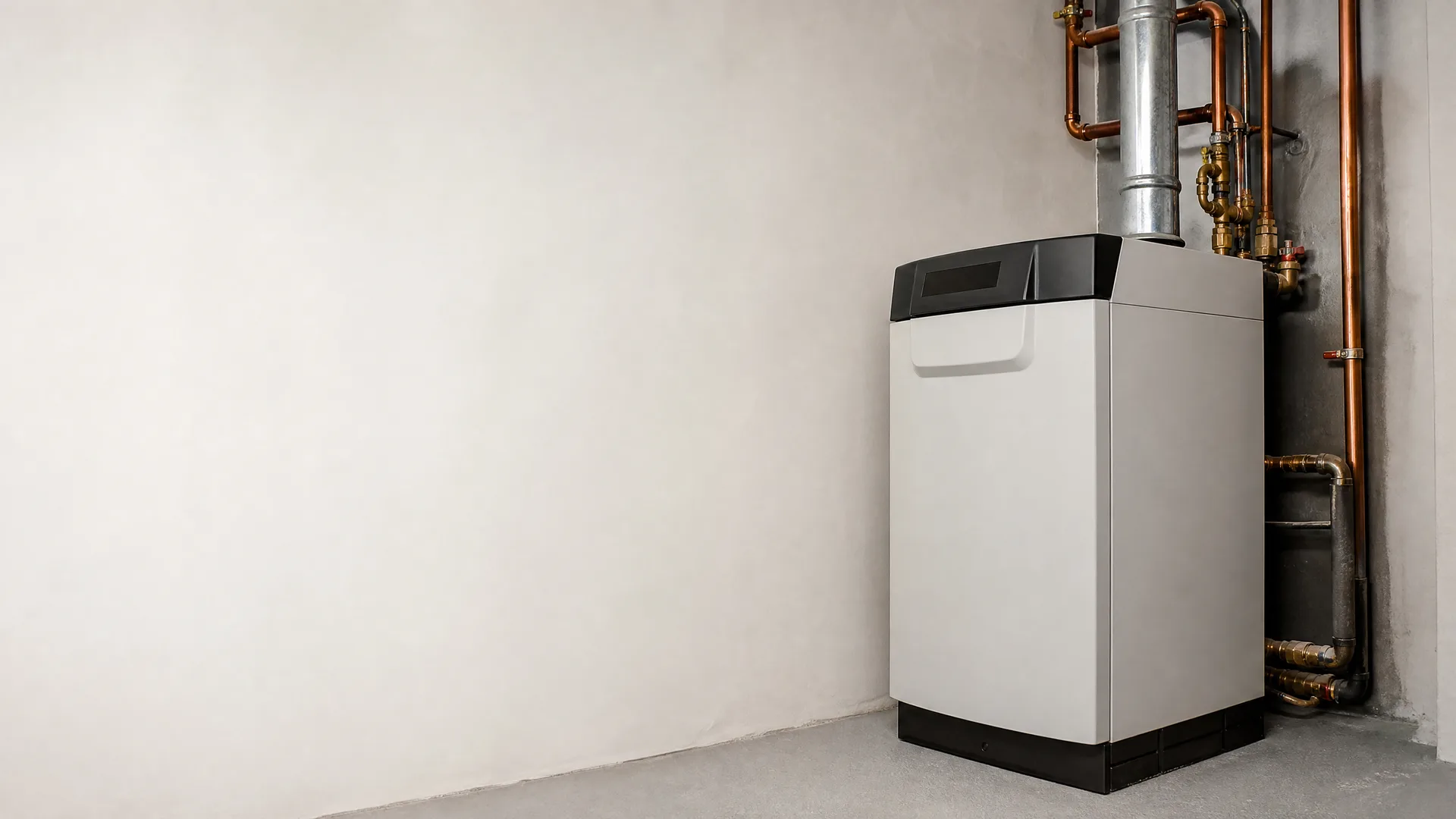
Why pressure drops over the summer
A boiler that sat idle since April can lose a pound or two of pressure by the time you turn the heat back on in October. Small amounts of water escape through the air vents and the expansion tank over months of standing full. It's not a leak in the way a puddle under the unit is a leak. It's slow and ordinary, and it's exactly why the gauge looks different than it did last winter.
Winter nights average 21°F statewide
At 21°F overnight, your boiler is running most of the night to keep up, and it needs that 12 to 15 psi to push heat all the way to the top floor. Low pressure on a cold night like that means some of your radiators won't get hot at all.
NOAA nClimDiv 1991-2020 county normals weighted by homes




Stop chasing a boiler pro
A pressure that's low on its own isn't usually an emergency. It only becomes one on a cold night when half your radiators stay cool because the water can't reach them. By then you're trying to diagnose a boiler at 9 p.m. instead of getting heat back. That's the moment most people decide to stop guessing at the gauge themselves. Repressurizing a boiler is simple when nothing else is wrong with it, but a system that keeps losing pressure week after week usually means a slow leak somewhere in the near the boiler or the automatic feed valve isn't doing its job, and that's not a fix you do with a radiator key. Someone who works on boilers all winter in Massachusetts has seen which parts on these systems fail first and why they fail when it's cold. Sending in what you're seeing, the gauge reading, whether it's dropping over days or weeks, gets that knowledge looking at your boiler instead of you looking at a number alone.
How the system actually holds pressure
- The pressure relief valve opens automatically at 30 psi, well above the 12 to 15 psi your gauge should show cold.
- A boiler fills from the same feed valve every time pressure drops, usually behind or below the unit near the main water line.
- An expansion tank absorbs the extra volume as water heats and pushes pressure up a few psi once the system is running.
- If the gauge climbs past 20 psi while running but sits low when cold, the expansion tank may be waterlogged instead of the system being underfilled.
- The autofeed valve only tops off pressure, it doesn't fix a leak that's causing pressure to drop in the first place.
- A pressure that creeps down over weeks, not days, usually points to a slow leak somewhere in the near-boiler piping or a radiator valve.
A boiler doesn't hold pressure by itself. It's a small system of parts working against each other, and knowing which one does what tells you whether a reading is a problem or just the system doing its job. Cold, the water in a closed loop sits at that 12 to 15 psi mark. When the burner fires and the water heats, it expands, and it has to go somewhere. That's the expansion tank's job, a sealed canister with a cushion of air inside that absorbs the extra volume so the pressure rises a little instead of climbing straight to the relief valve. A few psi of rise while the boiler runs is normal. What isn't normal is a tank that's lost its air cushion over time, usually from a slow leak in the bladder. When that happens, the tank can't absorb anything, and pressure that was fine cold spikes fast once the burner kicks on. On the other end, if pressure keeps dropping, the autofeed valve near the main water line senses it and adds water automatically to bring it back up. That valve will keep doing its job quietly for months even while something else, a loose radiator valve or a pinhole in the near-boiler piping, is slowly letting water out. The feed valve masks a leak. It doesn't find one. And if pressure ever gets far enough out of line, the relief valve at 30 psi is the backstop, built to open before anything in the system is at risk.


12 to 15 psi cold, needle climbing some when the boiler fires, back down when it cools. That's the whole answer. Below that and the top floor runs cold on the nights you need it most. Above 30 and the relief valve is doing something about it whether you asked it to or not. A boiler that holds steady in that range all winter usually doesn't need much. One that keeps drifting is telling you something, a slow leak somewhere in the loop, a feed valve that's not quite shutting, an expansion tank that's lost its air cushion. Figuring out which one takes someone who's been inside enough of these systems to know where they usually fail, and a local contractor who services boilers all winter in houses like yours has seen the pattern before. One contractor, licensed to work on it, not a handful of strangers calling about the same job. You already know what the gauge should say. What's left is finding out why yours doesn't.





Send one request and you're done looking
The pro who reaches out is licensed in Massachusetts.
Sending the form costs nothing.