



Profile view of a bearded man wearing a dark baseball cap and a dark gray T-shirt against a plain off-white background.

Signs your boiler won't last a Massachusetts winter

Step 1 of 3: Equipment

A boiler that's struggling shows it before the cold really sets in. Watch for short cycling, where it fires on and off every few minutes instead of running a steady stretch. Watch for rooms that used to heat evenly now leaving one cold, or radiators that are hot at the bottom and cool at the top, a sign of sludge or air trapped in the system. Listen for banging or kettling sounds from the boiler itself, which usually means scale buildup on the heat exchanger. If the pilot or igniter keeps dropping out, or you're bleeding the radiators more than once a season, the boiler is working harder than it should to keep up. Any one of these can turn into no heat at all once a hard freeze hits and the boiler is running nearly nonstop. Catching it now, before a January night in the teens, is what makes the difference between a repair and an emergency.

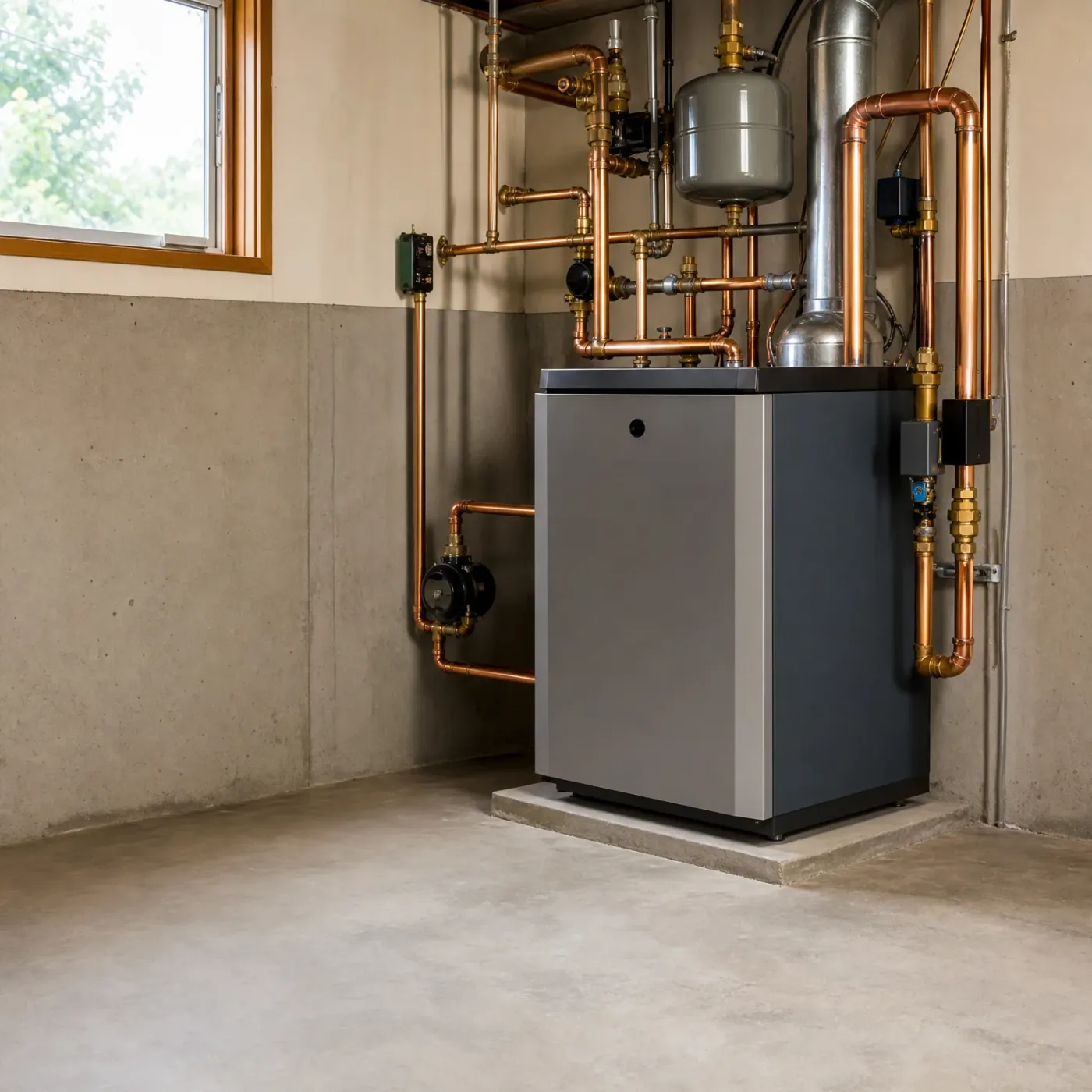
A gray floor-standing boiler on a concrete pad in a basement corner, connected to copper piping, brass valves, a circulator pump, an expansion tank, and a metal flue, with a window at upper left.
Steady heat, no rust on the pipe fittings, and a circulator pump that runs quiet mean the system is keeping up fine.
A gray floor-standing boiler in a basement corner with copper and black piping above it, a flue vent, and a gray expansion tank mounted on the concrete wall beside a concrete block wall.
Rust streaks near the base, a scorched flue connection, or pooled water on the concrete mean the boiler is on borrowed time.

A boiler rarely fails without giving some warning first, if you know where to look. That rumbling or popping sound, called kettling, happens when sediment settles on the heat exchanger and traps heat against the metal instead of letting it transfer into the water. Open the burner compartment and check the flame. It should burn steady blue. Yellow or orange means combustion isn't complete, and that's worth a look before it gets worse. The pressure relief valve weeping water isn't random, it's responding to pressure that's built past what the expansion tank can absorb. Inside the control box, the aquastat tells the circulator pump when to run. When it starts failing, the signal gets inconsistent, and that's often why one room heats late or not at all while the rest of the house is fine. Check the pressure gauge too. Under 12 psi usually points to a slow leak somewhere in the loop, not a one-time drop. And soot stains near the flue joints mean combustion gases are backdrafting instead of venting out where they should.

What's Actually Happening Inside

  • A boiler kettles, a rumbling or popping sound, when sediment builds up on the heat exchanger and traps heat against the metal.
  • The pilot or igniter should produce a steady blue flame; a yellow or orange flame means incomplete combustion and needs a look.
  • A pressure relief valve that weeps water is responding to pressure built past what the expansion tank can absorb.
  • An aquastat that's failing will send inconsistent signals to the circulator pump, so some rooms heat late or not at all.
  • Low water pressure on the gauge, under 12 psi, often means a slow leak somewhere in the loop rather than a one-time drop.
  • A flue pipe with soot stains near the joints points to backdrafting, where combustion gases aren't venting the way they should.
A woman with long blonde hair in a light blue shirt leans back on a beige sofa with her eyes closed, in a softly lit living room with cushions and a blurred plant and shelf in the background.
A woman with long dark hair in a gray knit sweater sits on a gray sofa with a cushion, looking toward a window in a living room with framed pictures and a lamp in the background.
A woman with long dark hair in a light grey knit sweater sits on a sofa indoors, looking to her right, with a framed landscape picture, a potted plant and a curtained window behind her.
A woman with long dark hair leans back against a gray sofa with her eyes closed, in a living room with a curtained window, a potted plant, and a dark screen in the background.
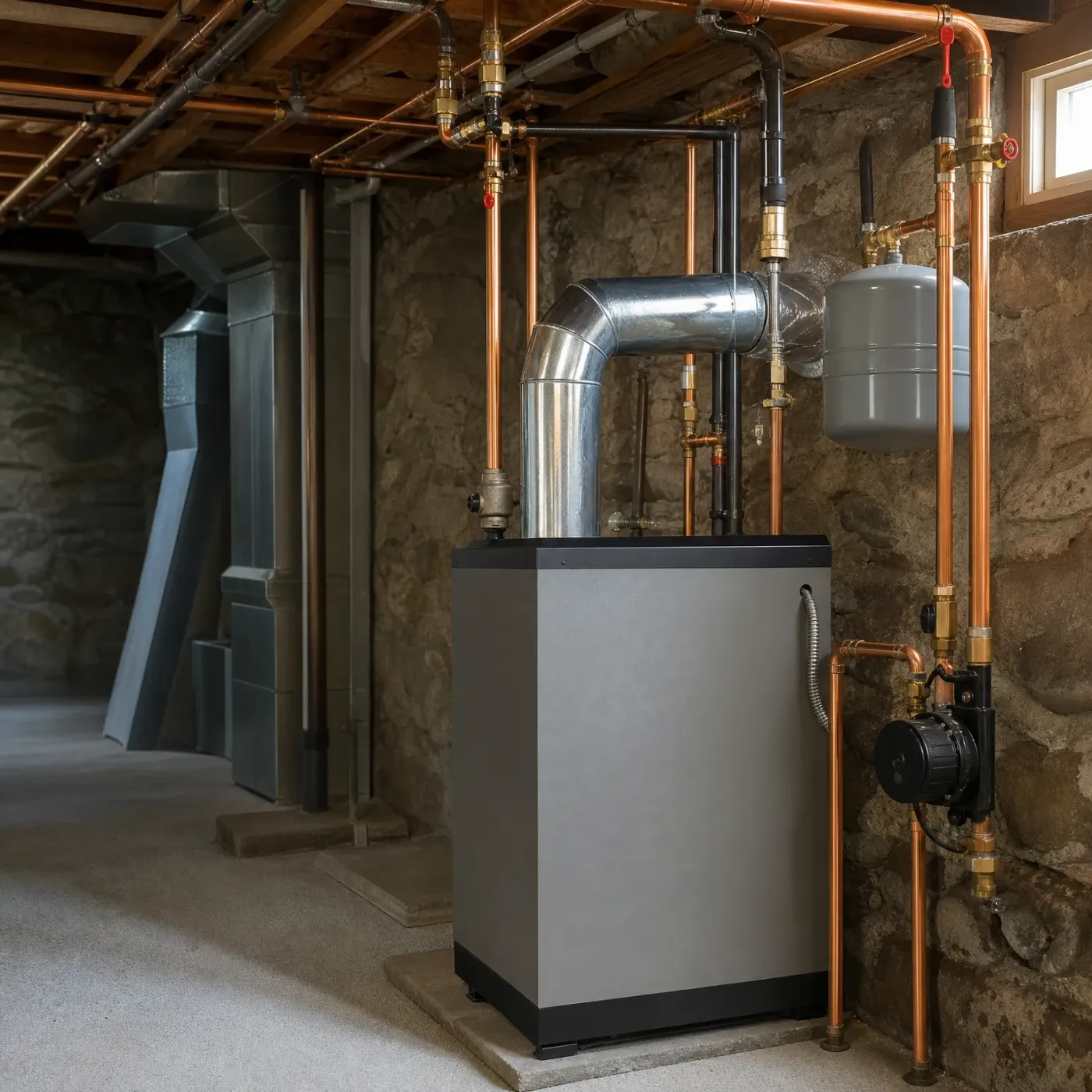
A gray boiler unit on a concrete pad in a stone-walled basement, connected to copper piping, brass valves, a circulator pump, an expansion tank, and a metal flue vent.

The right pro for this job

Your request stays with one local pro.

A local pro who knows boilers gets your details and gets in touch.

Connect with a pro

Sending the form costs nothing.

Keep It or Replace It

Keep Running

  • The boiler is under 15 years old and has had its yearly service done without skipped seasons.
  • Heat exchanger and burner are clean, so the flame stays steady and the gas bill hasn't crept up on its own.
  • Repairs so far have been small parts: an igniter, a circulator pump, a zone valve, nothing structural.
  • The cast iron sections or steel boiler block show no rust weeping from seams or fittings.
  • Replacement parts for this model are still easy for a local contractor to get.
  • It heats the whole house evenly through a Massachusetts January without help from space heaters.

Won't Make It

  • It's pushing 20 years or more, which is past where most gas boilers in Massachusetts homes are holding up.
  • The heat exchanger has been patched or repaired more than once in the last couple of winters.
  • Water or rust stains show up on the floor near the base after every cold snap.
  • It needs a service call every month or two once the weather turns, not just at the start of winter.
  • A contractor has already mentioned the block or heat exchanger is cracked, which can't be patched.
  • Rooms that used to warm up fine now stay cold no matter how long the boiler runs.
A gray boiler on a concrete pad in a basement, connected to copper piping, valves, circulator pumps, a metal flue, and a wall-mounted expansion tank.

Holding Up Fine

Pipes and fittings stay dry, the circulator pump runs quiet, and the flue connection looks clean where it meets the boiler. Heat comes on, runs a steady stretch, and shuts off on its own. A system like this is doing its job and there's no reason to touch it beyond the yearly service.
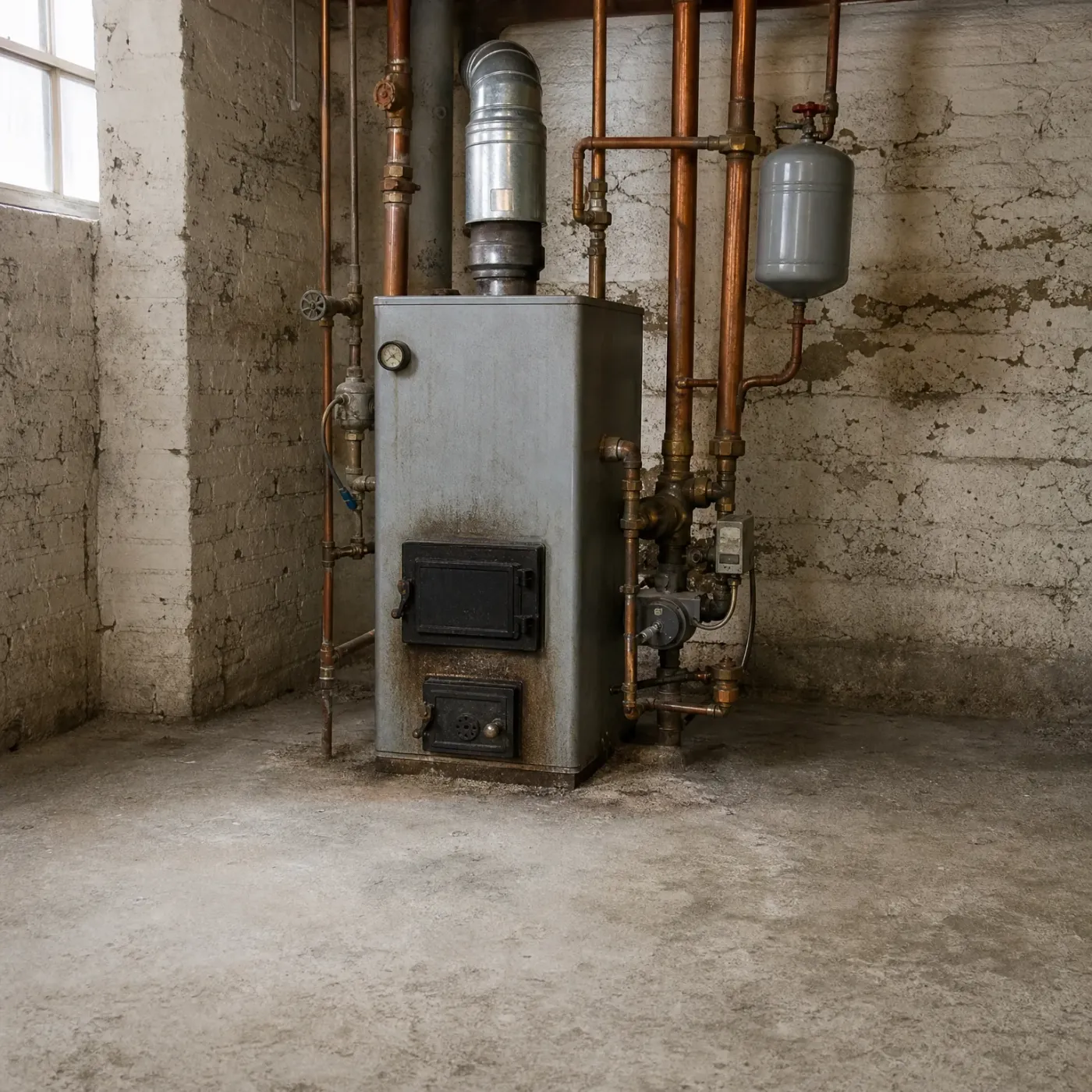
An old gray boiler with copper piping, a flue duct, pressure gauge and an expansion tank stands in the corner of a basement with painted masonry walls and a bare concrete floor.

Not Making It Through

The cast iron shows its age, the flue connection has gone dark at the seams, and the floor around the base stays damp between cleanings. A boiler running like this in January is a repair call waiting to happen, not a question of if but when it quits.

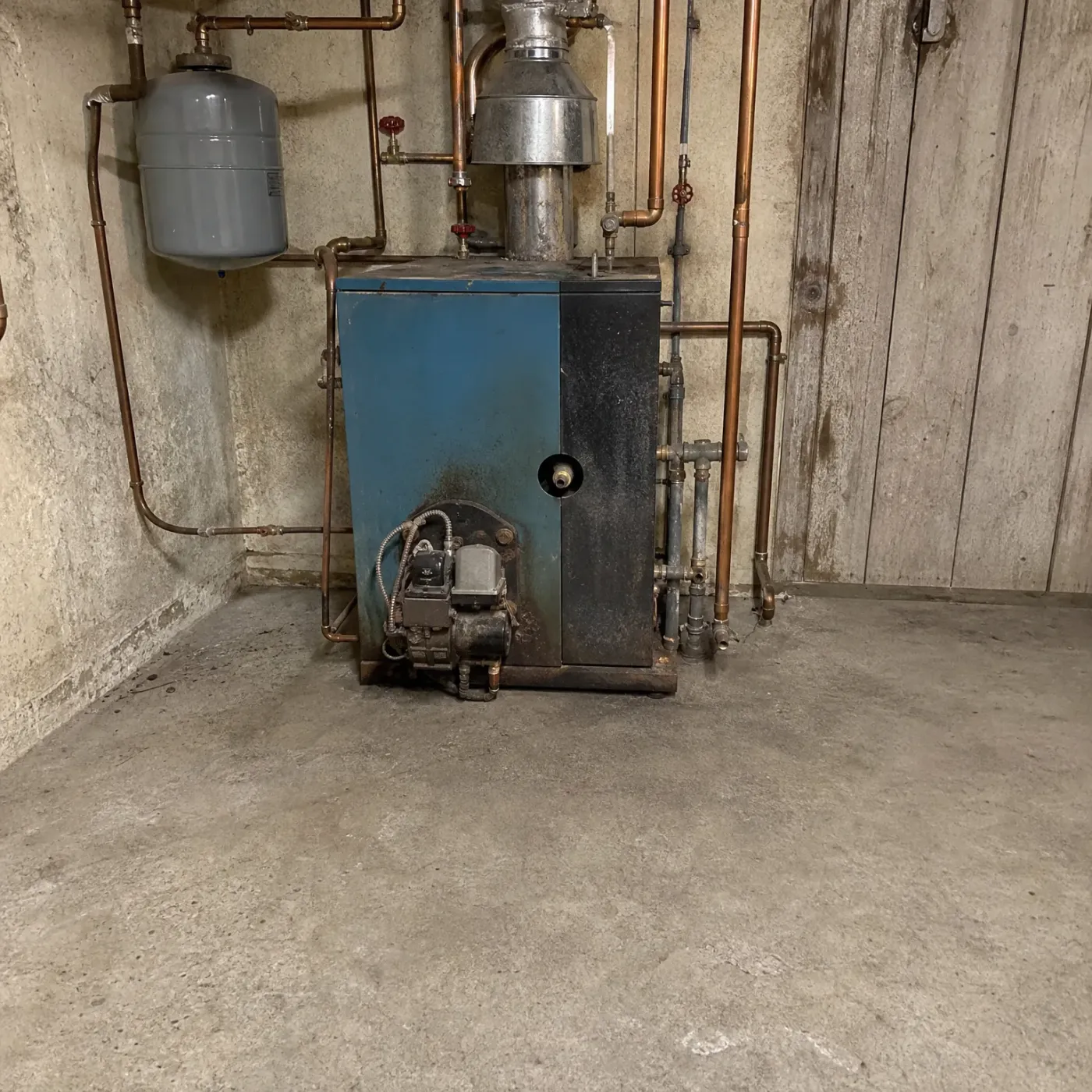
A blue and black boiler with a burner unit, flue, expansion tank and copper and steel piping stands on a concrete basement floor against a concrete wall and wooden plank partition.
Before you get your boiler repair
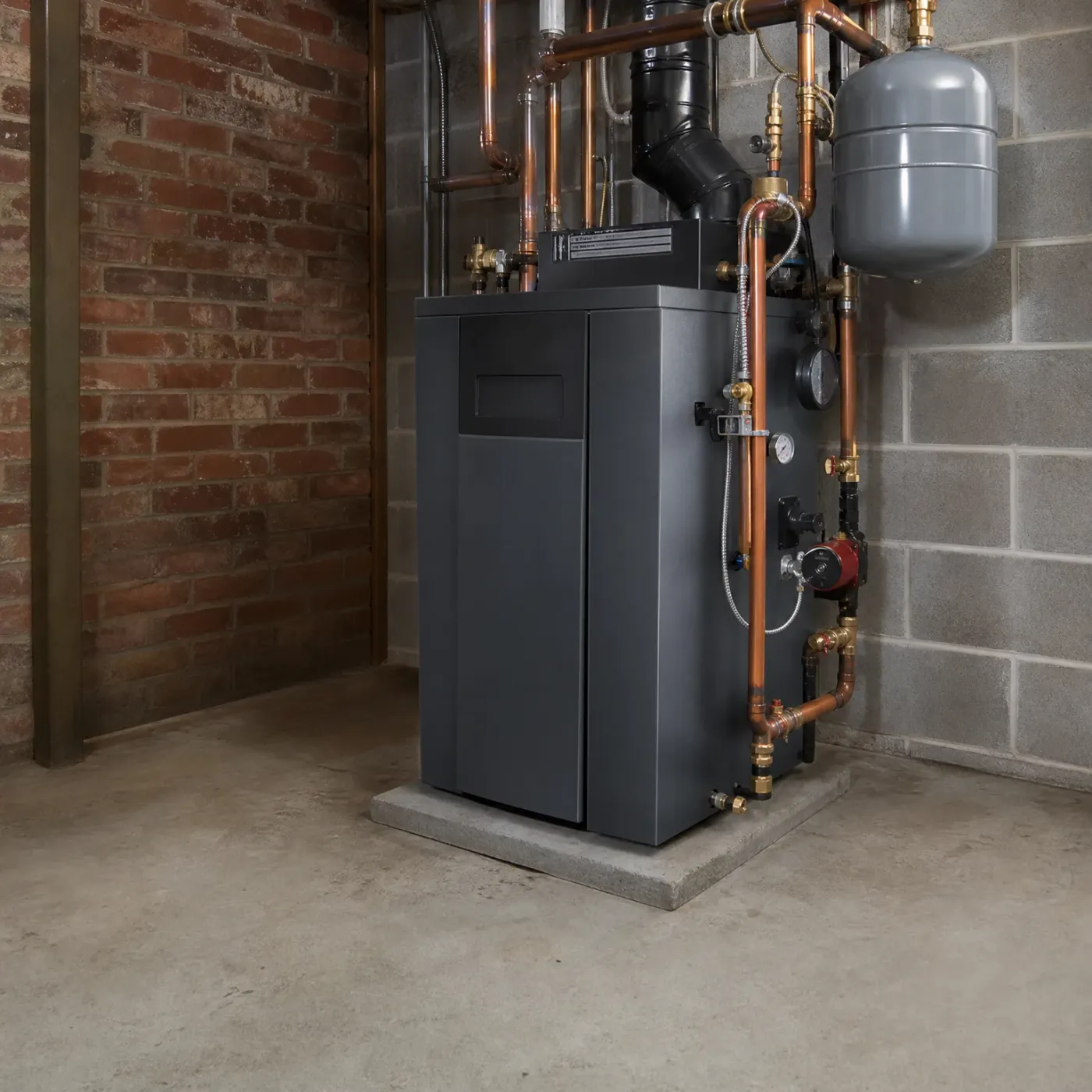
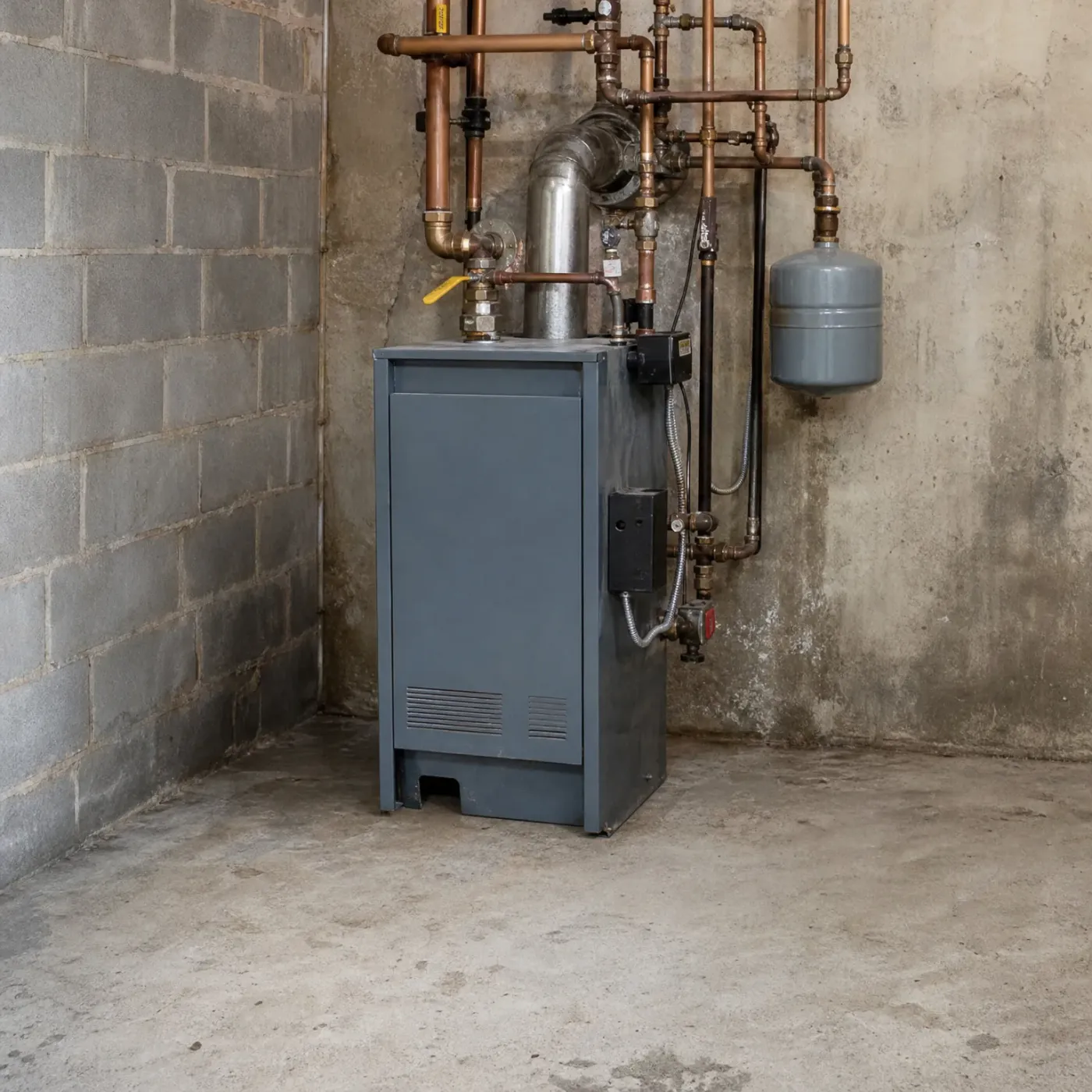
A dark gray floor-standing boiler on a concrete pad in a basement, connected to copper piping, valves, a circulator pump, a gauge, a black flue pipe, and a gray expansion tank, with a brick wall on the left and concrete block wall behind.
After you get your boiler repair

Winter nights average 21°F statewide

At 21°F, a boiler can't just cycle on now and then, it has to hold a long steady run to keep the house warm. If yours is already short cycling or leaving rooms cold, a night that cold will show it fast.

NOAA nClimDiv 1991-2020 county normals weighted by homes

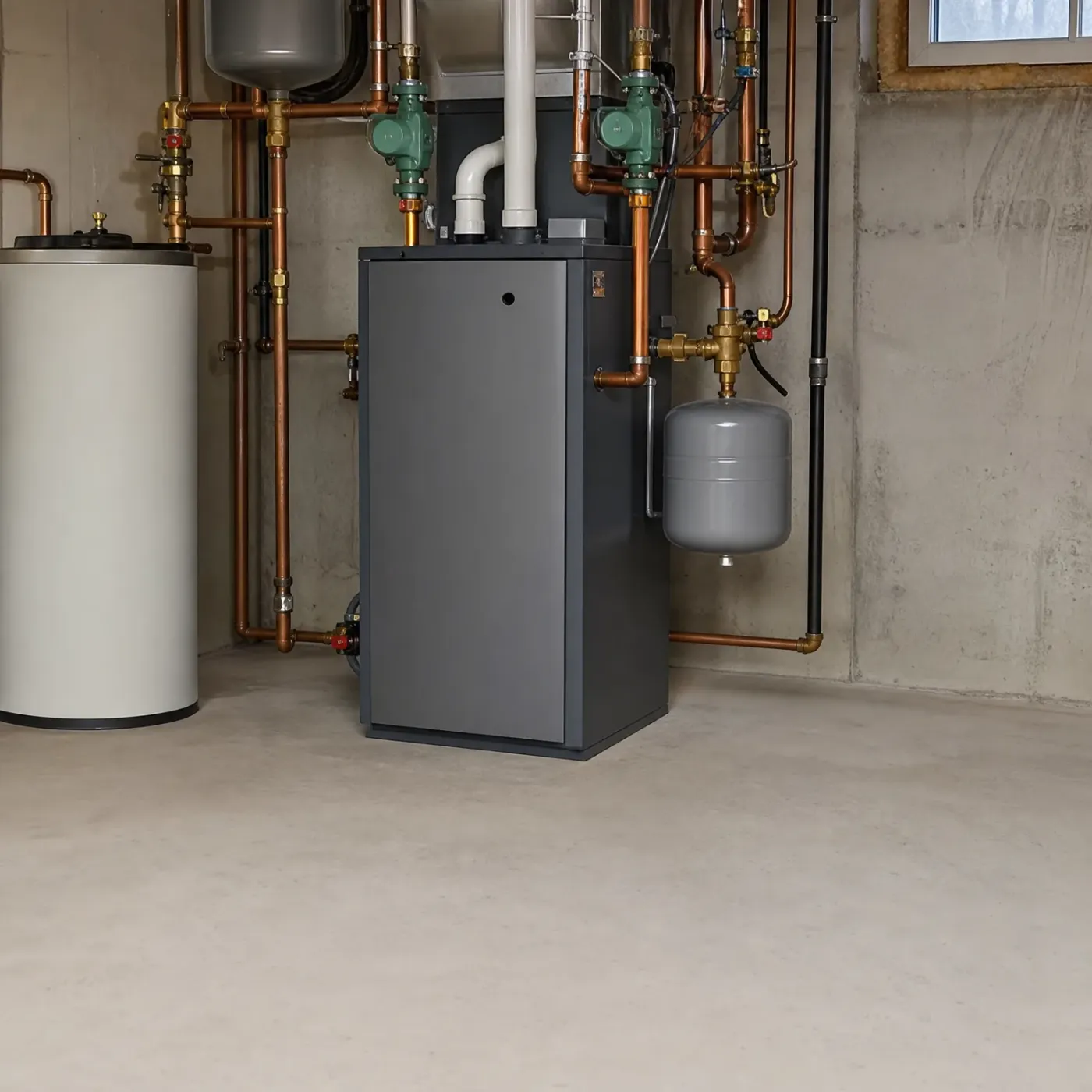
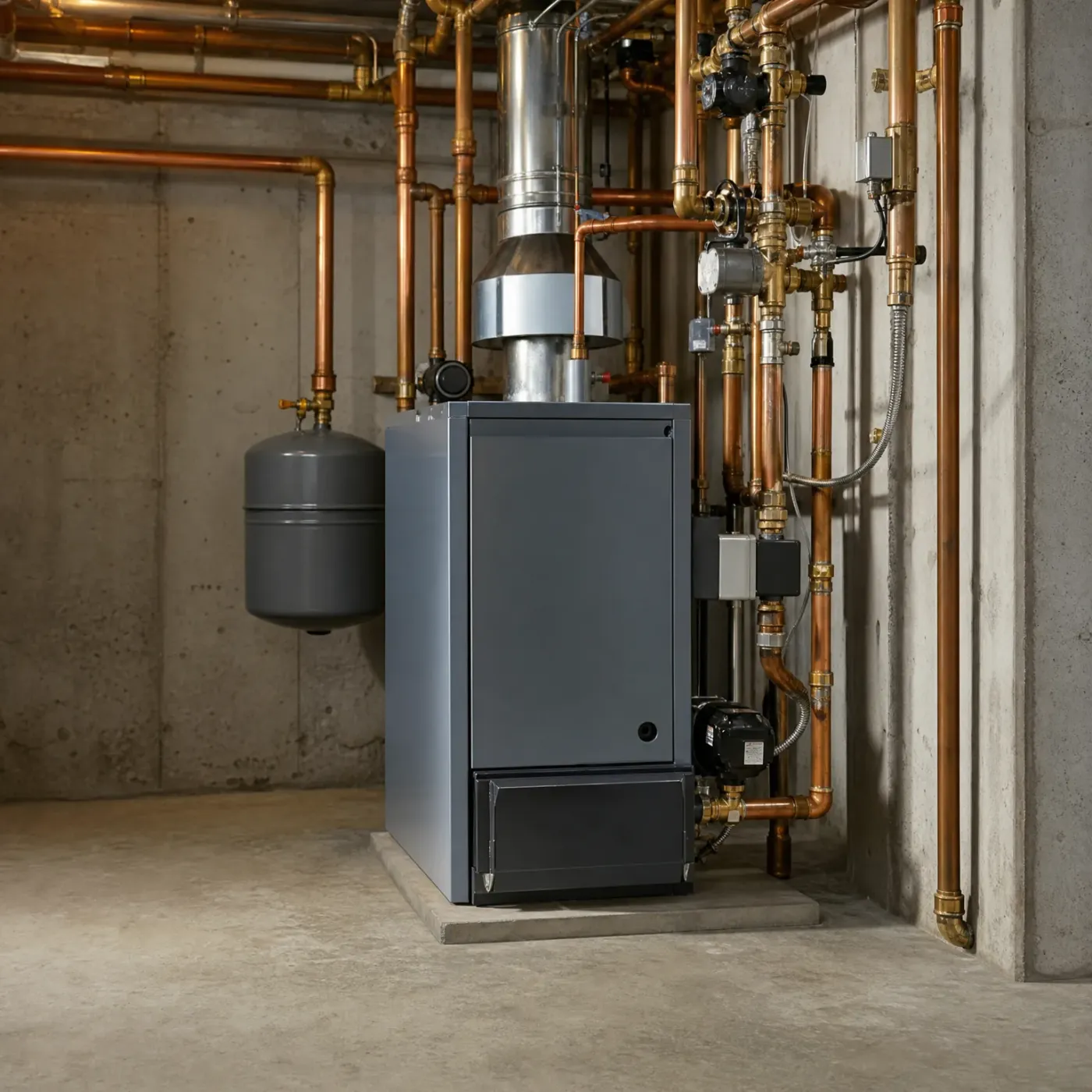
A dark gray floor-standing boiler in a concrete-walled basement, connected to copper piping, circulator pumps, a gray expansion tank, and a cream-colored storage tank to the left.

Running the Way It Should

Copper lines and fittings stay tight and dry, the circulator pump moves water without complaint, and the expansion tank sits there doing its quiet job. A room like this says the boiler is keeping up.

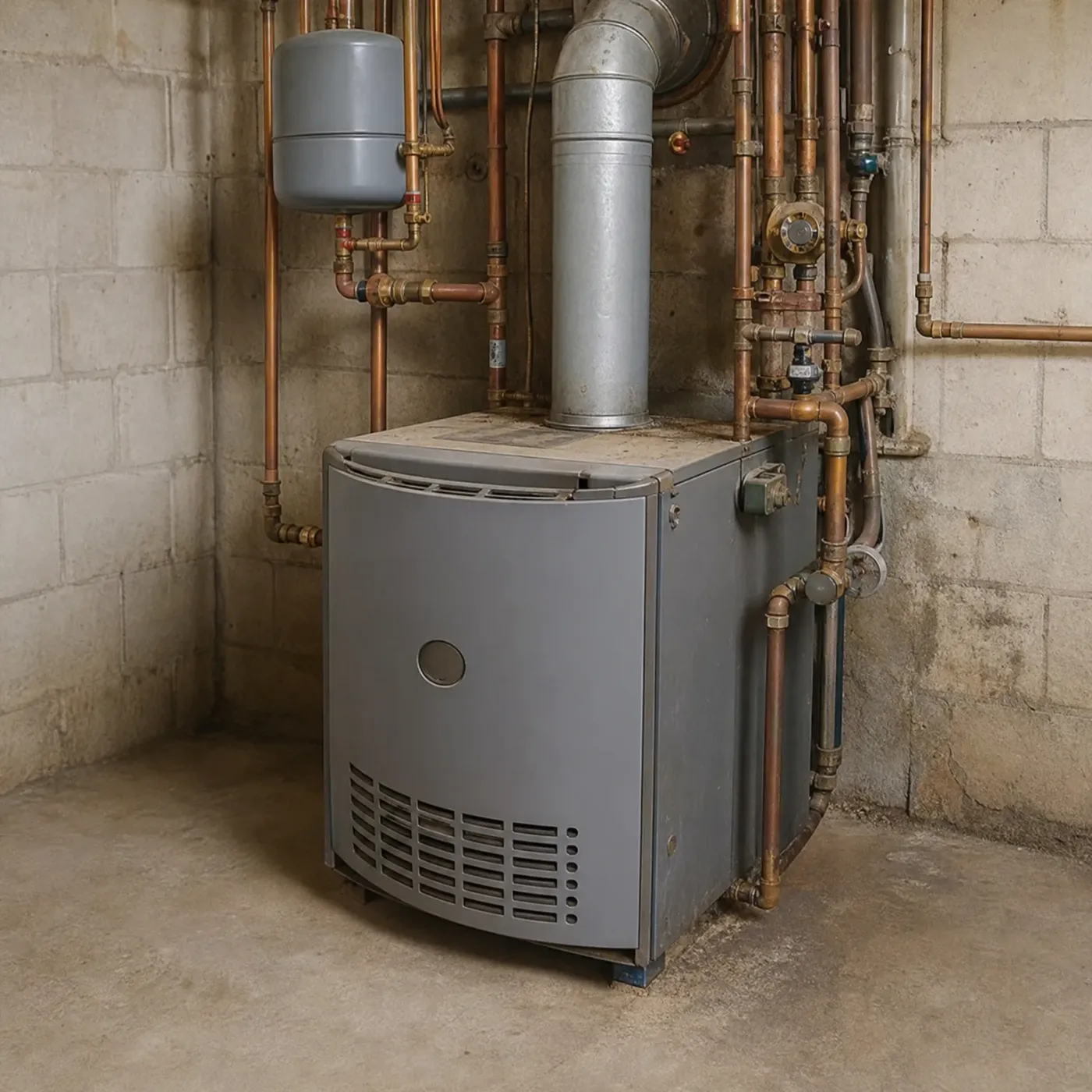
A gray residential boiler with a metal flue pipe stands in a concrete-block basement corner, surrounded by copper piping, valves and a gray expansion tank.

Showing Its Age

That galvanized flue pipe rising off the unit is worth a look. If it's rusted or the joints have pulled apart, combustion gas isn't going where it should. Paired with an aging boiler, that's not something to leave for spring.

A woman stands in the open front doorway of a single-story house with stone and wood siding while a man in a dark polo shirt and cap walks toward it along a concrete path.

If your boiler is showing these signs, don't wait for the next cold snap

The signs above tell you where your boiler stands. Short cycling, uneven heat, rust at the fittings, a yellow flame, kettling, a flue connection that looks scorched: any one of these means the boiler needs a look before the next hard freeze asks more of it than it can give. None of them get better on their own.

A local contractor who works on boilers all winter has seen these same signs play out in houses like yours and knows what usually turns out to be the problem. Once you're matched, that's who reaches out, one contractor who knows the equipment, not a string of calls to sort through. You'll know where your system stands before the weather forces the question.

A wooden table holding a stone vase with a bare branch, two stacked books and a small dark bowl, beside a window with green foliage outside and a sofa in the dim background.
Sunlight falls across a beige upholstered sofa with a textured woven cushion and a chunky knit throw, beside a dark wood cabinet holding a ceramic vase with green leafy branches, near a white-framed window.
A sunlit corner of a room with a wooden side table holding a ceramic vase of green foliage and a wooden bowl, beside a light upholstered sofa with a knit throw and rust-colored pillow, with window shadows cast on a beige wall.
A sunlit room corner with beige walls, a white-framed window with sheer cream curtain, wood floor with a light rug, and a woven basket holding a knit blanket.
A beige ceramic vase holding a leafy green branch sits on a wooden cabinet in a corner, with sunlight through a sheer curtain casting leaf shadows on the wall.
A grey upholstered sofa with a rust-orange velvet cushion and a textured throw sits beside a window with linen curtains, next to a wooden side table holding a pale ceramic vase of olive branches.

Matched to your boiler job

Your request goes to one pro, not a list of companies.

Find a pro near me

You're not committing to anything by asking.