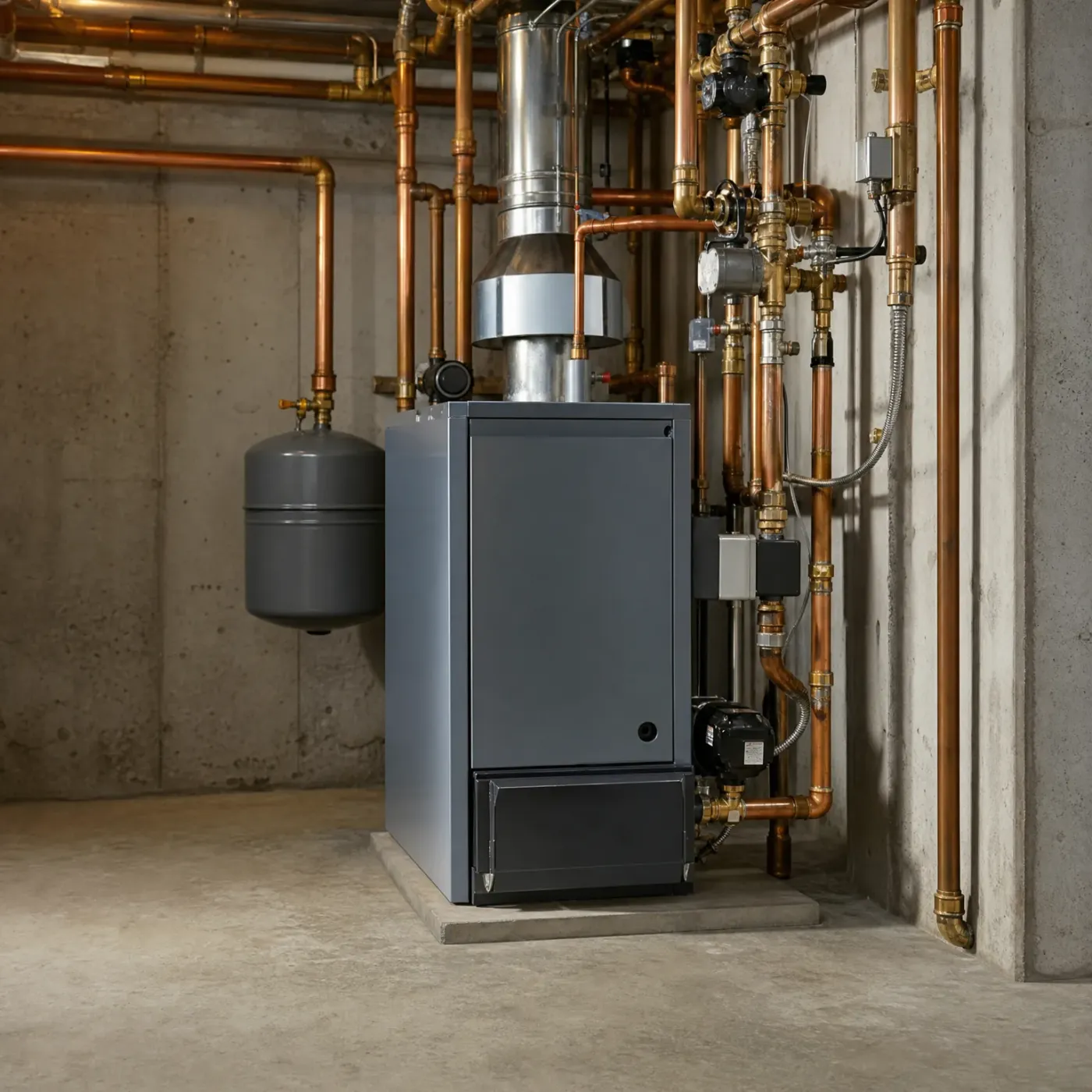
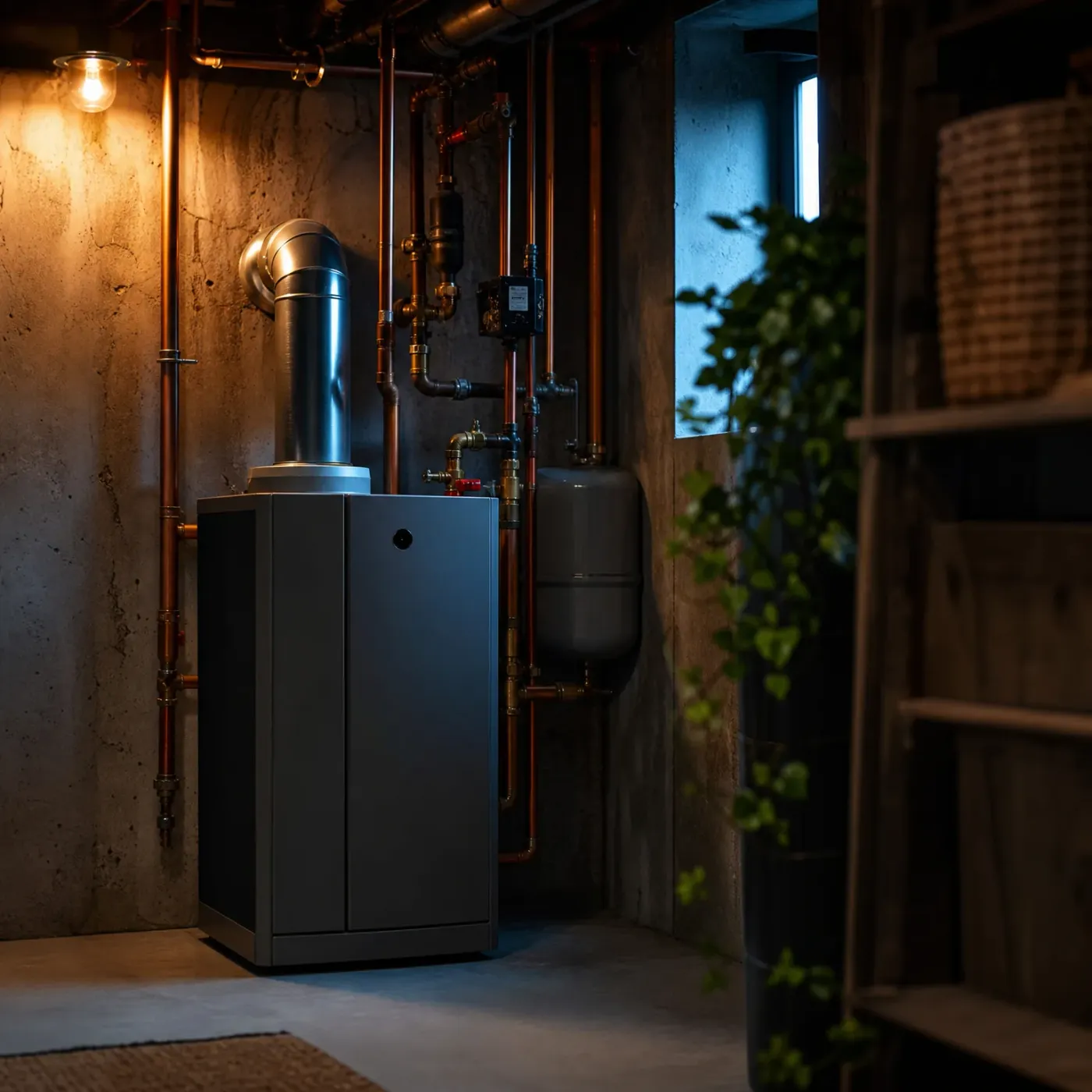
A dark grey floor-standing boiler with a metal flue stands against a concrete basement wall, surrounded by copper pipework, valves and a wall-mounted expansion tank, with ivy and a shelving unit at right.

Let someone else find the pro

Repair or replace an old boiler in Massachusetts

A boiler that's on its third repair this winter has you asking the real question: fix it again or replace it now. That depends on its age, what's failing, and whether parts for it are even easy to get anymore. Send in your address and a local contractor who works on boilers all winter takes it from here.

Let a pro reach out

A boiler worth repairing is one where the problem is a single part: an igniter, a circulator pump, a pressure-relief valve. Parts like that are still made, the fix is quick, and the boiler goes back to doing its job. Replacement makes more sense once the cracks show up in the heat exchanger itself, or once a contractor can't get parts for the model anymore because it's old enough that the manufacturer has stopped making them. Most Massachusetts homes heat with gas, and a gas boiler that's failed more than once this winter is usually telling you the same thing each time: the next cold snap will find it again. An old boiler running on borrowed time costs you more in February than a new one costs to install in November. The difference between repair and replace almost always comes down to what's actually broken and how old the unit is, and a contractor who looks at it in person can tell you which one you're dealing with.

A smiling man in a dark navy sweater sits on a light sofa in a living room, with a glass bowl of popcorn on a wooden coffee table and bookshelves behind him.
A smiling man in a dark green sweater sits on a tan leather sofa in a dimly lit living room, with a bowl of popcorn in the foreground and a kitchen area blurred behind him.
A smiling middle-aged man in a dark shirt sits on a gray sofa in a living room, with a bowl of popcorn on a side table and shelves, a window and kitchen area behind him.
A smiling bearded man in a dark gray t-shirt sits on a gray couch in a living room, with a large glass bowl of popcorn on a wooden table in the foreground.

Is your boiler telling you something right now

Short cycling is one of the clearest signs, the boiler firing up, running a few minutes, then shutting off before the house warms. You might hear banging or kettling from inside the tank, a sign of sediment buildup around the heat exchanger. Rust streaks near fittings or a puddle underneath mean a leak, and that doesn't fix itself. Rooms that used to heat evenly now have cold spots. If you're bleeding radiators more often than you used to, or the pilot won't stay lit, the boiler is working harder to do less. Left alone, a leak or a cracked heat exchanger can mean a bigger repair bill later, or a boiler that fails on the coldest night of the year instead of on your schedule.

  1. A contractor checks the boiler's age and the part that's failing

  2. They confirm whether the part is still manufactured

  3. If it's a single part, they repair it and test the system

  4. If the cracks run deeper, they size and install a new boiler

A gray boiler on a concrete pad in a basement, connected to copper piping, valves, circulator pumps, a metal flue, and a wall-mounted expansion tank.
Clean copper lines, a steady flue, pumps running quiet. A boiler like this is still worth calling someone to repair.
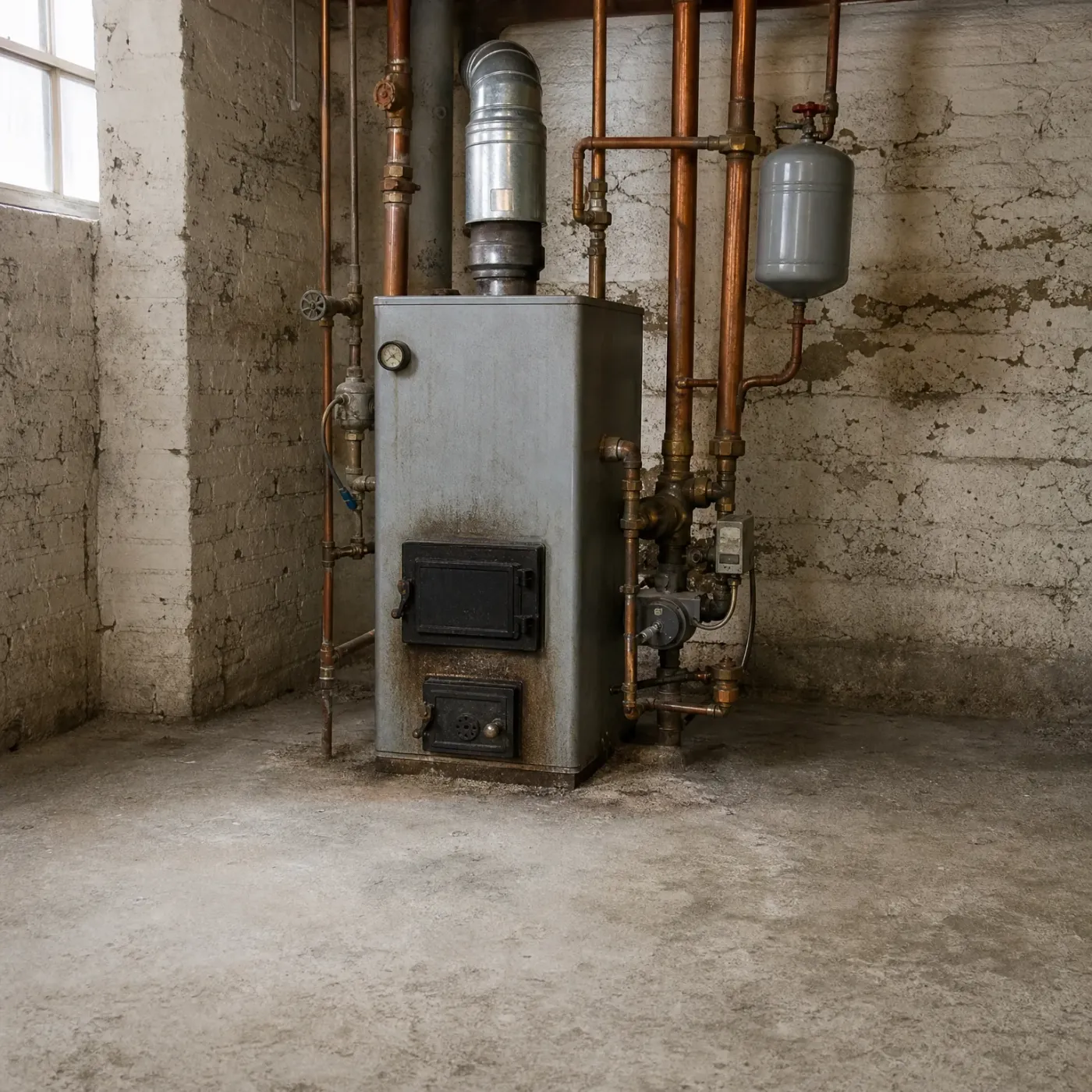
An old gray boiler with copper piping, a flue duct, pressure gauge and an expansion tank stands in the corner of a basement with painted masonry walls and a bare concrete floor.
A bare cast-iron boiler in the corner, old enough that parts are getting hard to find. This is the one you replace.

Cast iron and steel age differently. A cast-iron boiler holds heat in its sections and can keep working long after a steel one of the same age would be done. If yours lost power this winter, it likely came back on by itself once the power did too, since a standing pilot burns gas, not electricity. Some failures announce themselves. A popping or rattling sound from inside the tank is sediment that's baked onto the heat exchanger where water isn't moving. A circulator pump that hums without turning is usually seized, not dead, and a contractor can often free it rather than replace it. Other failures hide in plain sight. Check the pressure gauge. Under 12 psi, the boiler won't fire at all, even with every other part sound. And a boiler sized too big for the house will short cycle no matter how new it is, because it heats the rooms faster than the thermostat can keep up with.

How a boiler actually fails

  • A cast-iron boiler holds heat in its sections and can run another twenty years past the point a steel one would give out.
  • Standing pilot boilers relight on their own once power comes back, since the pilot runs on gas, not electricity.
  • Kettling sounds like popcorn or marbles rattling inside the tank, caused by sediment baking onto the heat exchanger where water sits still.
  • A circulator pump that hums but doesn't turn is usually seized, and a contractor can often free it without replacing the whole pump.
  • Low water pressure on the gauge, under 12 psi, will stop a boiler from firing even when every other part is sound.
  • A boiler sized too large for the house short cycles no matter how new it is, because it heats the space faster than the thermostat can track it.
A woman with dark hair in a bun reclines on a sofa with her eyes closed, wrapped in a cream fleece blanket, a closed blue hardcover book resting in front of her, with a lit lamp and a vase of dried flowers in the background.
A smiling bearded man in a navy sweater sits at a candlelit dinner table with a glass of red wine, a bowl of salad, and plates of food in the foreground.

One request and it's handed off

One installer gets your project, so there's no bidding war over it.

No fee to send it, and nothing to sign.

What gas boilers cost to run here

Massachusetts heats mostly with gas, and a boiler that's lost efficiency shows up on that bill before it shows up as a breakdown. An old boiler with a cracked heat exchanger or a failing aquastat works harder to hold the same temperature, cycling more to make up for heat it's losing. Electric backup or an electric circulator pump adds to that, and power here costs more than in most states. A newer boiler holds its temperature with less firing, so the difference is easiest to see over a full winter, not in any single month.

Why summer still matters

Summers get sticky in Massachusetts, and a boiler that also handles hot water keeps working even when the heat's been off for months. A unit that sat idle all summer can struggle to relight or hold pressure once it's called on again in the fall, especially if sediment built up in the tank. A contractor checking a boiler in October is also checking how it handled sitting unused since spring. If it's been short cycling or losing pressure since you last ran it, that's worth mentioning when someone comes to look at it.

Winter nights average 21°F statewide

A 21°F night means your boiler runs long stretches without much of a break. A single part, like an aquastat holding steady, is what keeps it from cycling on and off all night trying to catch up.

NOAA nClimDiv 1991-2020 county normals weighted by homes

Repair or Replace, Settled

  • A boiler worth fixing has one bad part; a boiler worth replacing has a cracked heat exchanger or a cast-iron block too old to find parts for.
  • Short cycling, kettling, and a pilot that won't hold are signs worth checking before another cold night goes by.
  • A local contractor who services boilers all winter knows which parts are still made and which ones mean it's time to size a new unit.
  • Sending in your address connects you with one licensed Massachusetts contractor, not a handful of companies competing for the call.
  • Someone who works on this equipment every season in homes like yours can look at your boiler and give you a straight answer.
  • Either way, the fix is the same next step: get a contractor's eyes on it before the next cold snap decides for you.

The question was never complicated. One bad part, still made, worth fixing in an afternoon. A cracked heat exchanger or a cast-iron block nobody stocks parts for anymore, worth replacing before it fails on the coldest night of the year. The signs along the way, short cycling, kettling, a pilot that won't hold, just tell you which side of that line your boiler is on.

What you need now isn't another winter of guessing. It's someone standing in front of the boiler who can tell you straight which one you're dealing with. A contractor who services boilers in Massachusetts homes all winter has seen this exact unit, or one close enough to it, more times than they can count. They know which aquastats are still on the shelf and which cast-iron blocks have quietly become impossible to source. That's not a guess from a phone call. That's someone who opens the panel and already has an idea what they'll find.

Send in your address and that's what you get: one licensed local contractor, not a pile of competing bids clogging your evening. Someone who works on this equipment for a living, in homes like yours, with winters like yours. The boiler itself will tell you which way this goes once someone qualified is standing in front of it. Until then, it's just a noise in the basement and a bill that keeps climbing.

At dusk, a dark board-and-batten house with a standing-seam metal roof and lit entry walkway of stone pavers, with two large outdoor heat pump units on a stone-walled pad at right and trees and hills in the background.

Boiler Installation

Done looking for a boiler pro

Step 1 of 3: Equipment
  • A dimly lit living room corner with a beige upholstered sofa holding a dark green cushion and a chunky knit throw, beside a wooden sideboard with a lit ceramic table lamp, a small potted plant, and a wooden bowl, with a framed artwork on the wall and a mug on a book in the foreground.
    • A local installer who puts in boilers gets your project.
    • Get in touch with a local installer about a new boiler.
  • A round wooden coffee table holding a round stone vase of green foliage, a lit candle in a glass container, and a small dark bowl, with a beige sofa, cushions and knit throw behind and a window at left.
    • Send it once and finding someone is no longer on you.
    • Send the form and stop researching installers for the new boiler.
  • Sunlit living room with a wooden coffee table holding a ceramic vase of leafy branches and a carved wooden tray with two stacked books, in front of a beige sofa with tan and green cushions and a potted plant near a window.
    • Skip collecting and comparing quotes for the new boiler.
    • Explain the job once and skip repeating it on every call.
  • Interior corner with a lit ceramic table lamp and wooden bowl on a wood sideboard, a framed picture and branch-filled vase behind, a knit throw over an upholstered chair, and a lit candle in a glass holder, stoneware mug and round planter of green foliage on a wooden table in the foreground.
    • Your request stays with one local pro.
    • Your request goes to one pro, not a list of companies.