Bay State Boiler Pros

Is a high-efficiency boiler worth it in Massachusetts

One request ends the search for a boiler installer.

Step 1 of 3: Equipment

For most Massachusetts homes, yes. Gas is how most people here heat, and a high-efficiency boiler burns less of it to make the same heat. The old standard boilers vent a lot of that heat straight up the flue. A high-efficiency model, usually a condensing boiler, pulls more of it out before the exhaust leaves the house, often running in the mid-90s for efficiency against the 80 percent or so of an older standard unit. Over a winter that runs from October into April, that difference shows up every month on the gas bill, not just once. It matters more if your boiler is old enough that it's losing efficiency anyway, or if it's sized wrong for your house and runs longer than it should. The installation itself is more involved than swapping in a standard boiler, since venting and piping work differently, so it's worth having someone local look at your actual setup before you decide.

A gray boiler on a concrete pad in a basement corner, connected to copper and black pipes with a gauge, circulator pump, and gray expansion tank, beside a wood-framed wall.

A standard boiler doing its job

This is what most Massachusetts basements have had for decades. It heats the house fine. It also sends a good share of the gas you paid for straight out that flue pipe as heat the house never gets.

An older oil-fired boiler with a burner unit, flue pipe, expansion tank and copper piping stands in the corner of a concrete-floored basement with weathered plaster walls.

What's sitting behind the walls of pipe

An old boiler like this keeps running until it doesn't, usually in January. The burner and pump are original parts doing the same work year after year, and every winter asks more of them than the one before.


Keep the boiler or upgrade

Staying with standard

  • No installation to pay for now, and no mid-winter project to schedule around.
  • You already know how it behaves, what the pilot light looks like, what sounds are normal.
  • Gas use stays where it's been, which in a Massachusetts winter is not a small number on the bill.
  • If the heat exchanger or venting is near the end of its life, this is borrowed time, not a fix.
  • Parts for an older standard boiler are usually easy to find, since so many homes here still run one.

Switching to high-efficiency

  • Installation costs more upfront, and venting usually has to change since these units vent through PVC pipe, not the chimney.
  • Less gas burned for the same heat, every month furnace and boiler would otherwise run, which here is most of the year.
  • Condensing boilers need a condensate drain, so where that water goes has to be worked out during install.
  • A contractor who installs these regularly in Massachusetts homes will know which venting routes and condensate setups actually work in an older basement.
  • Once it's in, the lower gas use keeps paying back for as long as you own the house.
  • The unit runs quieter and the room it sits in stays cooler, since far less heat escapes before it ever reaches your radiators.
A man in a gray sweater reclines in a brown leather armchair with his eyes closed, beside a wooden side table holding a mug, a folded newspaper and a potted plant, with a bookshelf and sunlit window behind him.
A man with greying hair and a dark sweater leans back on an armchair with his eyes closed and a slight smile, in a living room with a bookshelf, plant, folded newspaper and mug on a wooden table.
A man in a gray fleece jacket sits reclined in a leather chair with his eyes closed, in a room with bookshelves, a table lamp, a window, and a desk holding a folded newspaper and a dark mug.
A bearded man in a gray fleece pullover sits with eyes closed in a brown leather armchair in a living room, with a floor lamp, bookshelf, potted plants, a side table holding newspapers and a dark mug, and a bright window behind him.

Finding a pro stops being your job

One installer gets your project, so there's no bidding war over it.

There's no charge for the request.

A gray floor-standing boiler with a metal flue stands against a concrete block wall, connected to copper pipes, brass valves and a gray expansion tank, on a bare concrete floor.
A boiler like this, kept up, will run efficiently and heat the home without issue.
A blue oil-fired boiler with a burner unit and pressure gauge stands in a concrete basement corner, connected to copper pipes and a metal flue.
An older oil burner like this is working harder than it should to keep up, and it shows in the gas bill.
  1. Cold water enters and the sensor checks return temperature first

  2. A modulating burner fires at the exact rate the house needs

  3. Flue gas passes through a second heat exchanger, not just one

  4. That second pass condenses the exhaust, pulling out more heat

Winter nights average 21°F statewide

21°F is the average overnight low here from December through February, and your boiler is built to answer that call night after night. A standard model burns a lot of gas doing it, since so much heat goes straight out the flue. The colder it gets outside, the more that difference shows up on your bill.

NOAA nClimDiv 1991-2020 county normals weighted by homes

A standard boiler runs its flue gas out at well over 300°F. All of that heat came from gas you paid for, and none of it reached a single radiator.

A condensing boiler cools that same exhaust low enough to pull the heat back out before it leaves, which is the whole difference in a Massachusetts gas bill.
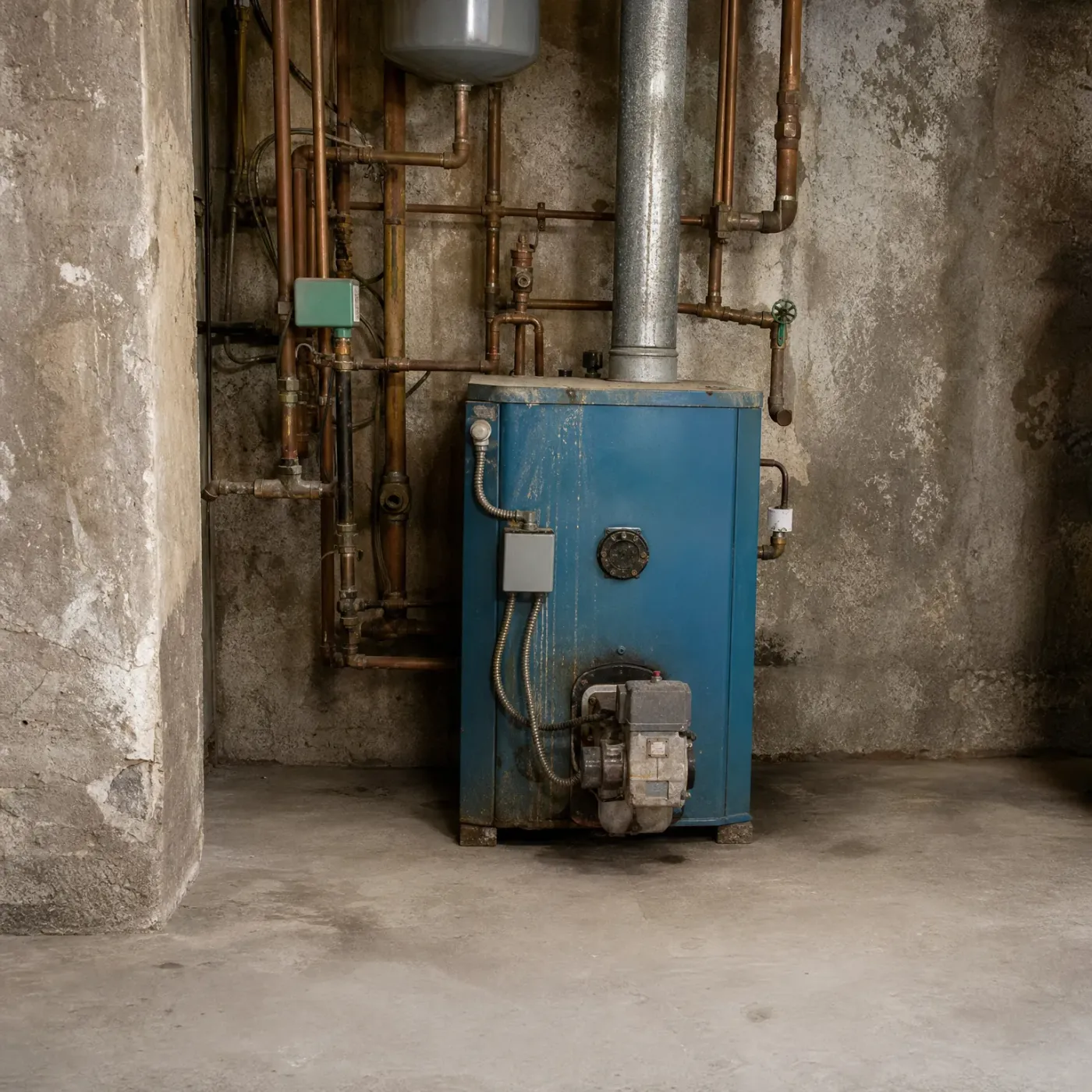
A blue cabinet boiler with a metal flue pipe and copper piping stands against a bare concrete wall in a basement with a concrete floor.
Before you get your boiler installation
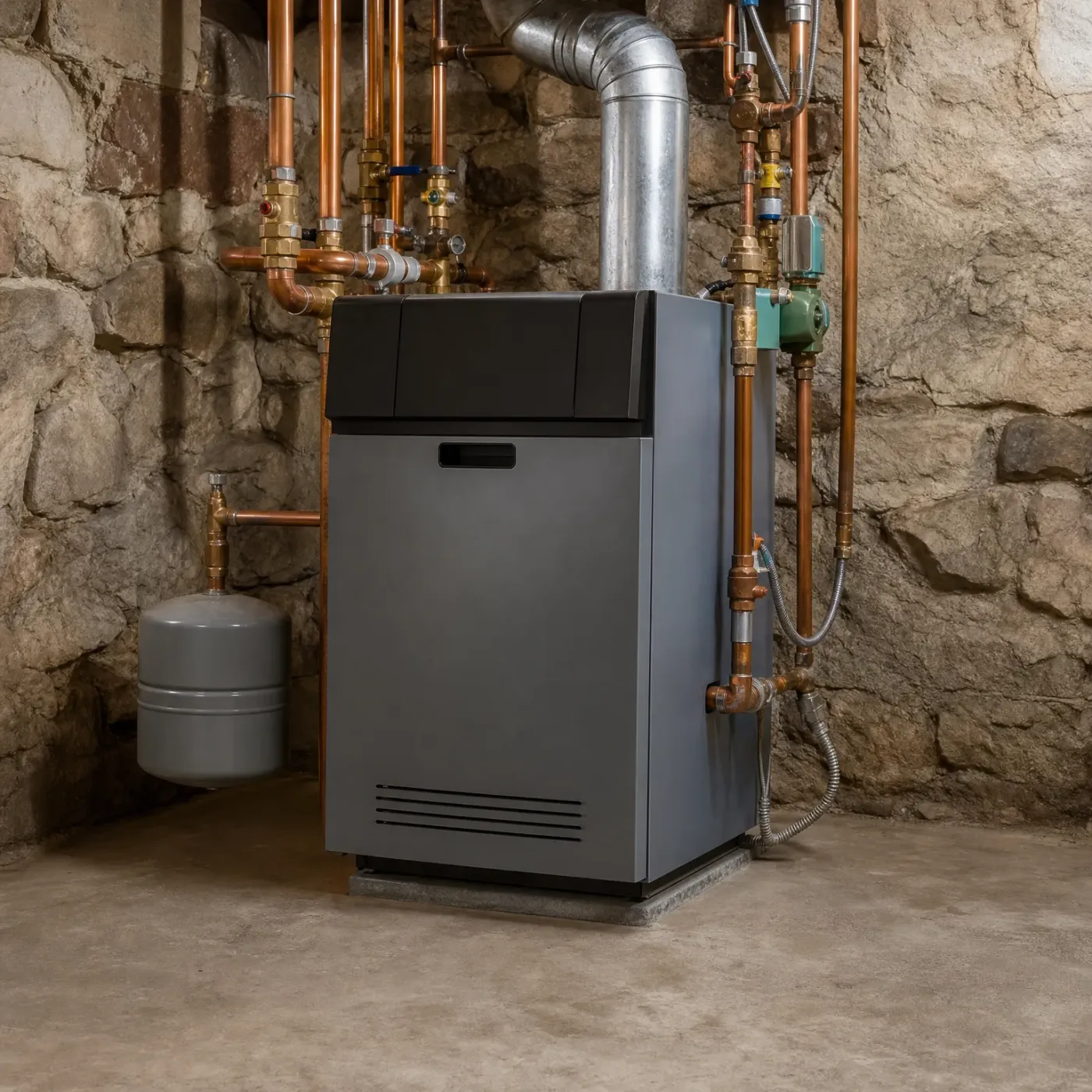
A gray residential boiler on a concrete pad in a basement with stone walls, connected to copper piping, brass valves, a circulator pump, an expansion tank, and a metal flue duct.
After you get your boiler installation

Where That Leaves You

  • A high-efficiency boiler costs less to run than a standard one in a state where gas heats most homes and winters ask a lot of it.
  • The payback shows up every month on the gas bill, not as a one-time saving you forget about by spring.
  • A standard boiler isn't broken or wrong to keep, it just burns more gas doing the same job.
  • A local contractor who installs these in Massachusetts basements every winter knows which models hold up to a Massachusetts cold snap and which don't.
  • Working with one licensed contractor instead of several means one person who knows your situation, not a stack of calls to sort through.
  • The furnace or boiler already in your basement tells you most of what you need to know about whether this is worth doing now.

If you heat with gas in Massachusetts, a high-efficiency boiler earns its keep. It costs less to run than a standard one, and in a state where winter asks this much of a heating system, that difference shows up month after month. None of this means your current boiler is a bad one. It just burns more gas to put out the same heat a condensing model would make from less.

Whether this is worth doing now comes down to what's in your basement. A unit that's holding up fine can keep running. One that's older, or struggling to keep pace on the coldest nights, is a different question, and that's worth a look from someone who sees this equipment all winter.

That's where a local contractor matters more than it might seem. Someone who installs boilers in Massachusetts basements every winter has seen which models hold up through a hard cold snap and which ones end up getting service calls a few years in. That's not something you get from a spec sheet. It comes from doing the work here, season after season.

You'll also only hear from one contractor, not four or five. That means one person looking at your actual setup, your actual boiler, and giving you a straight answer about your situation, rather than a handful of competing pitches to sort through on your own. For a decision that's going to sit in your basement for years, that's a better way to get to an answer you can trust.

Interior corner with a white-trimmed window overlooking green shrubs and trees, a framed artwork on a pale wall, and a woven basket holding a fringed linen throw on a wood floor.
Corner of a white horizontal-siding house with a white downspout running from the roof gutter to a mulched bed of shrubs, beside a mown lawn and leafy trees in low sunlight.
Corner of a house with board-and-batten siding, a shingled roof, and a dark gutter and downspout, with shrubs in the foreground and conifers and bare trees against a hazy sky behind.
A dark round planter holding a white-flowering hydrangea sits on a concrete porch between a stacked stone wall, a wooden post, and a dark vertical board-and-batten wall beside a window.
A dark wood front door with a divided-light glass panel above stone steps, flanked by white columns, shingle siding, a woven basket planter with a draped throw, dried hydrangea blooms, and trimmed shrubs with fallen leaves on the paving.

Let someone else find the pro

Only one pro gets your request, so you hear from one company.

Get a licensed local pro

You only hire the pro if you want to.