







Profile view of a bearded man wearing a black baseball cap and a dark gray T-shirt against a plain light background.

How to bleed radiators before a Massachusetts winter

Step 1 of 3: Equipment

Bleeding a radiator means letting the trapped air out of it so hot water can fill the whole thing again. Open the small valve at the top with a radiator key or flathead screwdriver, and hold a cloth underneath. Air hisses out first. Close the valve the moment steady water starts coming instead, usually just a few seconds in. A radiator that's cold at the top but warm at the bottom has air trapped in it, and that pocket keeps the water from circulating through the whole unit. Do this to every radiator in the house before you turn the heat on for the season, starting with the one farthest from the boiler and working back toward it. A boiler that's fighting trapped air works harder to heat the same rooms, and with gas prices what they are in Massachusetts, that adds up over a winter that runs from October into April.

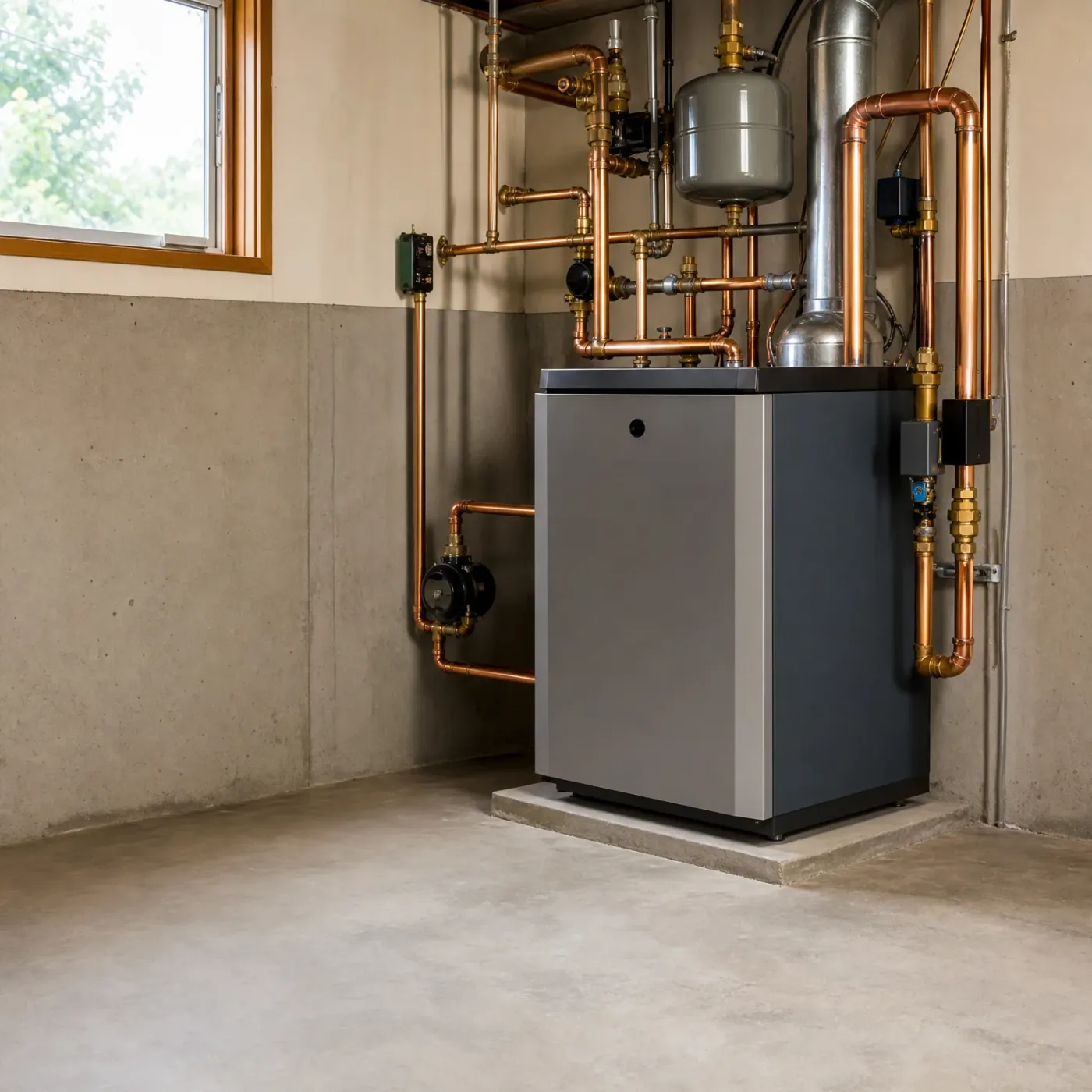
A dark gray floor-standing boiler on a concrete pad in a basement, surrounded by copper piping, brass valves, a gray expansion tank, a circulator pump, and a metal flue pipe against concrete block walls.
Bled and running right, a boiler like this heats evenly, top to bottom, on every radiator in the house.
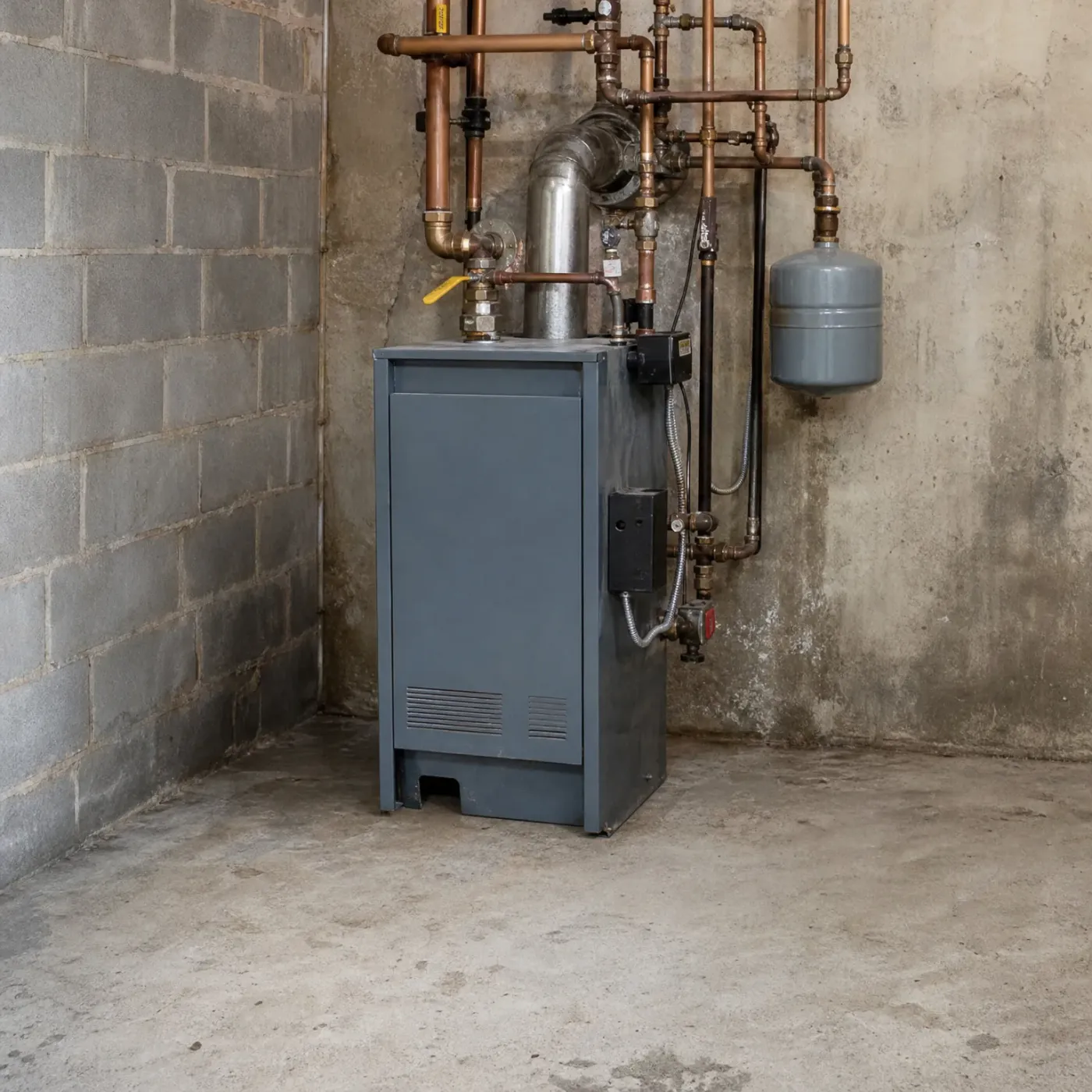
A blue boiler on a raised concrete pad in a basement corner, with copper and steel pipes, a gauge cluster, an expansion tank, and a metal flue running up the bare concrete walls.
Cold spots up top and a boiler working harder than it should both point to air still trapped in the lines.
  1. Shut off the boiler and let radiators cool fully.

  2. Turn the radiator valve open so water can flow.

  3. Fit the key into the bleed valve at the top.

  4. Turn slowly until trapped air starts to hiss out.

A woman in a cream knit sweater sits in an armchair with her eyes closed and a slight smile, beside an open window showing orange autumn foliage, with a mug, books and a lit candle on a small side table.
An older man with gray hair and a beard leans back on a beige sofa with his eyes closed, in a sunlit room with potted plants, a wicker chair and large windows behind him.

A radiator holding air doesn't announce it. It just runs cooler at the top than the bottom, and the boiler downstairs picks up the slack, cycling longer to push the house to the same temperature you always set it to. That extra runtime is gas, and with what power and heat cost in Massachusetts, it adds up over a winter without you ever seeing the cause. Leave the air in there long enough and it sits against the metal inside the radiator, which is where corrosion starts, slow and out of sight. None of this breaks anything overnight. It just means the boiler works harder than it has to, week after week, and parts built to last years start wearing down sooner. Bleeding every radiator in the house before the cold really sets in is an afternoon, start to finish. Skip it, and you're troubleshooting cold spots room by room in January instead, after the pressure's already dropped and the system's telling you it needs attention you could have given it in October.

What skipping it costs you

  • A radiator that stays cold at the top while the bottom heats up is still holding air and won't bleed itself out.
  • An unbled radiator forces the boiler to run longer to reach the same temperature, and gas burned that way shows up on the bill.
  • Trapped air left in the system all winter can let the metal inside the radiator corrode over time.
  • A boiler working harder than it needs to, week after week, wears down parts sooner than one that's running free.
  • Bleeding every radiator once before the heat goes on for good means one afternoon of work instead of troubleshooting cold spots in January.
  • A pressure gauge that reads low after bleeding means the system needs water added back before the first cold night.
A blue oil-fired boiler with a pressure gauge, burner unit and metal flue sits on a concrete pad in a basement corner, surrounded by copper and black pipes against bare concrete walls.
Before you get your boiler maintenance
A gray boiler unit on a concrete pad in a basement corner, connected to copper piping, circulator pumps, and a ceiling-mounted expansion tank against bare concrete walls.
After you get your boiler maintenance

A boiler system holds water at a set pressure, and bleeding a radiator lets some of that water out along with the air. If pressure drops below what the gauge calls for, the boiler won't push heat through the lines at all.

Check the pressure gauge near the boiler after bleeding every radiator in the house. If it reads low, the system needs water added back before the heat works the way it should.

A woman with long gray hair wrapped in a checked blanket sits on a sofa by a window with yellow autumn foliage outside, with a lamp, framed picture and plant in the background.
An older woman in a cream knit sweater sits on a sofa by a window, looking out at sunlit trees with yellow and orange autumn leaves, with a bookshelf and lamp behind her.
A woman with gray shoulder-length hair in a dark knit sweater sits on a cushioned seat by a window, looking out at yellow autumn foliage, with a living room, armchair, houseplant and framed picture behind her.
An older woman with gray hair in a bun, wearing a cream knit sweater, sits on a sofa with a gray blanket and looks out a large window toward yellow-green autumn trees, with a lit table lamp and dark armchair behind her.
A gray floor-standing boiler on a concrete pad in a basement with concrete block walls, connected to copper piping, a flue vent, and an expansion tank.

A pro who works on boilers

Send the form, and lining up the boiler tune-up stops being yours to chase.

Describe your boiler job, and a local pro who handles it gets in touch.

Find my pro

You only hire the pro if you want to.

Winter nights average 21°F statewide

Overnight lows average 21°F here across December, January and February, so your boiler is pushing hot water through every radiator in the house most nights, not just the cold snaps. Trapped air makes that harder on nights like those, and it's the top of the radiator that tells you.

NOAA nClimDiv 1991-2020 county normals weighted by homes

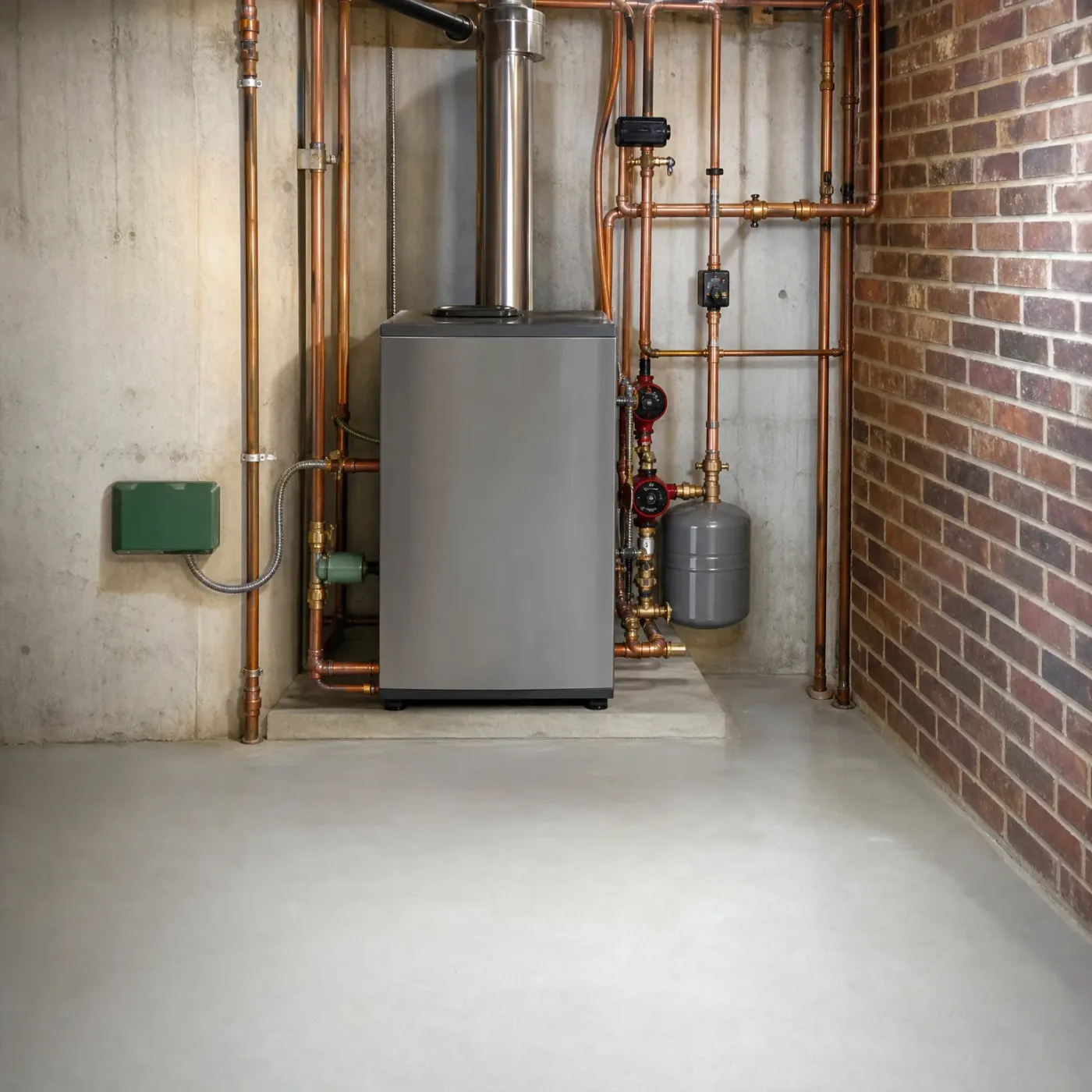
A gray boiler on a concrete pad in a basement, connected to copper piping, valves, pumps and a gray expansion tank, with a concrete wall on the left and a brick wall on the right.

Bled and maintained

This is what the inside of a working system looks like: copper lines, brass fittings, circulators moving water through every radiator without a fight. Pressure holds steady, the gauge reads where it should, and heat reaches the top of each radiator the same as the bottom.
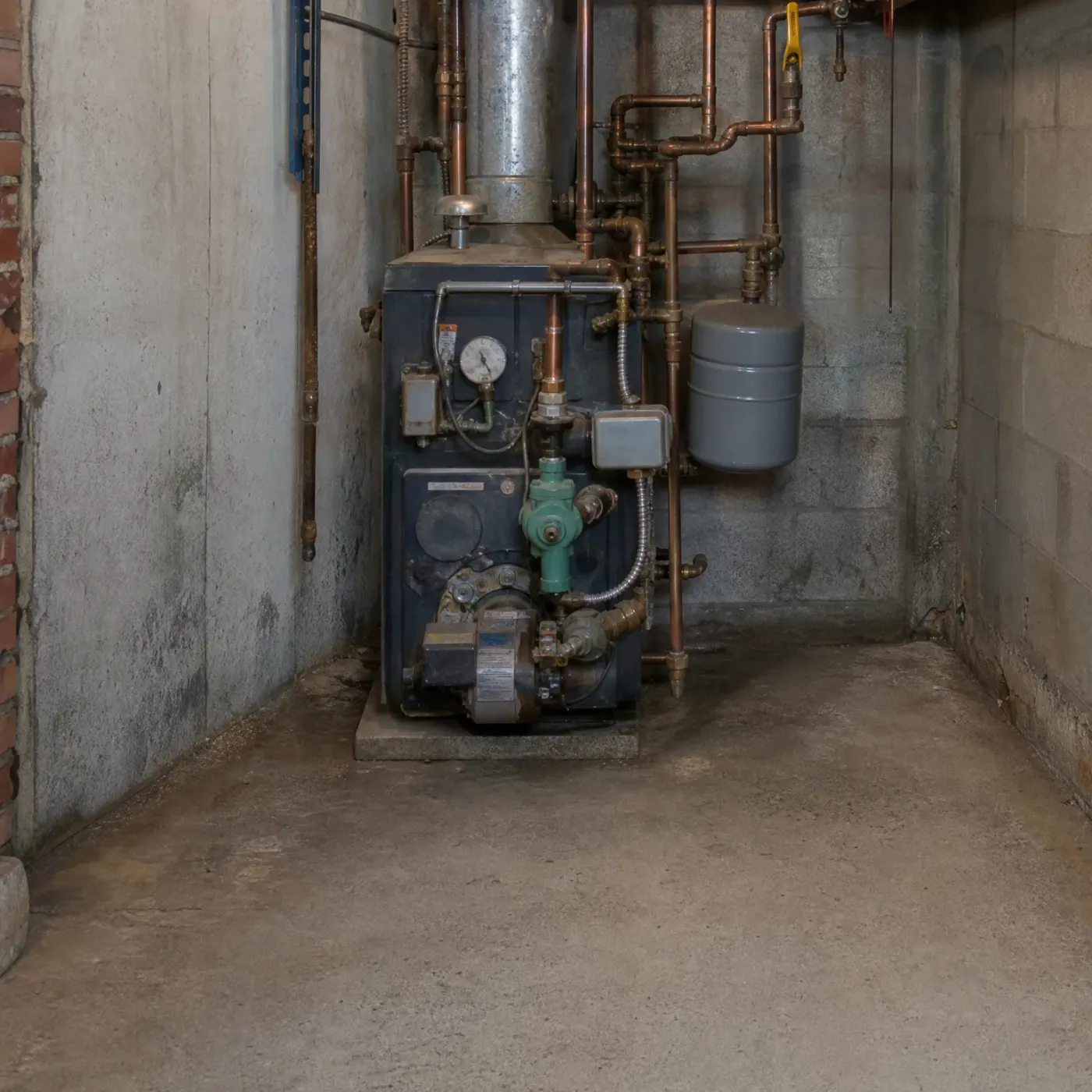
A dark cast-iron boiler with copper piping, pressure gauge, and a gray expansion tank sits on a concrete pad in a basement corner with concrete block and brick walls.

Overdue for attention

This boiler is older and still running, but a narrow alcove like this is where trapped air and a dropping gauge go unnoticed the longest. No one sees the pressure fall until a radiator stays cold at the top, and by then the boiler has been working harder for weeks.

Why is one radiator cold at the top but warm at the bottom?

That's air trapped at the top of the radiator, and you'll likely hear it too, a gurgle or a knock from inside when the boiler kicks on. Some rooms heat fine while one or two upstairs stay cool no matter how high you turn the thermostat. You might also notice the boiler running longer than it used to, cycling on and off more often to reach the same temperature. Left alone, that extra runtime shows up on the gas bill through a Massachusetts winter, and the metal inside the radiator sits wet with trapped water longer than it should, which over years invites rust at the seams.

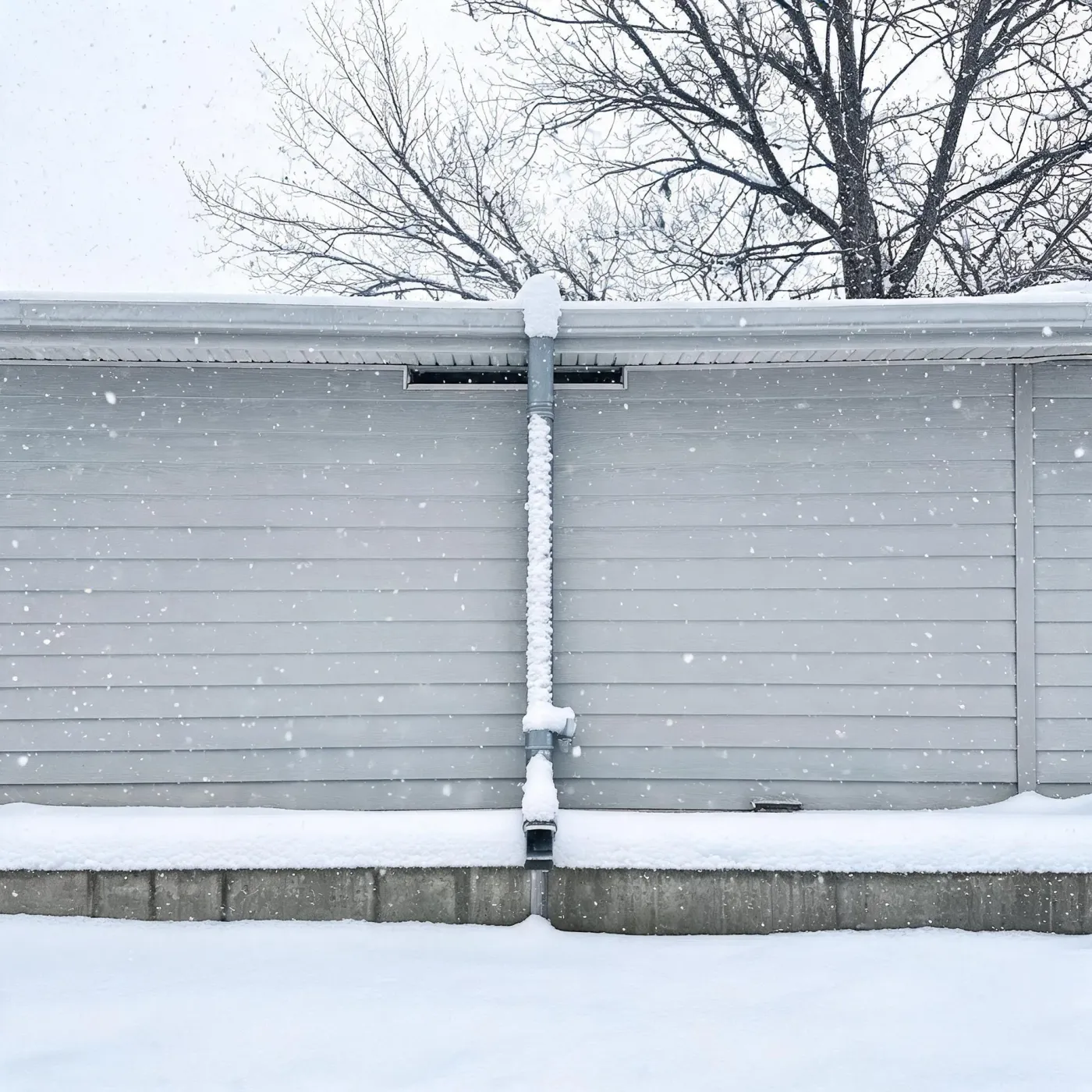
Exterior wall of a building with light gray horizontal siding and a snow-covered downspout running down its center, with bare trees behind the roofline and falling snow over deep snow on the ground.

Winter nights average 21°F statewide, per NOAA, and a boiler kicks on for hours at a stretch to hold the house against that. Water moves through every radiator in the run, over and over, all night. Air pockets left in the lines don't matter much on a mild evening, but on a night that cold they're the difference between a room that heats and one that doesn't. Bleed the radiators before the hard freezes set in and the boiler has a clear path to push heat where it needs to go, instead of fighting trapped air on the nights it matters most.

NOAA nClimDiv 1991-2020 county normals weighted by homes

Bleed It Yourself or Call In Help

Bleed it yourself

  • A radiator key costs little, and most Massachusetts hardware stores carry one built for the standard bleed valve.
  • You control the timing, so you can bleed every radiator in the house the same weekend before the first hard freeze.
  • It takes a few minutes per radiator once the boiler has cooled, so a whole house gets done in under an hour.
  • You'll know right away if a radiator was holding air, because water replaces the hiss within seconds.
  • Doing it yourself means checking the pressure gauge afterward falls on you too, and a system left underfilled still won't heat right.
  • If a valve is seized or won't close back up, you're left with a drip and no easy way to stop it.

Have a contractor do it

  • A contractor bleeding the system can also check the pressure gauge and top off the boiler if bleeding dropped it too low.
  • Seized or corroded bleed valves get replaced on the spot instead of becoming a bigger problem mid-winter.
  • A contractor working through the whole house catches a radiator you might skip, like one in a spare room nobody uses much.
  • Bleeding gets paired with a look at the circulator and the rest of the system, not just the radiators themselves.
  • You're not the one troubleshooting a valve that won't reseat or a radiator that still won't heat after bleeding.
  • Once you're matched with a contractor, getting this done stops being something you have to schedule around yourself.
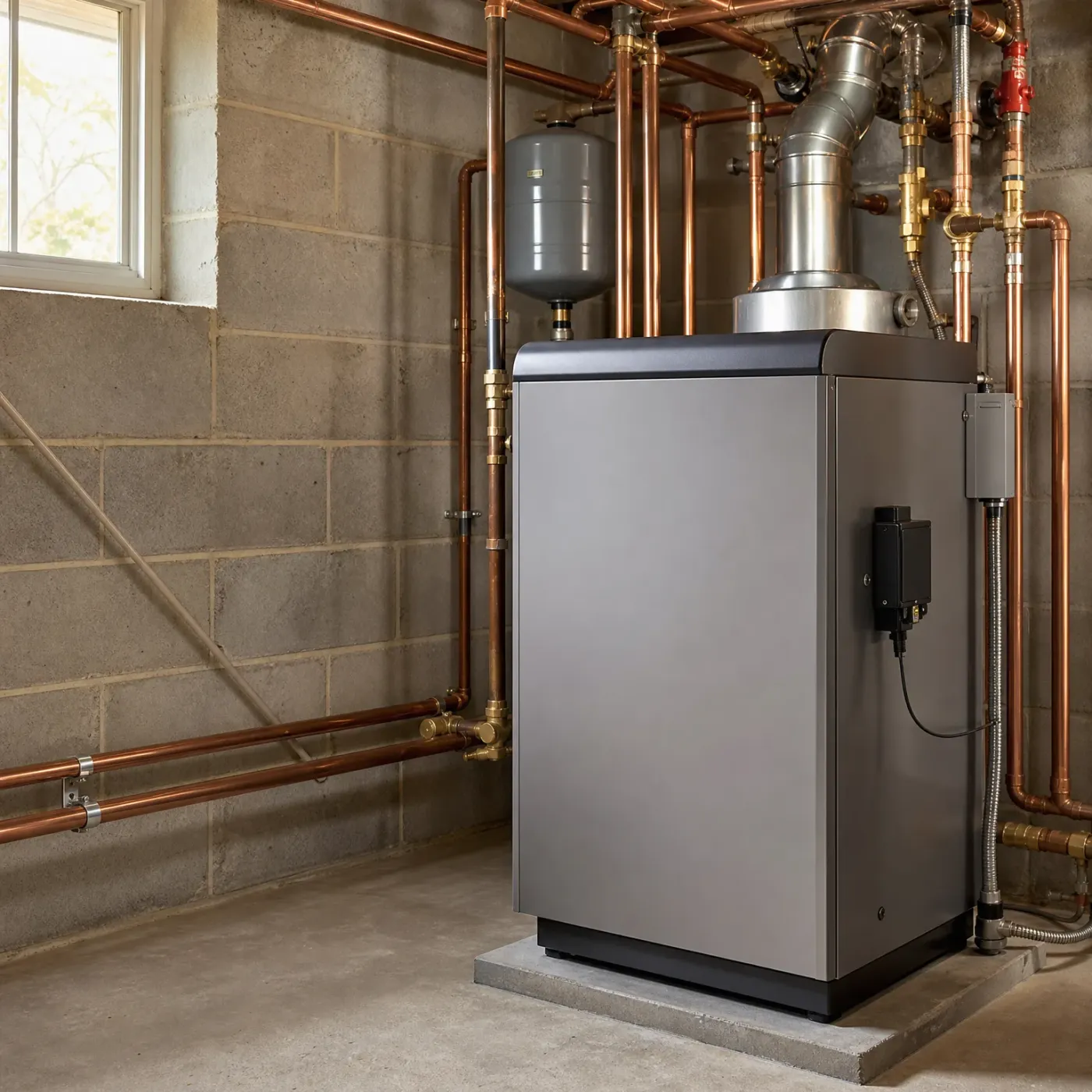
A gray floor-standing boiler on a concrete pad in a basement corner, connected to copper piping, brass valves, a circulator pump, an expansion tank, and a metal flue, with a window at upper left.

Running the way it should

Copper lines and brass fittings carry water from the boiler to every radiator in the house without a fight. The circulator pump moves it steadily, the expansion tank holds its charge, and the flue vents clean. Nothing here is working harder than it has to.

A gray floor-standing boiler in a basement corner with copper and black piping above it, a flue vent, and a gray expansion tank mounted on the concrete wall beside a concrete block wall.

Holding air it shouldn't

This boiler sits against the block wall with the same copper piping and the same expansion tank, but a line holding trapped air makes the pump push against it. The boiler runs longer to move the same heat, and that shows up on the gas bill before anything looks obviously wrong.

A woman in a cream cardigan and jeans stands with one hand raised facing an open front door of a gray horizontal-siding house, with a black lantern wall light, a potted shrub with yellow flowers, and a stone-faced porch column.

A bled radiator heats, and a quiet boiler lasts

Bleeding the radiators is a few minutes of work with a key, a cloth, and a little patience at each valve. Do it before the first hard freeze and the whole house heats the way it should, top to bottom, with the boiler working no harder than it needs to. Skip it and you'll know by the cold spot upstairs, the gurgle in the pipes, and a gas bill that doesn't match what the house felt like.

If you'd rather have someone else check the whole system while they're at it, that's a different conversation than the one this page walked through. A local contractor can look at pressure, the expansion tank, and every radiator in the run, not just the one acting up. Once you send the request, the looking is theirs to do, not yours.

A living room corner with a light beige sofa holding a textured taupe cushion, a large ceramic vase of olive branches by a window, a framed neutral artwork on the wall, and a dark bowl with stacked books in the foreground.
Corner of a house with light horizontal lap siding, a white gutter and downspout, and a window, beside a mulched bed with small shrubs, a lawn, wooden fence and trees in the background.
Close-up of a white gutter along an asphalt-shingle roof edge with dry brown leaves collected in it, a downspout and lap siding below, and blurred autumn trees in the background.
Exterior corner of a house with horizontal lap siding above a stone veneer base and a dark-framed window, with ornamental grasses and shrubs in the foreground and trees in low sunlight behind.
A white horizontal-siding house with a steep gray shingled gable roof, fronted by trimmed shrubs, a brick walkway, and a lawn scattered with fallen autumn leaves.
Corner of a house with cream horizontal lap siding, a black-framed window, asphalt shingle roof with dark fascia, white hydrangea blooms and green shrubs below, and a leafy tree and wood fence to the right.

Get your boiler to the right pro

After this form, you can stop searching for a boiler pro.

Get a boiler pro

Asking costs nothing, and the choice to hire stays yours.