


How long a boiler lasts in Massachusetts

A local installer who puts in boilers gets your project.

Connect with a pro

How long does a boiler last in Massachusetts?

Your boiler has kept the house warm through plenty of Massachusetts winters, and you want to know if it's nearing the end or if you've got years left before you need to worry about it. That answer changes how you plan for the cold months ahead.

A boiler in Massachusetts typically lasts 15 to 20 years

Most boilers run 15 to 20 years before they need replacing, and in Massachusetts that lifespan holds up well since gas heat, which most homes here use, tends to be easier on equipment than other fuel types. What shortens that span is how hard the system works. A boiler built for a smaller space but heating a bigger one, or one that cycles on and off all winter because of poor insulation, wears out sooner. Toward the end of that range, expect more repairs and less even heat through the house. If your boiler came with the house and you don't know its age, a technician can check the data plate and tell you roughly where it stands.

A dark grey floor-standing boiler on a concrete floor in front of a plywood wall, with copper pipes, valves, a pressure gauge, a flue pipe and a white expansion tank above it, beside a plain light-coloured wall.

What shortens a boiler's life

A boiler that short cycles, turning on and off instead of running steady, wears out faster than one left alone to do its job. Hard water leaves scale on the heat exchanger, so the burner works harder to heat the same water. If yours bangs, hisses, or takes longer than it used to for the radiators to warm up, that's the wear showing before the boiler quits for good.

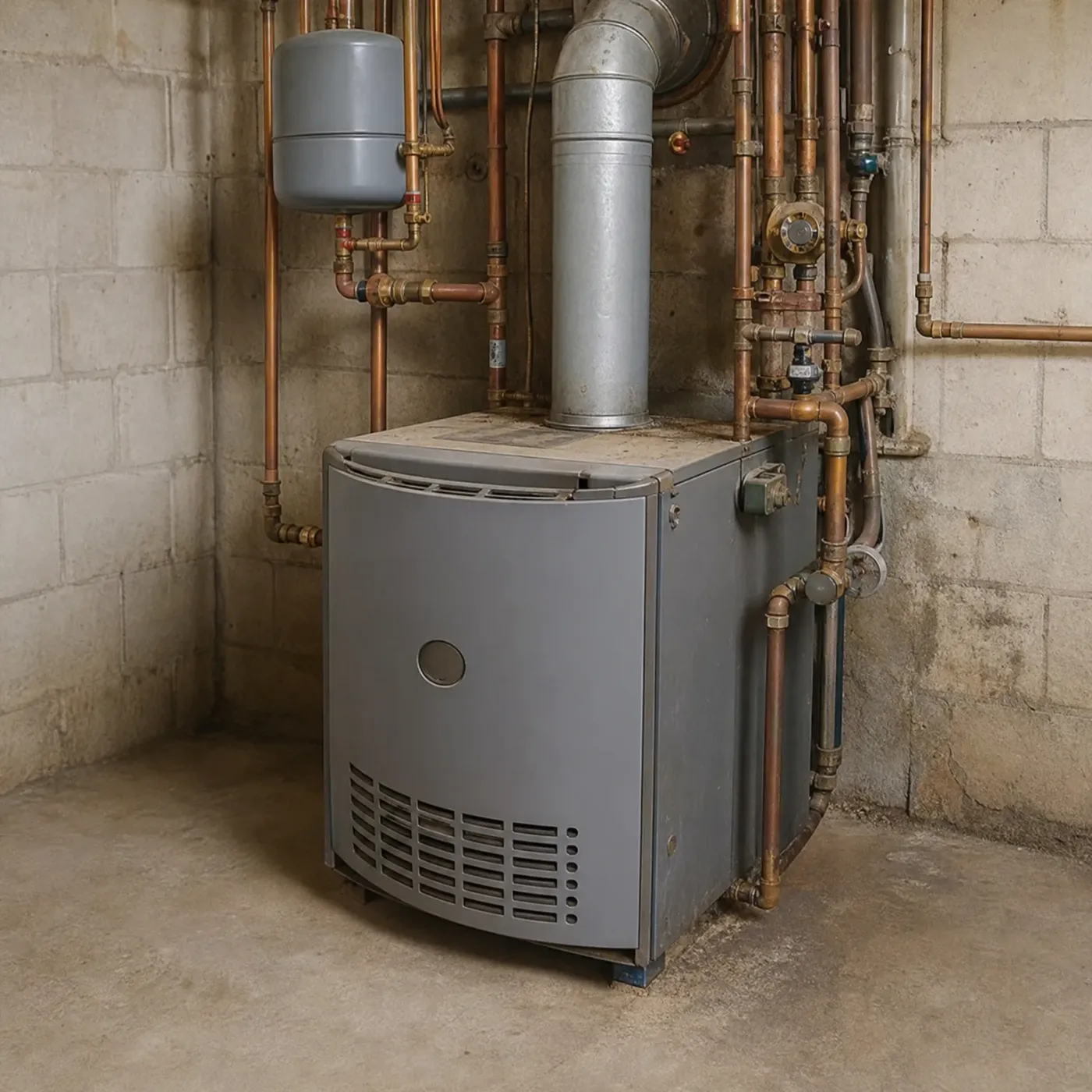
A gray boiler unit with a metal flue pipe stands in a basement corner, surrounded by copper piping and an expansion tank against a plain light wall and concrete floor.

What the nameplate won't tell you

The rating plate on your boiler lists its output, not its age or what's left in it. A gas-fired boiler installed new usually keeps a pilot that relights itself without power, so a storm outage alone won't tell you its condition either. What matters more is whether it's been flushed and inspected on a schedule, since a boiler that's been neglected for years can fail well ahead of one that's been looked after.

Repair the Boiler or Replace It

Keep It Going

  • A boiler past 15 years can still run fine if it's been flushed and the pressure relief valve checked every year.
  • Repairing a cracked circulator pump or a failed zone valve usually costs far less than a new install.
  • If the heat exchanger itself hasn't cracked, most other parts on a boiler can be replaced one at a time.
  • Staying with the boiler you have means no cutting into walls or floors to run new pipe or vent.
  • A unit that's heated the house through winters without major trouble has already earned some benefit of the doubt.

Replace It

  • Once the heat exchanger cracks, the boiler is done, since that part isn't made to be swapped out.
  • A boiler built before the mid 1990s runs well under the efficiency of what's sold today, and that shows up on the gas bill every month, October through April.
  • Rust-colored water or pooling near the base of the unit usually means the tank itself is failing from the inside.
  • New boilers modulate output to match how cold it actually is outside, instead of firing at one fixed rate all winter.
  • Paying for a second or third repair in the same winter often adds up to more than a chunk of a new unit's cost.
  • A new install comes with a warranty on parts that an old boiler patched together no longer has.
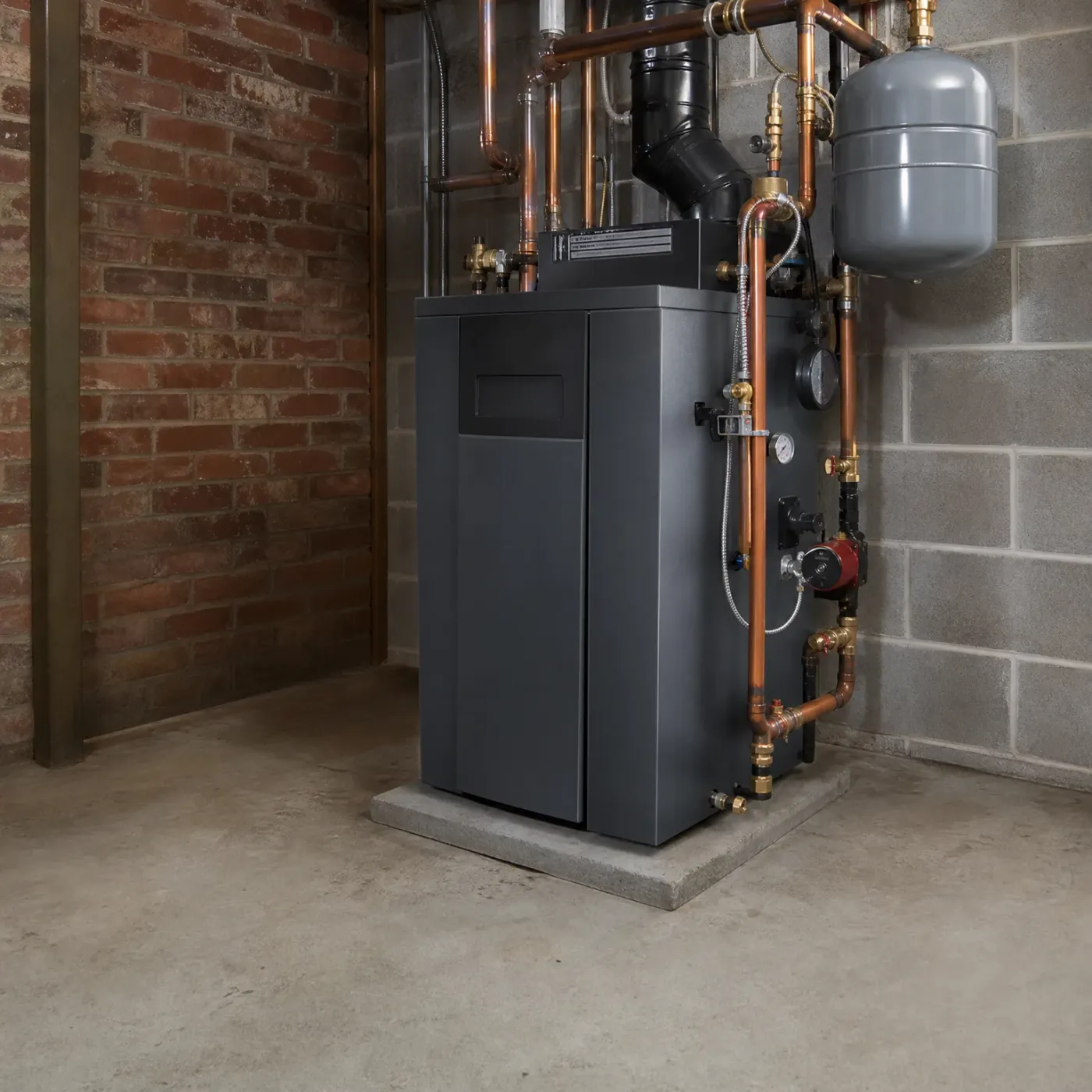
A dark gray floor-standing boiler on a concrete pad in a basement, connected to copper piping, valves, a circulator pump, a gauge, a black flue pipe, and a gray expansion tank, with a brick wall on the left and concrete block wall behind.

Running clean

This is what a boiler looks like when it's doing its job. Gauges holding steady, pipes tight, no rust creeping up the fittings. A unit kept like this, flushed on schedule with the relief valve checked, can carry you through many more Massachusetts winters.
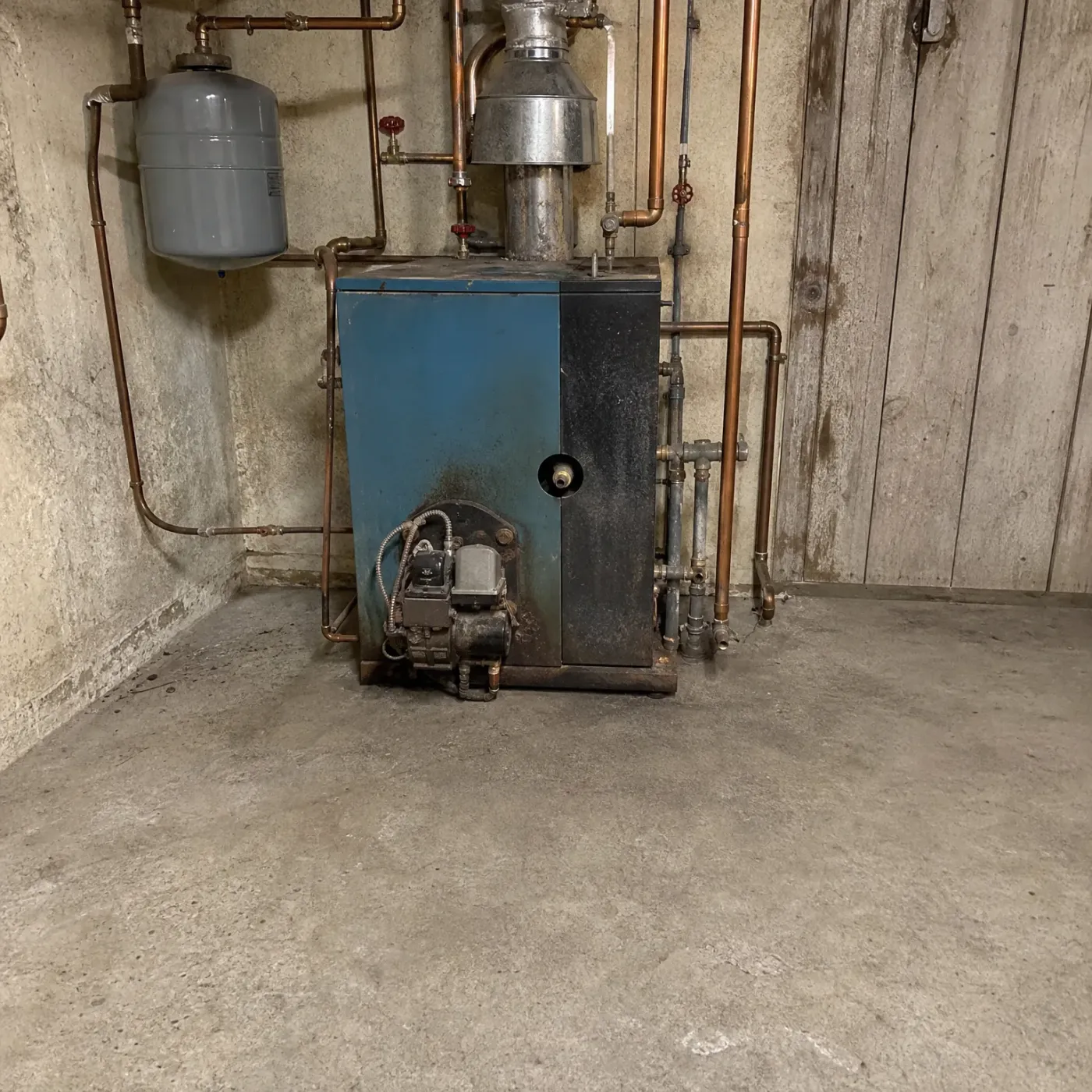

A blue and black boiler with a burner unit, flue, expansion tank and copper and steel piping stands on a concrete basement floor against a concrete wall and wooden plank partition.

On its way out

An old oil-fired boiler like this one tells you where it stands. Years of running have left it worn down in the corner, and once a unit gets here, patching it along stops making sense. Installing a new one means you're not guessing anymore about whether tonight's the night it quits.

A woman with long wavy brown hair in a grey ribbed sweater sits on a couch indoors, looking toward a window, with a potted palm-like plant and fireplace behind her.
A woman with long brown hair wearing a green V-neck top and beige cardigan sits on a light sofa, looking off to the side, with a dining table, lamp and framed picture in the background.
A woman with long dark hair in a cream knit sweater sits on a beige sofa indoors, looking toward a bright window with a houseplant and framed picture in the background.
A woman with long dark hair in a green knit sweater sits on a couch indoors, smiling and looking toward a window with a blurred room behind her.

The right pro for this job

A boiler that's twenty years old and still holding pressure might outlast one half its age that's been neglected. The only way to know which one you've got is to have someone look at the heat exchanger, the pressure relief valve, the circulator pump, and tell you straight whether you're looking at another decade or another winter. Getting that answer the usual way means finding a few plumbers who work on boilers, not just furnaces, calling each one, describing the rust and the noise and the pilot light that won't hold, then doing it again for the next one so you've got something to compare. Massachusetts winters don't wait well, and a boiler that's failing in January doesn't give you much room to shop around once it actually quits. If yours is old enough that you're asking this question, that's reason enough to get a straight read on it now, while you still have the choice, instead of after a cold morning makes the choice for you.

What an aging boiler means at home

A boiler that's struggling to keep up shows itself in cold rooms upstairs, a kitchen that takes longer to warm in the morning, or the burner running longer to get the same result. Your gas bill climbs even though nothing else changed, because a tired heat exchanger needs more fuel to do the same work. With power rates in Massachusetts among the highest in the country, that inefficiency shows up fast on the bill. None of this means the boiler is about to fail. It means it's working harder than it used to, and that cost lands on you every month it keeps running that way.

What failing at the wrong time risks

A boiler that quits in January doesn't give much warning first. You're left without heat on a night when the temperature outside makes that a real problem, not just an inconvenience, especially with anyone at home who can't easily deal with the cold. Instead of spending evenings calling around for quotes, explaining the same symptoms to five different companies and trying to sort who actually does good work, getting matched with a contractor who knows Massachusetts boilers means one call, one visit, and a straight answer on whether it's time to replace it before it decides for you.

A gray residential boiler with a metal flue pipe stands in a concrete-block basement corner, surrounded by copper piping, valves and a gray expansion tank.
Before you get your boiler installation
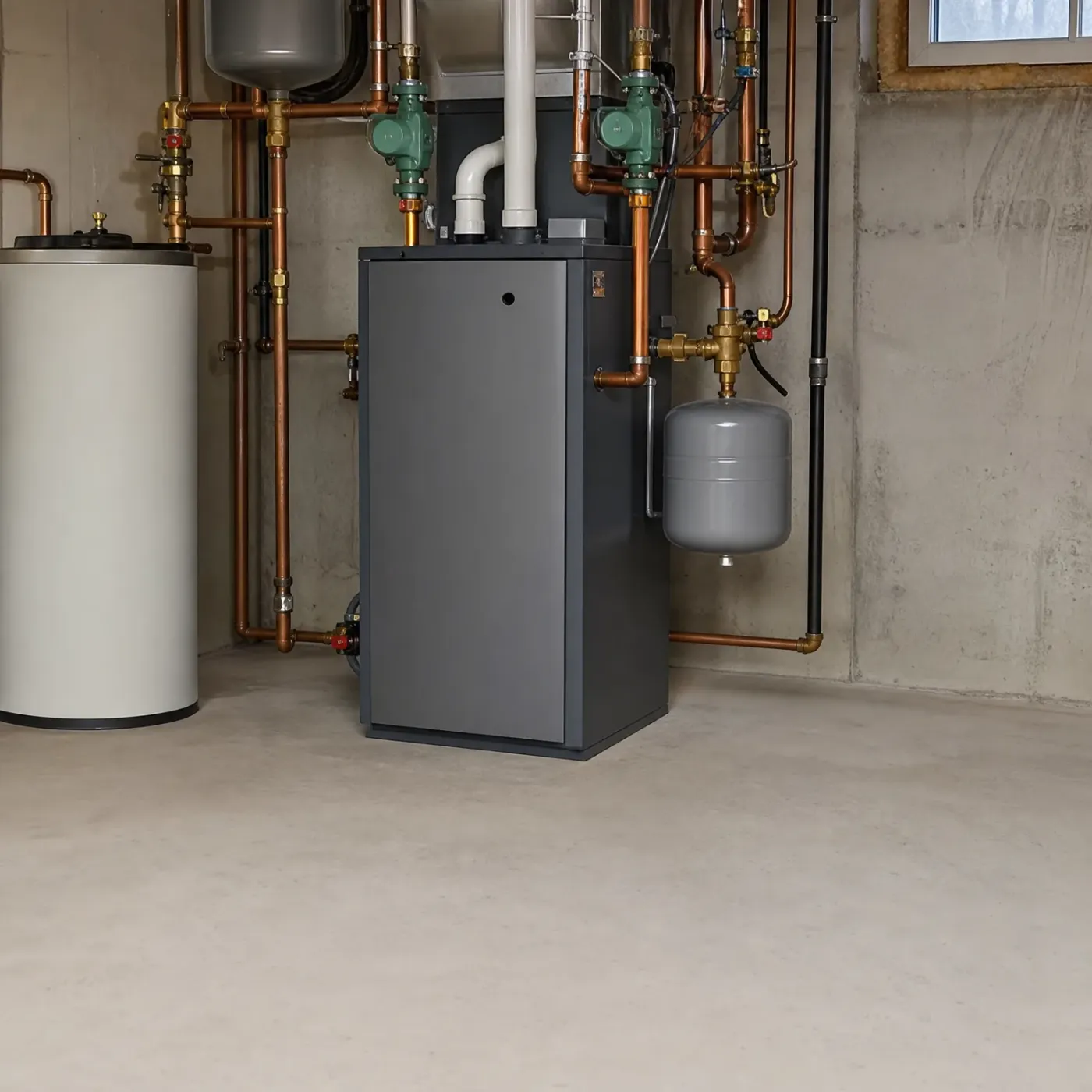
A dark gray floor-standing boiler in a concrete-walled basement, connected to copper piping, circulator pumps, a gray expansion tank, and a cream-colored storage tank to the left.
After you get your boiler installation

15 to 20 years

That's the typical run for a well-kept boiler. Yours might land right in that range, or it might be pushing past it already without much to show for the wear.

Describe it once

One phone call instead of five

Skip calling around, explaining the same thing twice, and sorting through quotes. Get matched with a contractor who can look at what you've got and tell you where it stands.

Describe it once

Winter nights average 21°F statewide

At 21°F on a typical winter night, your boiler isn't idling, it's running close to full tilt to keep the house warm. That kind of steady demand, night after night from December through February, is exactly what puts the years on a boiler.

NOAA nClimDiv 1991-2020 county normals weighted by homes

  1. Thermostat calls for heat and opens the zone valve

  2. Circulator pump pushes water through that zone's pipes

  3. Burner ignites and heats water inside the heat exchanger

  4. Hot water travels through baseboards or radiators to warm rooms

A smiling man in a denim shirt and white t-shirt stands in an open dark doorway of a stucco house, facing a woman with long brown hair and a green jacket seen from behind in the foreground.

What an old boiler risks in your house

A boiler that's on its way out doesn't always announce it. It might just mean the upstairs bedrooms stay cold until noon, or the youngest one complains about the bathroom floor being freezing again. You keep nudging the thermostat up to compensate, and the gas bill follows it up. Meanwhile the risk isn't just comfort. A heat exchanger that finally cracks can mean no heat at all on the coldest night of the year, the kind where pipes are at risk too if it goes unfixed for long.

You don't have to figure out on your own whether yours is fine for now or close to done. Instead of calling a handful of plumbers and repeating the same details about your system to each one, you get matched with a contractor who takes a look at your specific boiler and reaches out to you directly. One conversation, with someone who already knows what you're dealing with before they ring you.

Interior corner of a room with a window and sheer curtain at left, a gray upholstered sofa with a cushion at right, and a round wooden table holding stacked books and a round vase with an olive branch.
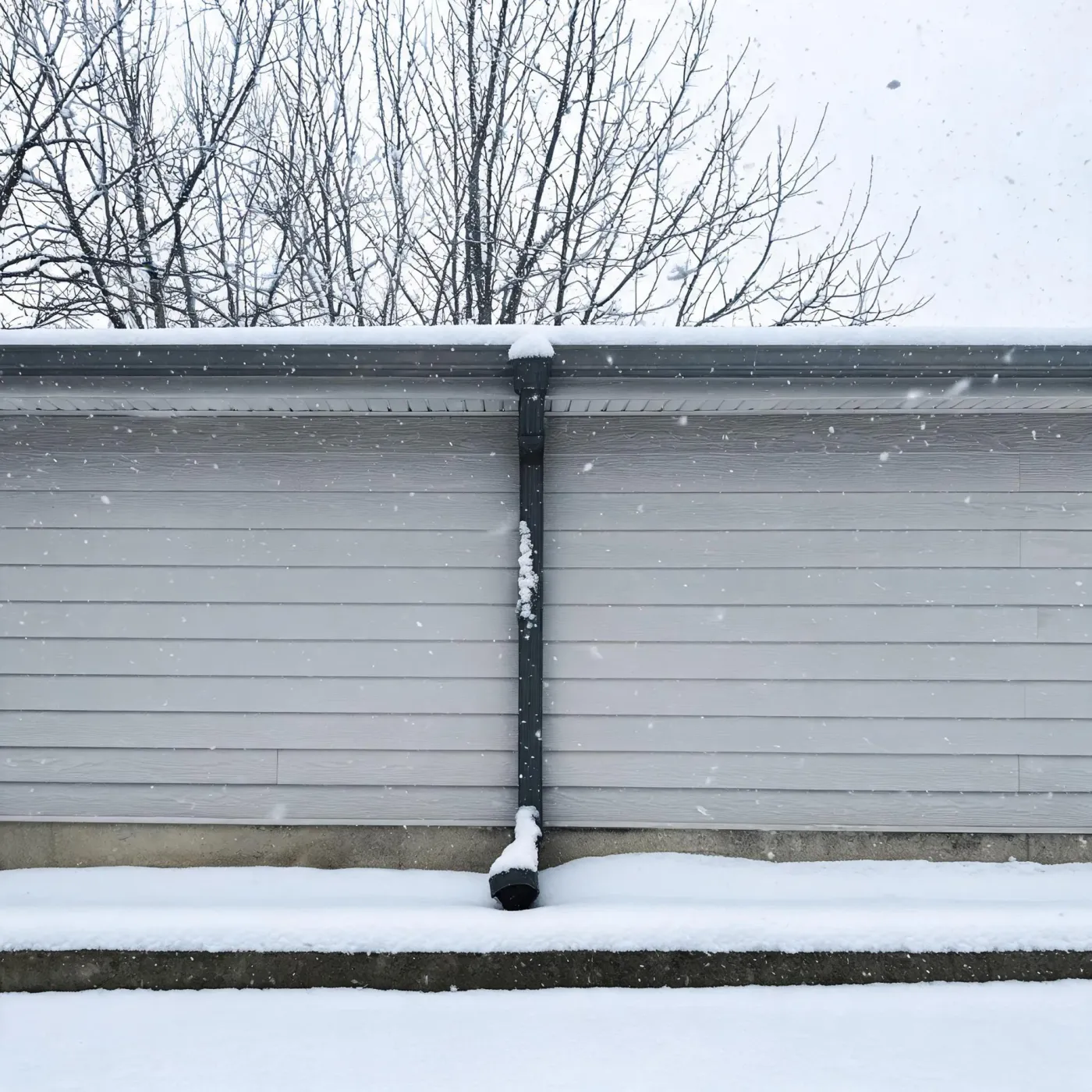
Exterior wall of a building with light gray horizontal siding and a dark downspout running to the ground, with snow on the roofline, steps, and ground, and bare trees behind during falling snow.

Statewide, winter nights average 21°F, according to NOAA climate data. Your boiler is built to answer that by holding water at a steady high temperature for hours on end, not cycling on for a few minutes and shutting back off. Night after night of that kind of demand is what wears down a heat exchanger and keeps a circulator pump running longer than it would in a milder state. You'll notice it most around January, when the burner seems to run almost constantly and the upstairs still takes a while to catch up. That's not a sign anything's broken. It's just what a Massachusetts winter asks of the equipment, year after year.

NOAA nClimDiv 1991-2020 county normals weighted by homes

An older woman with gray hair in a bun and glasses, wearing a beige knit sweater, smiles while looking to the side in a warmly lit kitchen, with a loaf of bread on the counter in the foreground and a snowy scene outside the window.
A woman and a sleeping child wrapped together in a cream knitted blanket on a couch, with a potted plant, framed photo and lit lamp in the background.

A well-kept boiler in Massachusetts runs 15 to 20 years, sometimes longer if the water's been flushed and the pressure relief valve checked on schedule. Yours is either well inside that window, coming up on it, or already past it and still holding on. The heat exchanger, the circulator pump, the zone valves all tell that story if someone looks at them, and that's the only real way to know what you've got left. What you don't need to do is spend an afternoon calling boiler companies, explaining the same cold upstairs bedroom to each one, then sitting with a stack of quotes trying to figure out who actually knows what they're looking at. That part of it can be off your plate. Whether your boiler has a few more winters in it or needs replacing before the next one hits, the work of finding someone qualified to tell you which is a different task than keeping the house warm, and it doesn't have to fall on you the same way.

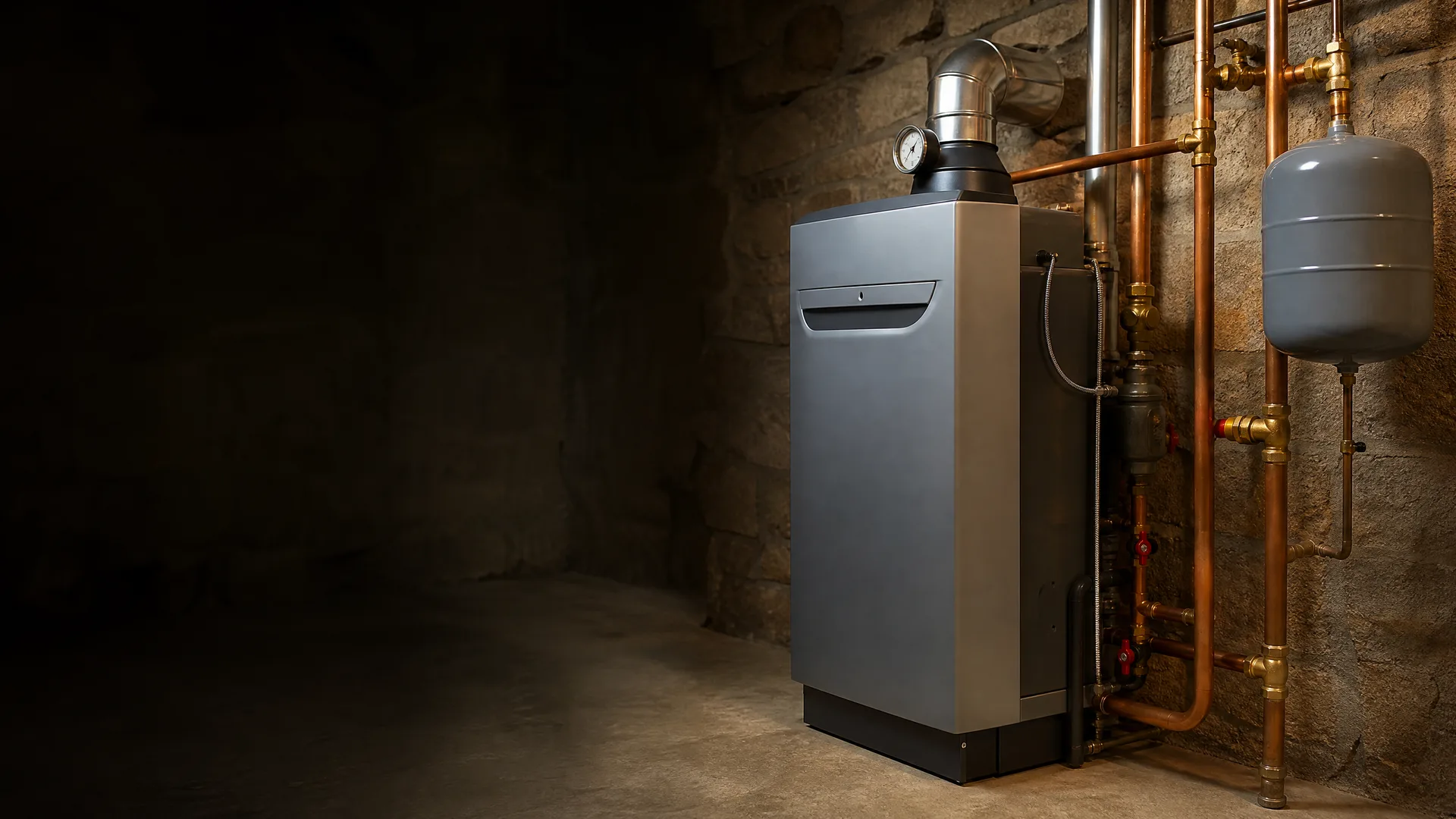
A gray floor-standing boiler with a flue pipe and pressure gauge stands against a stone basement wall, connected to copper and brass piping and a gray expansion tank.

A boiler pro near you

Step 1 of 3: Equipment