Boiler pilot light keeps going out in Massachusetts

Step 1 of 3: Equipment

A pilot light that keeps going out is usually the thermocouple. That's the small sensor that sits in the flame and tells the gas valve the pilot is lit. Once it wears out or sits slightly out of position, it stops reading the flame correctly and the valve shuts the gas off as a safety measure, even though the pilot was burning fine. Drafts can also blow a pilot out, and a dirty or clogged pilot tube will starve the flame until it's too weak to stay lit. In Massachusetts, this tends to show up more in the cold months, when the boiler is running most hours of the day and any weak connection gets tested over and over. A thermocouple is a cheap part, but it has to be replaced and adjusted correctly, and if the gas valve itself is the problem instead, that's a different repair. Either way, a boiler that won't hold a pilot light needs to be looked at before the cold really sets in.

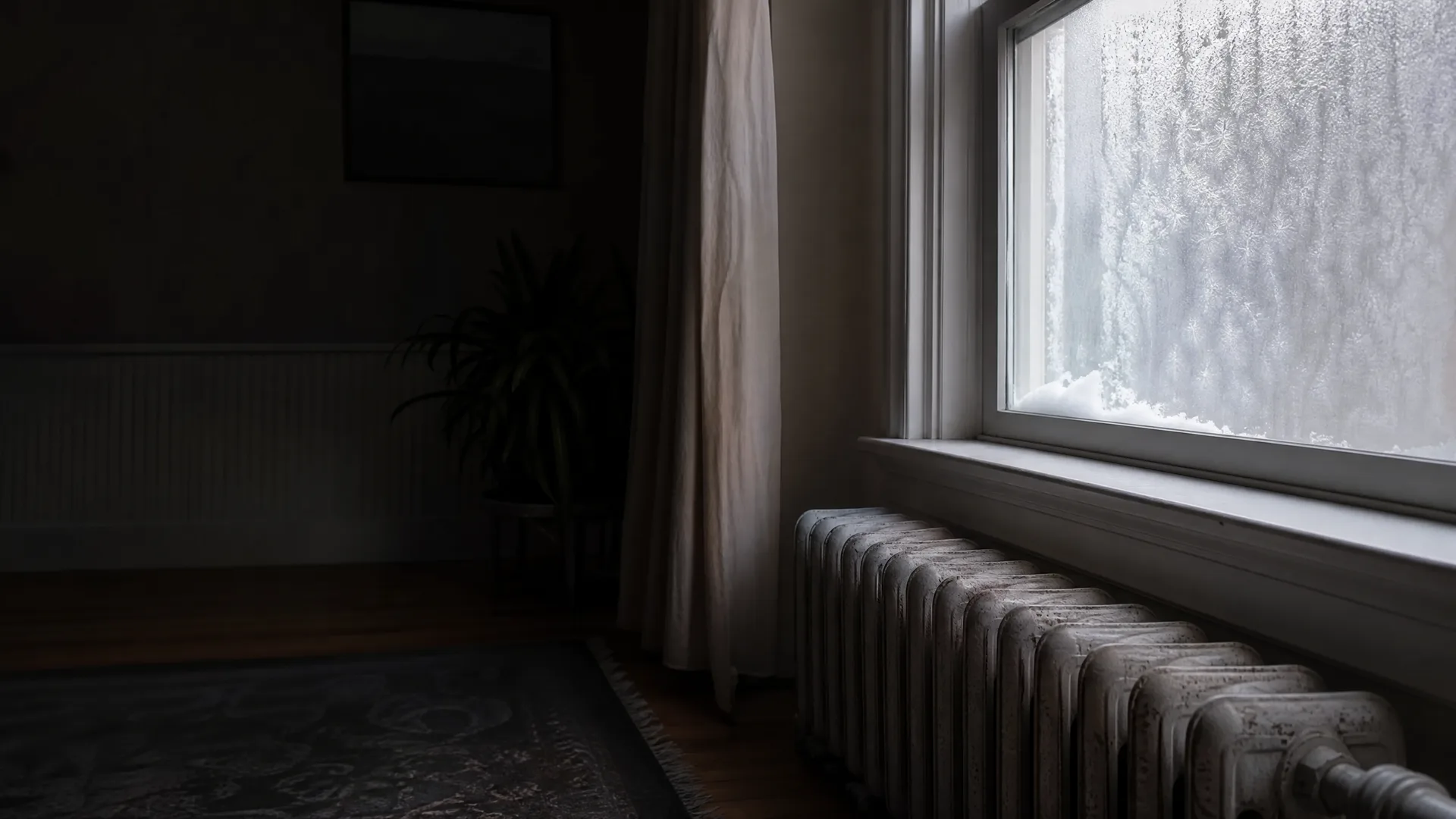
A dimly lit room with a cast-iron column radiator beneath a wide window covered in frost and snow, with a pale curtain, a potted plant, and a patterned rug on a wood floor.

You come downstairs before the thermostat has caught up, and the living room still holds the cold from overnight. The radiator under the window sits dead quiet. Outside it's the kind of January morning where the glass fogs and freezes on the inside, a thin skim of ice at the corner of the pane. You crouch by the boiler and find the pilot out again, the third time this month. You strike the igniter, it catches, holds for a few seconds, then dies. Upstairs your kids are still asleep under extra blankets, and the thermostat reads a number that won't move until this flame stays lit.

Thermocouple or Something Else

Thermocouple problem

  • A worn thermocouple reads a lit pilot as unlit and the gas valve shuts the flame off, usually within a minute of letting go of the knob.
  • This is the most common reason a pilot won't hold, and it gets more likely the longer the boiler has been running on the same one.
  • A contractor can test it with a multimeter in a few minutes and knows the reading a healthy one should give.
  • The part itself is inexpensive, and swapping it is a straightforward repair on most boilers.
  • If the pilot lights fine and stays lit as long as you hold the knob down, this is almost always the cause.

Other causes

  • A draft from a nearby window or vent can blow out even a healthy pilot, and that shows up more on windy winter nights.
  • A dirty or partly blocked pilot orifice starves the flame and lets it go out on its own, separate from any sensor issue.
  • A failing gas valve can cut the pilot supply even when the thermocouple and the flame itself are fine.
  • Low gas pressure from the utility or a partly closed valve somewhere on the line can starve the pilot the same way.
  • These causes need a technician on site, since a multimeter test alone won't rule them out.
A smiling woman with dark shoulder-length hair in a cream V-neck sweater sits at a marble counter with a glass of red wine, with a kitchen and softly lit living room behind her.
A woman in a dark green sweater laughs while seated at a marble kitchen island with a glass of red wine, with open shelving, cabinets and a living room visible behind her.
A woman with long dark hair in a cream knit sweater laughs while looking off to the side, seated at a counter with a glass of red wine, in a dimly lit living room with a sofa, lamp, framed pictures and houseplant behind her.
A smiling woman with long dark hair in a beige sweater sits at a marble kitchen counter with a glass of red wine, with a dimly lit living room behind her.

Why a draft makes it worse

A pilot assembly sits close to tolerance. The flame has to touch the thermocouple at a certain point for the reading to hold. A gust down the flue, a window cracked for air on a mild day, or a storm pushing wind against the house can bend the flame off that spot just enough to make a borderline thermocouple drop out. That's why the pilot might hold fine for a week and then go out three nights running once the wind picks up. The part was already failing. The draft just decided when it finally showed.

What a tech checks first

A contractor who works on boilers all winter in Massachusetts starts with the same two things. First, the thermocouple reading itself, checked with a meter against the millivolt range the valve needs to stay open. Second, where the tip sits in the flame, since a thermocouple can test fine and still fail if it's sitting to the side instead of in the hottest part. Between those two checks, most pilot problems turn up without needing to pull the gas valve apart, which is the more expensive part to replace.

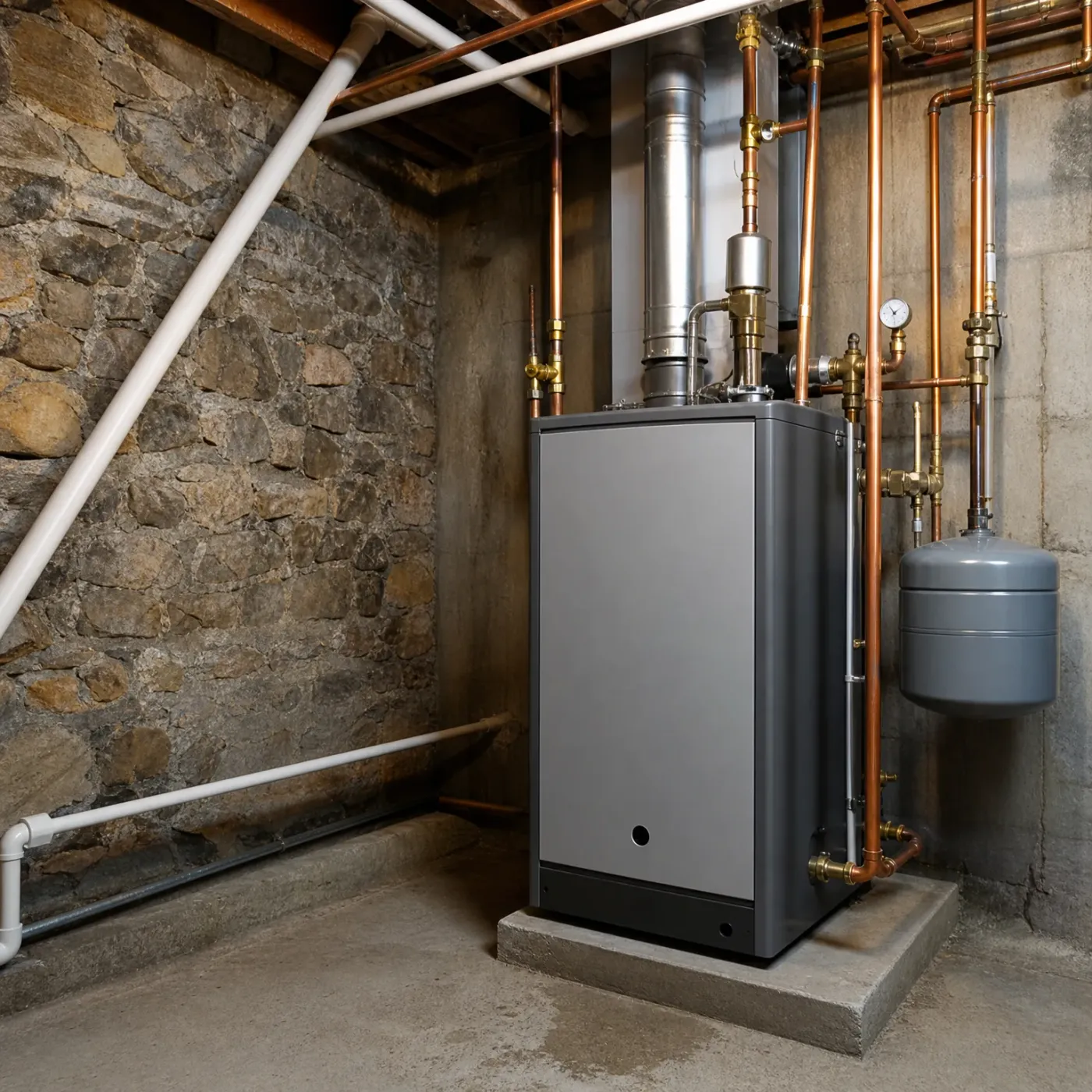
A gray boiler on a concrete pad in a basement with painted concrete block walls, copper piping, a metal flue, and electrical control boxes.
Before you get your boiler repair
A gray boiler with a metal flue pipe stands in a basement against concrete and concrete-block walls, connected to copper piping, a circulator pump, and two gray expansion tanks.
After you get your boiler repair
A gray floor-standing boiler on a concrete pad in a basement, connected to copper piping, a metal flue, a gauge, and a gray expansion tank, beside a stone wall and white insulated pipes.

Explain it one time

The pro who reaches out is licensed in Massachusetts.

Answer a few questions instead of calling shop after shop.

Skip calling around

It costs nothing to send, and you don't have to hire anyone.

Why does my pilot light go out only sometimes, not every time?

You can light the pilot on a Tuesday and it holds fine all week, then it goes out twice in one day the next week. That kind of pattern makes you want to wait and see rather than deal with it, especially with how things pile up in the evening. But a pilot that only sometimes fails isn't random. Something is changing between the times it holds and the times it doesn't.

A thermocouple that's close to failing only drops out under certain conditions

A thermocouple doesn't fail all at once. As it wears, the reading it sends the gas valve gets weaker, but it can still pass as long as the flame sits exactly where it should. A draft, a slightly low gas pressure, or the flame drifting off center from age will push a weak thermocouple past the point where it can hold. That's why it drops out on windy nights or when the furnace or dryer kicks on nearby and changes the air pressure in the house, but holds fine on a still day. Once a thermocouple gets to this point it keeps getting less reliable, not more. It won't fix itself.

A gray boiler unit on a concrete pad in a basement corner, connected to copper piping, valves and a metal flue against painted concrete block walls.

Running right

The pilot stays lit and the flame sits steady and blue against the thermocouple. The gas valve holds, the burner fires when the thermostat calls, and the pipes along the wall stay quiet except for the normal tick of heat moving through them. Nothing needs a second look.

A blue oil-fired boiler with a burner unit sits on a concrete pad in a basement corner, with copper piping, valves and a gray expansion tank overhead against concrete block walls.

Pilot won't hold

The flame catches, then drops out again within a minute of letting go of the knob. You relight it and it holds for a day, then quits overnight. The boiler sits cold in the corner while the thermocouple or the valve behind it stops doing its job.

Winter nights average 21°F statewide

On a 21°F night your boiler is calling for heat most of the night, not just at the coldest hour. That means the pilot has more hours to drift out of position or get caught by a draft before morning. A pilot that won't hold shows up fast on a night like that, because the burner needs it lit again and again to keep up.

NOAA nClimDiv 1991-2020 county normals weighted by homes

  1. Gas flows to the pilot and the burner waits for a signal.

  2. You hold the knob in while the pilot flame heats the thermocouple tip.

  3. The thermocouple sends a small electric signal back to the gas valve.

  4. That signal tells the valve to stay open and keep gas flowing.

A closed silver laptop and a glazed ceramic mug on a wooden table, with a blurred kitchen counter, potted plant, cutting board and window in the background.

A boiler that won't hold its pilot means a cold house while you're still looking for help

You relight the pilot before bed and it's out again by the time you're up for work. Gas is how most houses around here heat, so when the boiler won't hold a flame, there's no backup running quietly in the basement picking up the slack. The thermostat keeps calling and nothing answers it. With power costs in Massachusetts what they are, you're not about to heat the place with space heaters while you sort this out.

What usually eats the evening isn't the repair, it's getting to someone who'll do it. Searching for a boiler tech, calling two or three companies, describing the same pilot problem each time, then waiting to see who calls back first and comparing what they quote. Ask once here and a licensed Massachusetts contractor who works on these pilot assemblies all winter gets the details, and you're not fielding calls from five different companies while your living room sits cold.

A gray upholstered sofa with a beige cushion and knit blanket beside a curtained window, with a white mug and a book on a dark wooden table in the foreground and a lit lamp in the background.
Gray horizontal lap siding on a building wall with a central downspout, seen during falling snow, with snow-covered ground and bare tree branches above the roofline.

Winter nights average 21°F statewide, according to the National Weather Service. At that temperature your boiler is firing on and off most of the night to keep up, not just during a cold snap. Every one of those cycles depends on the pilot holding steady. A thermocouple that's already worn gets more chances to lose contact with the flame over a long cold night than it would on a mild one. That's why a pilot problem tends to show up worse once the real cold sets in. You'll notice it as a furnace that lit fine at bedtime and is out again by 4 a.m., with the house noticeably colder by the time you're up.

NOAA nClimDiv 1991-2020 county normals weighted by homes

A bearded man in a dark navy sweater over a collared shirt smiles and looks off to the side while seated at a dinner table with a glass of red wine, a lit candle, and a plate of food in the foreground of a dimly lit room.
A woman in a dark gray sweater reclines on a couch with her eyes closed and a knit blanket over her lap, an open book resting face-down in front of her, with a lit table lamp and shelving blurred in the background.

What to do about the pilot

  • A pilot that won't hold almost always means the thermocouple is worn or sitting out of position.
  • Relighting it over and over doesn't fix the reading problem, it just delays the call.
  • A boiler tech who works on these all winter can usually tell what's wrong before taking the cover off.
  • One licensed contractor local to you handles the fix, so you're not fielding calls from three different companies.
  • A gas valve that won't hold a flame isn't something to leave through another cold stretch.

A pilot that keeps going out is telling you something specific, not something random. Most of the time it's the thermocouple, worn down or knocked slightly out of place so it can't read the flame anymore. Relighting it gets you through one more night, but it doesn't touch the actual problem, and the gas valve will keep shutting the flame off until that sensor gets looked at or replaced.

This isn't a part most people have reason to recognize on sight, but a boiler tech who works on these systems all winter has seen the same failure enough times to know where to look first. Someone local, who handles gas boilers through the cold months here, can often tell what's wrong before the cover even comes off, because the pattern is familiar even if your boiler isn't.

Finding that person is usually the slow part. Instead of calling around and explaining the same problem three or four times to three or four companies, one licensed contractor local to you takes the job and handles the fix directly. You're not sorting through competing quotes or fielding callbacks from people who don't know your boiler.

A pilot that won't hold is a gas valve problem, and it's not one to let ride through another cold stretch. The fix is usually straightforward once someone who knows the part is standing in front of it.

Elevated view over a dark standing-seam metal roof with a stone chimney and wood-sided gable, surrounded by conifers and autumn-colored trees with forested hills under an overcast sky.

Skip the calls to every shop

Fill out one form

No charge to send it. You decide if you hire them.

One request gets a licensed boiler tech who already knows these pilot assemblies, not four companies calling you back at once and asking you to explain the problem again each time.